Calibrating Culture: V&A East Interfaces with Black British Music's Legacy
V&A East calibrates the cultural architecture of Black British music, tracing its disruptive sonic and style trajectory from underground pulses to global impact.
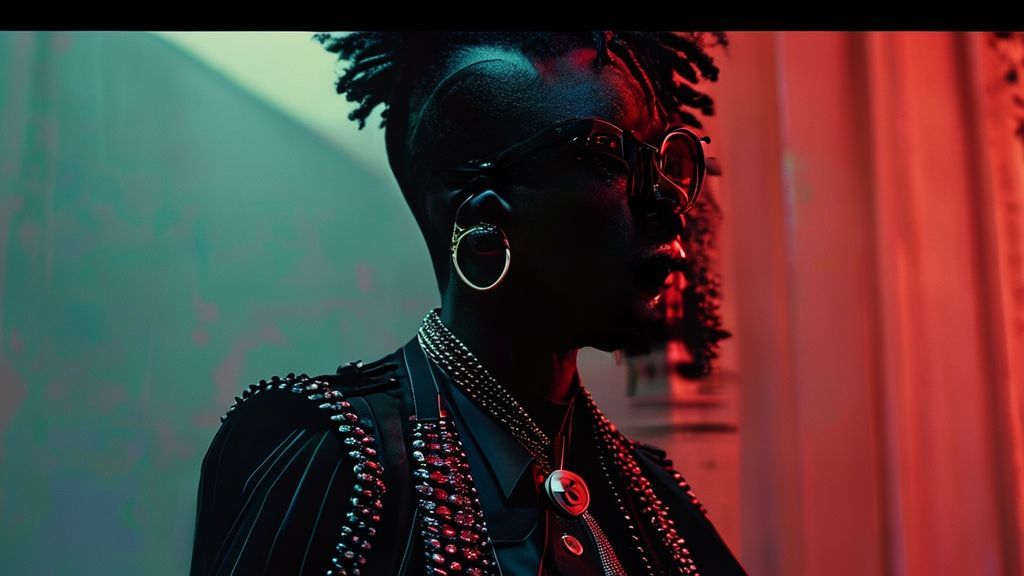
Plate · Calibrating Culture: V&A East Interfaces with Black British Music's Legacy
In an era defined by rapid cultural flux and the constant recalibration of identity, the V&A East emerges as a critical nexus, poised to deconstruct and re-present the profound impact of Black British music. This isn't merely an exhibition; it's an immersive interface, a meticulously curated data stream designed to chart the disruptive sonic architecture and sartorial evolution that have defined an era. From the raw, foundational rhythms of sound system culture to the hyper-stylized global resonance of Afrobeats, the V&A East offers a granular analysis of how sound, style, and social narrative have converged to forge an unparalleled cultural fabric.
Calibrating the Sonic Architecture: From Analogue Pulse to Digital Flux
The narrative commences with the foundational elements, tracing the complex lineage of Black British music. It’s a story woven with threads of migration, resistance, and innovation, where sonic experimentation became a potent instrument of expression and community building. The exhibition meticulously archives the early catalysts, demonstrating how Caribbean influences, particularly reggae and dub, were remixed and re-engineered on British soil, giving birth to entirely new musical forms.
The Genesis: From Roots to Rhythm
The initial pulse of Black British music was often an analogue one, emanating from the powerful, bespoke sound systems that became mobile hubs of culture and resistance. These weren't just speakers; they were architectural marvels of acoustic engineering, designed for maximum impact within communal spaces. The associated aesthetics were often utilitarian, reflecting a DIY ethos born of necessity. Early streetwear, often a blend of repurposed military surplus and customized garments, became the uniform of a community asserting its presence. Think functional denim, robust workwear, and customized accessories, all imbued with a distinct sense of belonging. This heritage fashion laid the groundwork for future urban style, emphasizing durability and a subtle form of protest through self-expression. The initial sonic landscape was raw, authentic, and deeply rooted in a desire for collective liberation.
"The exhibition functions as a critical node, a temporal interface where the past's raw energy is processed into a future-forward cultural narrative, revealing the adaptive evolution of style and sound."
Disrupting the Mainstream: Punks, Pirates, and Pop
As the decades progressed, Black British music began its relentless push into the mainstream, often through subversive channels. The 1980s saw the emergence of Two-Tone, Lovers Rock, and early British Hip-Hop, each genre modulating the existing cultural frequency. Fashion during this period became more overtly performative, a direct reflection of the music's dynamic energy. Artists embraced bold colors, experimental silhouettes, and the nascent integration of branded sportswear. The 1990s witnessed the explosion of Jungle and Garage, genres that thrived in underground circuits and pirate radio, fostering distinct subcultural fashion codes. Tracksuits, designer sneakers, and logo-heavy apparel became integral to these scenes, signaling allegiance and status. This was a period of aesthetic disruption, where the boundaries between high fashion and street-level expression began to blur, often through the deliberate choices of musicians who understood style as an extension of their sonic identity. The performance apparel of the era was not just clothing; it was a statement of intent, a modular system for cultural navigation.
The Fabric of Identity: Style as Statement
The V&A East meticulously illustrates how fashion has consistently served as a powerful visual language within Black British music, articulating identity, aspiration, and rebellion. Each sonic movement has generated its own distinct visual grammar, a design legacy that continues to influence global trends.
Grime's Urban Utility & Global Interface
The turn of the millennium heralded Grime, a genre born from the hyper-local realities of inner-city London, yet destined for global impact. Grime’s aesthetic was intensely functional design-driven, reflecting its origins. Its uniform, characterized by functional tracksuits, technical fabrics, and branded sportswear, became a form of urban armour, a performance apparel system for navigating cityscapes. This urban utility aesthetic, while seemingly minimalist, represented a profound statement of self-reliance and community. Artists like Dizzee Rascal and Wiley, often clad in tracksuits and high-tech outerwear, projected an image of preparedness and resilience. This wasn't merely casual wear; it was a calibrated system of dress, optimized for both movement and visual impact. The influence of Grime's streetwear and adaptive fashion principles can be seen across contemporary British fashion, demonstrating how a localized movement can achieve global resonance and redefine contemporary design.
Beyond the Beat: Afrobeats, R&B, and High Fashion Synthesis
The contemporary landscape of Black British music is a vibrant tapestry, with artists operating at the apex of global culture. Genres like Afrobeats and modern R&B have not only broadened the sonic landscape but have also elevated the sartorial conversation. Today, artists navigate the high-stakes interface of global fame, their curated aesthetics often a synthesis of luxury performance wear and bespoke tailoring. Collaborations with high-fashion houses, the embrace of sartorial innovation, and the crafting of unique design legacies are now standard. Artists like Stormzy, Dave, and Little Simz exemplify this shift, seamlessly blending streetwear with haute couture, creating elevated design narratives that speak to both their roots and their global aspirations. The exhibition showcases garments that are not just clothes but artifacts of cultural synthesis, demonstrating the dynamic interplay between music, fashion history, and cultural identity. This cross-cultural synthesis is a testament to the genre's expansive reach and its ability to redefine luxury and performance within the fashion industry.
The V&A East Archive: A Cultural Cadence
The V&A East’s approach to archiving this rich history is itself a masterclass in experiential design. Visitors are guided through a multi-sensory journey, where the visual and auditory are inextricably linked. The exhibition features an impressive array of artifacts:
- Iconic stage costumes and performance wear from pioneering artists.
- Rare photographs and archival footage, providing contextual depth.
- Original instruments and recording equipment, highlighting technological evolution.
- Personal effects and ephemera, offering intimate glimpses into creative processes.
Each item functions as a data point within a larger narrative, meticulously assembled to illustrate the profound cultural impact. The curation emphasizes not just the finished product but the process, the innovation, and the relentless drive for self-expression. It's a digital archive rendered tangible, an immersive experience that allows for direct interfacing with the cultural architecture of Black British music. The exhibition reveals how specific material innovation, whether in fabric technology or instrument design, has consistently mirrored the evolving sound and message.
Concluding Insights: The Future Trajectory
The V&A East's exhibition on Black British music is more than a historical retrospective; it's a critical examination of an ongoing adaptive evolution. It underscores how this dynamic cultural force has continuously recalibrated, innovated, and disrupted, leaving an indelible mark on global fashion history and music history alike. The exhibition’s greatest strength lies in its ability to connect the dots between seemingly disparate moments, revealing a coherent and powerful design legacy. It highlights the resilience, creativity, and enduring influence of Black British artists, whose work has consistently pushed boundaries, both sonically and sartorially. The narrative presented by the V&A East is a powerful reminder that culture is a living, breathing entity, constantly in flux, constantly innovating. The future trajectory of Black British music promises continued innovation, further blurring the lines between art forms, and solidifying its position as a global arbiter of style and sound. This exhibition is a vital calibration point, ensuring that this crucial cultural fabric is not only remembered but understood as a blueprint for future generations of creatives and cultural disruptors.