The Silent 'D', The Sharp Blade: Tarantino's 'Django/Zorro' — An Avant-Garde Sartorial Manifesto
Tarantino’s 'Django/Zorro' crossover promises a cinematic and sartorial explosion. Prepare for a radical redefinition of hero archetypes through groundbreaking costume design.
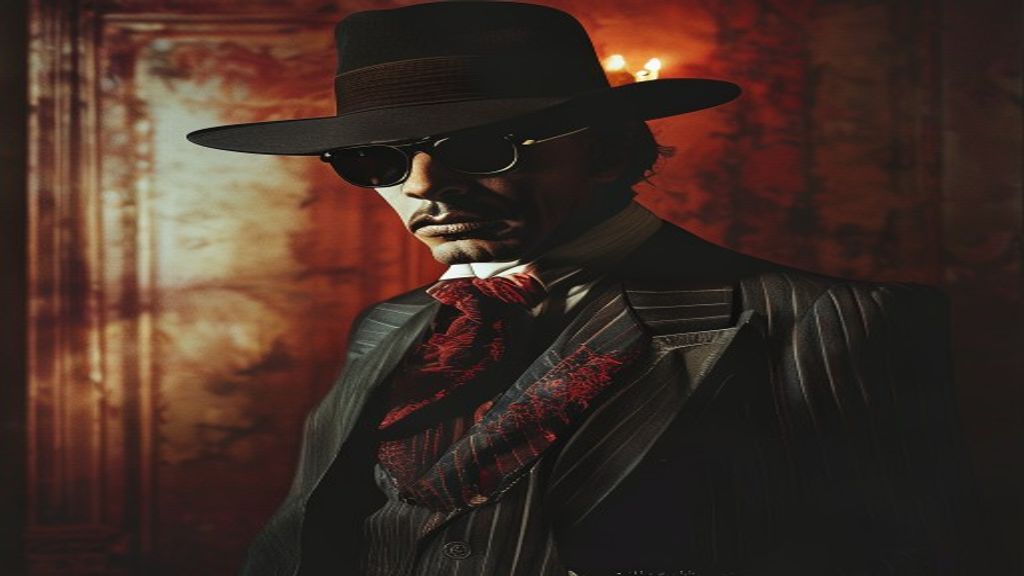
Plate · The Silent 'D', The Sharp Blade: Tarantino's 'Django/Zorro' — An Avant-Garde Sartorial Manifesto
The Unveiling: A Cinematic & Sartorial Reckoning
In the rarefied air of high fashion and cinematic discourse, whispers often precede seismic shifts. Today, those whispers have coalesced into a thunderous declaration: Quentin Tarantino’s audacious ‘Django/Zorro’ film crossover is not merely a phantom of fan speculation but a tangible entity in active development. For the discerning eye accustomed to the exquisite calibration of detail, the meticulous crafting of narrative, and the profound impact of visual lexicon, this news transcends mere entertainment. It heralds a potential revolution, a clash of titans not just in storytelling, but in the very fabric of cinematic style. This is not just a film; it is an impending avant-garde fashion editorial, a deconstruction and reconstruction of iconic archetypes through the potent language of costume, silhouette, and sartorial rebellion. The ‘D’ may be silent, but the blade, both literal and metaphorical, is poised to cut through convention, leaving a trail of sartorial innovation in its wake.
Tarantino, a maestro of genre alchemy and a connoisseur of cultural iconography, has consistently demonstrated an unparalleled ability to imbue his characters with an indelible visual identity. From the sharp suits of Reservoir Dogs to the eclectic cool of Pulp Fiction, the martial arts chic of Kill Bill, and the meticulously researched, yet anachronistically brilliant, Western wear of Django Unchained, his films are veritable lookbooks of character-driven fashion. The collision of Django Freeman, the liberated slave turned bounty hunter, with Don Diego de la Vega, the aristocratic masked vigilante, offers a canvas of unparalleled richness for exploring themes of justice, identity, and power through the lens of high-concept costume design. This is where the intersection of film and fashion truly becomes a fertile ground for artistic expression.
Deconstructing the Archetypes: Threads of Retribution and Romance
To truly grasp the magnitude of this sartorial fusion, one must first dissect the inherent style codes of each protagonist. Their wardrobes are not merely clothes; they are extensions of their being, potent symbols of their journeys and their convictions.
Django: The Sartorial Evolution of a Liberated Soul
Django Freeman’s journey in Django Unchained is a profound narrative of liberation, mirrored exquisitely in his evolving attire. Initially clad in the coarse, utilitarian garb of a slave – a stark representation of his subjugation – his transformation is marked by a deliberate and defiant embrace of luxury. The iconic blue velvet suit, a flamboyant statement piece chosen by Dr. King Schultz, is more than just an outfit; it is a declaration. It’s a subversion of expectation, a deliberate act of sartorial dissonance that announces his newfound freedom and agency. Later, his impeccably tailored brown leather duster coat and sophisticated Western wear signify a man who has not only reclaimed his identity but redefined it on his own terms. Django’s style trajectory is a masterclass in how bespoke tailoring, rich textiles, and carefully chosen accessories can communicate power, wealth, and an audacious spirit. His outfits are always a statement, a deliberate choice to stand out, to command attention, to assert his presence in a world that sought to deny it. This is not just fashion; it is psychological warfare waged through fabric and form.
Zorro: The Masked Aesthetic of Heroic Shadowplay
Zorro, on the other hand, embodies a different kind of sartorial power – one steeped in anonymity, elegance, and the dramatic flair of a bygone era. His iconic black silhouette, a uniform of mystery and justice, is instantly recognizable. The flowing cape, the wide-brimmed hat, the intricately designed mask, and the precise, almost balletic, movement of his sword all contribute to an aesthetic that is both romantic and menacing. Zorro’s attire speaks to the grandeur of Spanish colonial elegance, yet simultaneously offers a stark contrast to the opulence of his alter ego, Don Diego. His costume is a functional yet highly stylized uniform, designed for stealth, combat, and dramatic reveals. It’s an exercise in controlled theatricality, where every pleat of the cape, every gleam of the sword hilt, is part of a carefully constructed persona. The allure of Zorro lies in this duality: the aristocratic dandy by day, the shadowy avenger by night, both meticulously dressed for their respective roles.
The Confluence of Codes: A New Visual Language
The true genius of a Tarantino crossover lies not just in the narrative potential, but in the explosive visual alchemy that will undoubtedly ensue. How will these two distinct, yet equally potent, sartorial universes collide, merge, and ultimately redefine themselves?
Weaving the Narrative: Costume as Cultural Commentary
Tarantino’s films are renowned for their anachronistic brilliance, their playful disregard for strict historical accuracy in favor of a more potent, often subversive, aesthetic truth. This ‘Django/Zorro’ project offers an unprecedented opportunity for costume design to become a central pillar of the narrative. Imagine the fusion: the raw, defiant swagger of Django’s Western-meets-Dandy look intersecting with Zorro’s refined, almost gothic, Spanish colonial panache. We anticipate a visual feast where:
- Hybrid Silhouettes: The structured Western jacket might meet the fluid drama of a Zorro-esque cape. Perhaps a Django-inspired wide-brimmed hat, but rendered in Zorro’s signature black, with a more refined, almost aristocratic, embellishment.
- Materiality of Power: The rugged utility of leather and denim, emblematic of the American frontier, could be juxtaposed with the luxurious brocades, velvets, and silks of Spanish aristocracy. This clash of textures will speak volumes about the characters’ internal and external conflicts.
- Color Palette Expansion: While Zorro is defined by black, and Django found power in bold blues and browns, their combined world could introduce a richer, more complex spectrum. Deep jewel tones, burnished metallics, and even unexpected pops of vibrant color could signify moments of alliance or tension.
- Weaponry as Adornment: The sword and the revolver, while instruments of violence, are also extensions of their owners’ style. Expect intricate hilt designs, custom holsters, and weapon embellishments that elevate them to objects of high design, blurring the lines between tool and accessory.
“This isn't just about dressing characters; it’s about dressing a revolution. The threads of Django’s liberation and Zorro’s justice will intertwine to create a new textile of defiance and distinction.”
Beyond the Seam: Crafting a Transgressive Wardrobe
The potential for this film to influence contemporary fashion cannot be overstated. Tarantino’s past works have consistently spawned trends, from the resurgence of slim-fit suits to the embrace of vintage-inspired aesthetics. ‘Django/Zorro’ promises to be a veritable crucible for new ideas, a trend forecasting event in itself.
The Alchemy of Adornment: From Screen to Street Style
We foresee a collection of audacious details and bold statements emerging from this cinematic endeavor, inspiring runway collections and influencing streetwear trends alike. Consider the possibilities:
- Deconstructed Westernwear Redux: Imagine designers taking cues from Django’s frontier attire, reinterpreting it with avant-garde cuts, unexpected fabrics, and a heightened sense of luxury. Think fringed leather jackets with intricate laser-cut patterns, or reimagined denim adorned with artisanal embroidery.
- Neo-Baroque Detailing Meets Urban Edge: The dramatic flourishes of Zorro’s world – intricate lacework, dramatic ruffles, ornate buttons – could be integrated into modern menswear and womenswear, adding a touch of gothic romance to contemporary silhouettes.
- Statement Accessories Ascendant: From exaggerated wide-brimmed hats with unexpected embellishments to intricately carved belt buckles and custom-designed leather goods, the film will undoubtedly inspire a renewed focus on impactful, narrative-driven accessories. The mask itself, in various contemporary iterations, could become a powerful motif.
- Gender-Fluid Reinterpretation: The inherent theatricality and power of both Django’s and Zorro’s wardrobes offer fertile ground for gender-fluid fashion. Capes, tailored suits, and dramatic headwear can transcend traditional gender boundaries, offering a compelling vision of inclusive, powerful dressing.
“Every stitch, every buckle, every flowing cape in 'Django/Zorro' will be a calculated act of rebellion, a sartorial manifesto against the mundane, pushing the boundaries of what cinematic costume can achieve.”
The Avant-Garde Imperative: Fashion as a Force of Disruption
In the hands of Tarantino, fashion is never an afterthought; it is an active participant in the narrative, a character in its own right. The ‘Django/Zorro’ crossover is poised to be an exploration of identity, justice, and revenge, all underscored by an unparalleled visual flair. The costume designers, whoever they may be, will be tasked with creating not just clothes, but a new visual lexicon that speaks to the heart of this audacious fusion.
The Silent Language of Style: Decoding the D
The “D is silent” in Django, a subtle nod to the unspoken power, the hidden depths, and the subversive nature of his character. In the context of fashion, this translates to the unspoken language of style – the nuanced choices that convey status, defiance, and personality without a single uttered word. Zorro, too, relies on the silent communication of his mask and uniform. The film will undoubtedly delve into this silent discourse, using clothing as a primary medium for conveying character development, emotional states, and societal commentary. The interplay of light and shadow on a meticulously crafted garment, the subtle shift in a character’s ensemble, the deliberate choice of a particular fabric – these are the silent ‘D’s’ that speak volumes in Tarantino’s universe. This is cinematic fashion at its most profound, turning every frame into a curated tableau, every ensemble into a statement piece.
Concluding Insights: The Blade's Edge of Sartorial Innovation
The prospect of Quentin Tarantino’s ‘Django/Zorro’ is more than just another highly anticipated film; it is a cultural event, a confluence of two iconic figures that promises to be a feast for the eyes and a provocation for the mind. For those attuned to the intricacies of style and the power of visual storytelling, it represents an unprecedented opportunity to witness the birth of a new fashion paradigm. We anticipate a film that will not only entertain but will also challenge our perceptions of heroism, justice, and ultimately, style itself. The fusion of Django’s defiant individualism and Zorro’s masked elegance will undoubtedly birth a wardrobe that is both historically resonant and fiercely contemporary, setting new benchmarks for luxury fashion, heritage fashion, and avant-garde design. The blades are indeed sharp, poised to cut through the mundane and carve out a new space for sartorial brilliance on the silver screen and beyond. Prepare yourselves for a spectacle where every stitch tells a story, and every silhouette screams revolution. The future of film fashion is about to be rewritten, with a flourish and a cut.