Meryl Streep Takes ‘The Devil Wears Prada 2’ From Green Spotted Satin to Red Patent in New York: A Sartorial Manifesto
Meryl Streep redefines Miranda Priestly for 'The Devil Wears Prada 2,' trading sartorial nostalgia for a bold, red patent future. A study in power, reinvention, and high fashion.
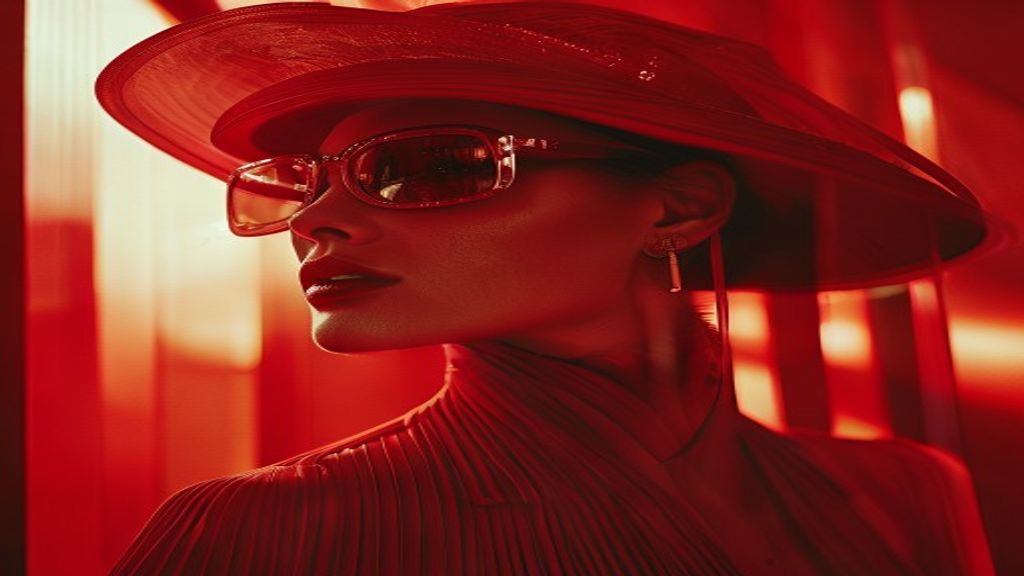
Plate · Meryl Streep Takes ‘The Devil Wears Prada 2’ From Green Spotted Satin to Red Patent in New York: A Sartorial Manifesto
The fashion world, a crucible of whispers and seismic shifts, holds its breath. News from the cinematic ateliers confirms the long-anticipated return of a titan: Meryl Streep, reprising her iconic role as Miranda Priestly in ‘The Devil Wears Prada 2’. But this isn't merely a sequel; it is a sartorial revolution, a profound re-evaluation of power, presence, and the very fabric of an icon. The indelible image of Priestly, once encapsulated by a certain 'green spotted satin' – a relic, perhaps, of a more conventional, albeit formidable, era – is now being meticulously dismantled, replaced by the audacious, unyielding gleam of red patent leather. This transformation, sighted amidst the unforgiving yet utterly captivating backdrop of New York City, is not just a costume change; it’s a manifesto.
For those who understand fashion as a language, not merely an aesthetic, this shift speaks volumes. The green spotted satin, a symbol of established, almost archival authority, hinted at a certain predictable luxury, a meticulously curated distance. It was the uniform of a queen secure in her dominion. The red patent, however, is a declaration of war, a defiant embrace of the future, and a visceral assertion of absolute, uncompromised power. It’s a move that transcends mere trend, catapulting Miranda Priestly from a revered institution to an avant-garde disruptor, even within her own legendary narrative.
The Priestly Palimpsest: From Archive to Avant-Garde
The original Miranda Priestly, as immortalized in ‘The Devil Wears Prada,’ was a masterclass in understated ferocity. Her wardrobe, a symphony of Chanel, Valentino, and Prada, was a fortress of impeccable taste. The ‘green spotted satin,’ though a fictional detail, perfectly captured the essence of her formidable yet classic aesthetic – a collection of pieces that were timeless, expensive, and carried the weight of tradition. Her style was aspirational, untouchable, a testament to a certain echelon of luxury fashion that felt both aspirational and terrifyingly out of reach. It was the uniform of an empress who had nothing left to prove, only to maintain.
Yet, even empresses must evolve. In an era where fashion cycles accelerate with dizzying speed, and the very definition of power is being rewritten, a static icon risks becoming a historical footnote. The necessity for Miranda Priestly to shed her former skin is not merely a creative conceit; it is a reflection of the industry she ostensibly controls. To remain relevant, to continue to dictate rather than merely observe, her personal aesthetic must undergo a metamorphosis. This is where the audacious leap from the archival comfort of green spotted satin to the challenging frontier of red patent leather becomes not just logical, but vital.
The Semiotics of Scarlet: Red Patent as a Manifesto
Red, in its purest form, is the color of passion, danger, and unadulterated power. Patent leather, with its high-gloss, almost liquid surface, adds layers of complexity: a hard, reflective shell that deflects rather than absorbs, a futuristic sheen that speaks of control and a certain, almost dangerous, allure. The combination of red and patent leather is a potent cocktail, a visual roar in a world often content with a whisper. It is a fabric choice that screams, rather than suggests, an unyielding presence.
Red patent isn't merely a fabric; it's a declaration, an unyielding assertion of presence. It’s the visual equivalent of a mic drop.
Consider the designers who have historically embraced patent leather with an avant-garde sensibility: Helmut Lang’s minimalist aggression, Comme des Garçons’ deconstructed rebellion, or the architectural precision of Balenciaga under Demna. These are not brands that whisper; they provoke, they challenge, they redefine. Miranda’s adoption of red patent aligns her not with the quiet luxury of established houses, but with the boundary-pushing visionaries, positioning her as a figure who, even in her later career, refuses to be confined by convention. It speaks to a character who might be more ruthless, more exposed, or perhaps, simply more defiantly herself than ever before.
- Power & Authority: An undeniable visual assertion of command.
- Aggression & Allure: A dangerous elegance that captivates and intimidates.
- Futurism & Edge: A rejection of nostalgia for a forward-thinking aesthetic.
- Defiance & Reinvention: A clear break from past sartorial codes.
Streep's Embodiment: The Actress as Auteur of Style
Meryl Streep’s genius lies not just in her ability to portray a character, but to become an architect of their essence. Her performances are deeply empathetic yet fiercely intelligent, allowing her to inhabit roles with a rare authenticity. For Miranda Priestly, Streep didn't just wear the clothes; she imbued them with a specific gravitas, a silent language of power that emanated from every perfectly tailored seam and every dismissive glance. The transformation to red patent is a bold stroke, but it is Streep's unparalleled ability to internalize this new aesthetic that will truly define its impact.
Streep's Miranda doesn't just wear the clothes; she weaponizes them, each seam a strategic move in a high-stakes game.
The synergy between actress, character, and costume designer becomes paramount here. While Patricia Field masterfully crafted the original Miranda’s wardrobe, the vision for DWP2 demands a new, perhaps more subversive, eye. This collaboration will undoubtedly elevate the red patent from a mere material choice to a profound statement on Miranda's evolved psychology and position within the fashion hierarchy. Streep, with her innate understanding of character nuance, will translate the tactile aggression and sleek confidence of the red patent into a compelling human narrative, making the fashion not just a spectacle, but an extension of her very being.
The New York Canvas: A City Transformed by Style
New York City, a character in itself within the original film, serves as the ultimate stage for Miranda Priestly's metamorphosis. The city's relentless energy, its architectural grandeur, and its unforgiving street style are the perfect counterpoint to the bold new aesthetic. Imagine Miranda, a flash of scarlet against the concrete canyons, her red patent trench coat catching the reflection of a thousand hurried taxis, her presence a ripple effect through the city's fashion-conscious denizens. The city, which once seemed to revolve around her established power, now feels electrified by her renewed, more aggressive sartorial stance.
The paparazzi’s lens, a crucial element in documenting celebrity style and influencing global fashion trends, will undoubtedly capture every nuanced detail of this transformation. These images, disseminated instantly across digital platforms, will not only fuel anticipation for ‘The Devil Wears Prada 2’ but will also spark a tangible shift in fashion discourse. From the luxury boutiques of Madison Avenue to the avant-garde showrooms of SoHo, Miranda’s red patent will resonate, challenging perceptions and inspiring a new wave of power dressing that embraces boldness over conventionality. It's an intersection of cinematic narrative and real-world fashion impact, playing out on the world's most iconic stage.
Deconstructing the Silhouette: Key Elements of the Red Patent Aesthetic
The shift to red patent isn't a singular garment choice; it’s a complete overhaul of Miranda’s silhouette and styling philosophy. Where once there was a focus on impeccably tailored wools, silks, and cashmeres, now we anticipate a harder, more defined line, a sculptural quality that speaks to unyielding control. This aesthetic will manifest in several key ways, each element contributing to the overall narrative of a power player who has transcended, not merely adapted, to the times.
- Architectural Trench Coats: Imagine a red patent trench, sharp-shouldered, cinched at the waist, its surface reflecting the urban landscape. It's a garment that commands space, a mobile fortress.
- Thigh-High, Sculptural Boots: Replacing the classic Manolo Blahniks, these boots would be less about delicate luxury and more about a dominant, almost weaponized stride. A second skin of power.
- Minimalist, Edgy Accessories: Gone are the elaborate necklaces. We foresee severe, perhaps geometric, jewelry or a single, striking piece that acts as a focal point. Think stark, modern luxury.
- Sharp, Defined Hair & Makeup: The classic silver bob might be retained, but perhaps styled with a sharper edge. Makeup would be precise, impactful – a bold lip, a defined eye, no room for softness.
- Unexpected Texture Play: The red patent would likely be juxtaposed with unexpected textures – perhaps a chunky knit, a raw silk, or even another, contrasting patent color – to create visual tension and depth.
This is a deliberate departure from the perceived ‘softness’ or conventionality of her past wardrobe. The red patent aesthetic is not about blending in with the elite; it's about standing out, a beacon of defiant individuality in a sea of curated sameness. It’s a challenge to the status quo, even her own.
From the archives of fashion's past, a phoenix rises, clad in the iridescence of unbridled power. This is not evolution; it is revolution.
Concluding Insights: The Enduring Allure of the Avant-Garde Empress
The return of Miranda Priestly, clad in the uncompromising sheen of red patent, is more than just a cinematic event; it’s a cultural touchstone. It signals a shift in the portrayal of female power, moving from an established, almost regal authority to a more aggressive, self-possessed, and undeniably avant-garde stance. This sartorial evolution reflects deeper societal conversations about age, relevance, and the enduring capacity for reinvention.
Meryl Streep, through her masterful embodiment, will once again elevate costume design to a narrative art form, demonstrating how clothing can be a powerful extension of character and thematic depth. The red patent isn't just a bold choice for ‘The Devil Wears Prada 2’; it’s a statement on the future of power dressing, a nod to those who dare to defy expectations and embrace a harder, more defined edge in their personal and professional personas. As the fashion world eagerly awaits the full unveiling of this new Miranda, one thing is clear: her reign, now cloaked in scarlet and gloss, is far from over. It has, in fact, just begun its most audacious chapter yet, forever cementing her as a timeless, yet perpetually evolving, fashion icon.