The Art of Absence: Jenna Ortega & Charli XCX Bring Sculpted Neutrals in Mugler and Simon Carle to ‘The Gallerist’ Sundance Premiere
Jenna Ortega in Mugler and Charli XCX in Simon Carle delivered a masterclass in sculpted neutrals at ‘The Gallerist’ Sundance premiere, redefining red carpet avant-garde with architectural precision.
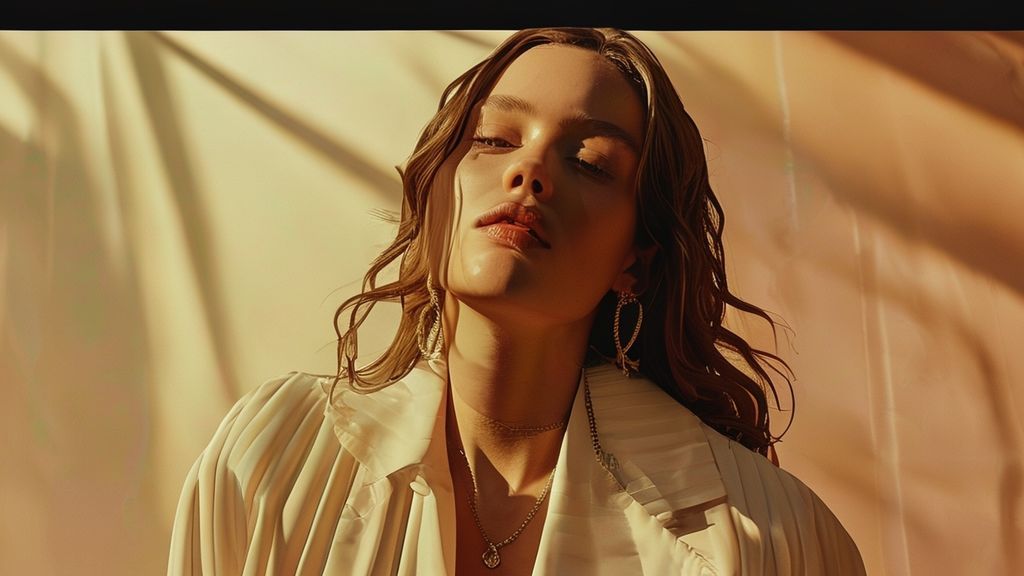
Plate · The Art of Absence: Jenna Ortega & Charli XCX Bring Sculpted Neutrals in Mugler and Simon Carle to ‘The Gallerist’ Sundance Premiere
The Art of Absence: Jenna Ortega & Charli XCX Bring Sculpted Neutrals in Mugler and Simon Carle to ‘The Gallerist’ Sundance Premiere
In the hushed, snow-dusted environs of Park City, where the cinematic avant-garde converges, a different kind of artistry unfolded on the red carpet of ‘The Gallerist’ Sundance premiere. This was not a spectacle of overt glamour, but a meticulously curated exhibition of form, texture, and understated power. Jenna Ortega and Charli XCX, two titans of contemporary culture, eschewed the expected sartorial fanfare, instead opting for a profound exploration of sculpted neutrals, anchoring their presence in the architectural precision of Mugler and the deconstructed elegance of Simon Carle. Their collective statement transcended mere fashion; it was a manifesto on the evolving lexicon of celebrity style, a testament to the potency of restraint, and a bold declaration that true impact often lies in the artful absence of excess.
This red-carpet moment was a masterclass in sartorial curation, a deliberate move away from the saturated hues and shimmering embellishments that often define such events. Ortega and Charli XCX, guided by an astute understanding of their personal brands and the nuanced language of high fashion, presented a unified front of sophisticated minimalism. They proved that the most arresting narratives are sometimes told through the interplay of shadow and light, the subtle undulations of fabric, and the stark, uncompromising beauty of a perfectly sculpted silhouette. This was not just dressing; it was the embodying of a new aesthetic, a quiet revolution whispered through the fabric of their chosen ensembles.
The New Minimalism: Sculptural Forms Take Center Stage
The contemporary fashion landscape is undergoing a profound shift, moving beyond the transient whims of trend cycles towards a more enduring appreciation for structure, materiality, and an almost brutalist elegance. This 'new minimalism' is not about austerity, but about amplification through reduction – stripping away the superfluous to reveal the essential beauty of design. It’s a philosophy perfectly encapsulated by the sculpted neutral palette, where color takes a backseat to form, allowing the inherent power of the silhouette and the tactile quality of the fabric to command attention. At Sundance, Ortega and Charli XCX became its most compelling proponents, translating this runway phenomenon into a red-carpet reality.
The appeal of sculpted neutrals lies in their inherent versatility and timelessness. These are garments that speak of intellectual rigor and quiet confidence, eschewing the flash-in-the-pan for lasting resonance. They are a canvas upon which light plays, revealing the intricate construction, the precise tailoring, and the intentionality behind every fold and seam. For an event like Sundance, steeped in artistic integrity and intellectual discourse, such a sartorial choice felt not only appropriate but profoundly resonant. It signaled a deeper engagement with the craft of fashion, mirroring the meticulous efforts behind the cinematic narratives being celebrated.
Jenna Ortega: Mugler's Architectural Poise Reimagined
Jenna Ortega, a figure synonymous with a brooding, sophisticated edge, arrived in a Mugler ensemble that was a profound homage to the house’s legacy of empowered, body-conscious design, yet filtered through a decidedly contemporary lens. Her look was a study in monochromatic mastery, a deep charcoal or obsidian that absorbed light, emphasizing the architectural lines of the garment. It was a Mugler, yes, but not the overt theatrics of archival pieces; rather, it was a distillation of their core principles – precision, structure, and an almost futuristic sensuality – rendered in a way that felt both formidable and intimately modern.
The dress, or perhaps a tailored two-piece, featured an exquisitely sculpted bodice, potentially crafted from a structured neoprene or a dense, technical wool that allowed for a rigid yet fluid form. The shoulders were sharp, almost blade-like, creating a powerful horizontal line that contrasted with a cinched waist and a silhouette that either fell into a sleek column or subtly flared with an unexpected architectural detail. There was an intentionality in every seam, every curve, speaking to a meticulous craftsmanship that is the hallmark of Mugler’s enduring appeal. This was not about showing skin, but about celebrating the body through the art of concealment and revelation, a powerful interplay of tension and release.
"Ortega’s Mugler wasn't merely a dress; it was a sartorial sculpture, a testament to the enduring power of form over fleeting embellishment."
Her styling was equally considered. Hair, perhaps pulled back severely to highlight the neckline and shoulders, or styled with a minimalist wave, ensured the focus remained on the garment’s structure. Minimalist jewelry, if any, served only to punctuate, not detract. The overall effect was one of formidable elegance, a quiet confidence that resonated with Ortega’s enigmatic screen presence. It was a bold statement that she is not merely an actress, but a fashion arbiter, capable of interpreting iconic design houses with a fresh, individualistic perspective.
Charli XCX: Simon Carle's Deconstructed Elegance
Complementing Ortega’s controlled precision, Charli XCX, the undisputed queen of avant-pop and a consistent disruptor of fashion norms, presented a vision of deconstructed elegance in Simon Carle. This was a masterclass in informed asymmetry and textural interplay, a look that celebrated the art of the 'unfinished' or the 'reimagined'. Carle, a designer who, one might infer, operates at the fringes of conventional design, creating pieces that challenge perception, found the perfect muse in Charli’s fearless aesthetic.
Charli’s ensemble was a symphony of muted tones – perhaps an ecru, a slate grey, or a deep taupe – rendered in fabrics that spoke of tactile luxury: perhaps raw silk, textured linen blends, or even a subtly distressed wool. The silhouette was less about rigid structure and more about artful drape and unexpected cut-outs. Imagine a blazer, meticulously tailored on one side, yet deconstructed on the other, revealing layers or an exposed seam that became part of the design. Trousers might have featured an asymmetric hem or a subtle pleating that created movement and visual intrigue. This was fashion as conceptual art, where garments are not just worn, but experienced.
"Charli XCX in Simon Carle is a testament to fashion as fearless experimentation, where deconstruction becomes the ultimate form of elegance."
The beauty of this Simon Carle creation on Charli was its ability to feel both utterly contemporary and deeply personal. It resonated with her artistic identity – subversive, experimental, and always pushing boundaries. Accessories would have been minimal, perhaps a single, sculptural earring or an unconventional bag, allowing the complexity of the clothing to shine. Her hair and makeup would have mirrored this ethos: perhaps a slicked-back, wet-look style or a deliberately undone aesthetic, enhancing the raw, artistic sensibility of the ensemble. Charli XCX, ever the style provocateur, proved that true luxury lies not in ostentation, but in intellectual design and fearless self-expression.
The Dialogue of Contrasts: Mugler vs. Carle
The juxtaposition of Ortega’s Mugler and Charli XCX’s Simon Carle at ‘The Gallerist’ premiere created a compelling dialogue on the red carpet. While both embraced the sculpted neutral aesthetic, their interpretations were distinct, reflecting the unique design philosophies of their chosen houses and their individual style personas. Ortega’s Mugler was about controlled power, precise lines, and a celebration of the body through meticulous tailoring and structured forms. It was a statement of formidable, almost architectural, elegance.
Charli XCX’s Simon Carle, conversely, spoke to a more fluid, deconstructed power. It was about challenging conventional notions of perfection, embracing asymmetry, and finding beauty in the artful unraveling of traditional forms. Yet, both looks shared a common thread: an unwavering commitment to a sophisticated neutral palette that allowed the intricate design and textural richness of the garments to take precedence. They demonstrated that ‘neutral’ is far from mundane; it is a profound canvas for artistic expression, capable of conveying myriad moods and messages.
The Power of the Palette: Beyond Beige
The term 'neutral' often conjures images of blandness, but the ensembles worn by Ortega and Charli XCX vehemently refuted this misconception. Their chosen palettes – ranging from deep charcoal and obsidian to nuanced ecru and slate – were anything but passive. These were shades that possessed an inherent depth, capable of absorbing and reflecting light in ways that emphasized the sculptural qualities of the garments. The texture of the fabrics, whether a dense wool, a crisp poplin, or a subtly slubbed silk, added another layer of complexity, preventing the looks from appearing flat.
Consider the psychological impact of these colors. Black and charcoal evoke sophistication, authority, and timelessness. Ecru and off-white speak to purity, understated luxury, and a refined sensibility. When combined with sculpted forms, these hues become dynamic, allowing the interplay of shadow and highlight to define the contours of the body and the garment. This strategic use of color, or rather, the strategic absence of vibrant color, elevates the clothing to an almost artistic plane, where every fold, every seam, and every architectural detail is brought into sharp focus.
Fashion as Narrative: 'The Gallerist' and Beyond
In the context of ‘The Gallerist’ premiere, a film whose title itself evokes themes of art, curation, and perhaps the hidden depths within seemingly simple forms, Ortega and Charli XCX’s fashion choices felt incredibly pertinent. Their looks were, in essence, wearable art installations, curated with the same discerning eye that a gallerist applies to an exhibition. They challenged the viewer to look beyond the superficial, to appreciate the craftsmanship, the conceptual thought, and the subtle narratives woven into the fabric of their ensembles.
Celebrity styling, particularly at high-profile events, is no longer just about looking 'good'. It is a potent form of communication, a meta-narrative that speaks volumes about the individual, the film, and the broader cultural zeitgeist. Ortega and Charli XCX, with the guidance of their visionary stylists, leveraged this platform to make a profound statement about the evolving nature of red-carpet glamour. They championed a vision where intellectual design, tactile luxury, and a nuanced understanding of form supersede fleeting trends, cementing their status as true fashion vanguard.
Key Elements Defining Sculptural Neutrals:
- Architectural Silhouettes: Emphasis on strong lines, precise angles, and defined forms.
- Monochromatic Palette: A focus on single, deep neutral tones (black, charcoal, ecru, taupe) to enhance form.
- Luxurious Textures: Use of rich, often unexpected fabrics like neoprene, structured wools, raw silks, or technical blends.
- Minimalist Styling: Hair, makeup, and accessories are kept understated to allow the garment to be the focal point.
- Strategic Draping & Cut-outs: Thoughtful manipulation of fabric to create dimension and unexpected visual interest.
Concluding Insights: The Future of Red Carpet Avant-Garde
The ‘Gallerist’ premiere at Sundance, marked by the distinctive stylistic choices of Jenna Ortega and Charli XCX, offered a compelling glimpse into the future of red-carpet fashion. It underscored a growing appetite for clothing that is not just aesthetically pleasing but intellectually engaging, challenging the conventions of traditional glamour. Their embrace of sculpted neutrals from Mugler and Simon Carle was a powerful declaration that true impact lies in the art of sophisticated restraint, in the meticulous celebration of form, and in the nuanced interplay of texture and shadow.
These looks will undoubtedly influence upcoming fashion cycles, encouraging a deeper appreciation for architectural design, the versatility of neutral palettes, and the power of a well-considered silhouette. Ortega and Charli XCX have cemented their positions not just as performers, but as pivotal figures in the evolving narrative of high fashion, demonstrating that the most memorable statements are often the ones whispered with profound clarity, rather than shouted with overt extravagance. Their Sundance moment was a testament to the enduring allure of avant-garde sensibilities, proving that the art of absence can, indeed, create the most impactful presence.