The Unfolding Canvas: Rei Kawakubo's Seminal Solo Art Fair Debut in New York
Fashion's avant-garde high priestess, Rei Kawakubo, transcends the runway, unveiling her inaugural solo art fair presentation in New York, a profound exploration of form and anti-fashion.
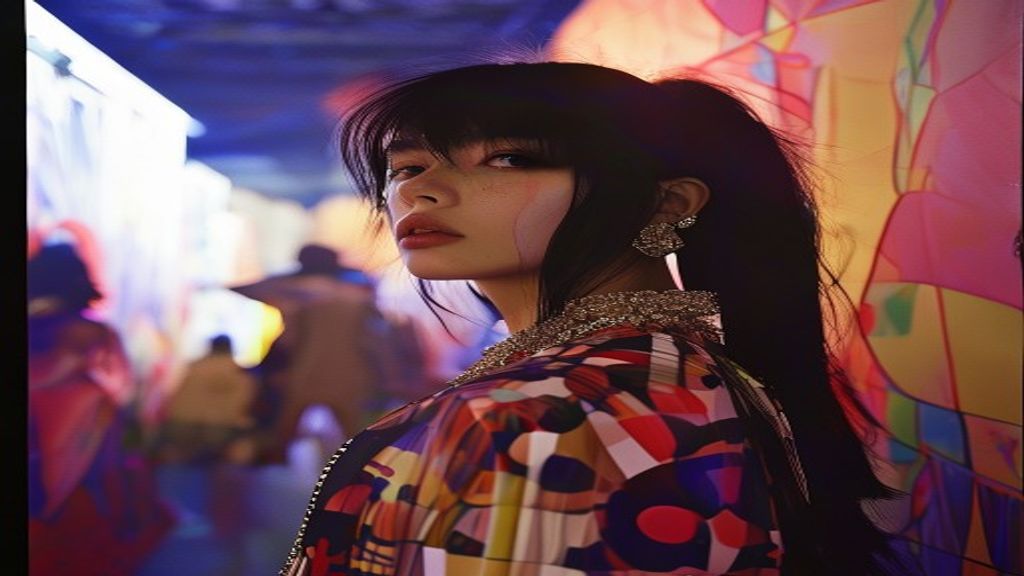
Plate · The Unfolding Canvas: Rei Kawakubo's Seminal Solo Art Fair Debut in New York
In the annals of fashion, few names resonate with the seismic force and uncompromising vision of Rei Kawakubo. For over half a century, her label, Comme des Garçons, has been less a brand and more a philosophical treatise on clothing, form, and the very essence of existence. Her creations, often described as 'anti-fashion,' intentionally eschew conventional notions of beauty, wearability, and commercial appeal, instead exploring themes of absence, discomfort, proportion, and the human condition with unparalleled intellectual rigor. Now, in a pivotal moment that transcends the traditional runway and gallery space, Kawakubo stages her first-ever solo art fair presentation in the heart of New York City, an audacious declaration that firmly positions her oeuvre within the highest echelons of contemporary art.
This unprecedented venture marks a significant chapter in the ongoing dialogue between fashion and art, a convergence Kawakubo has championed and embodied throughout her illustrious career. It is not merely an exhibition but a profound re-contextualization, inviting a discerning audience to experience her work not as garments to be worn, but as conceptual sculptures, potent installations, and profound meditations on the human experience. The decision to present within an art fair setting, rather than a conventional museum retrospective, speaks volumes about Kawakubo's desire to challenge established hierarchies and to engage directly with the contemporary art market's discourse on value, meaning, and aesthetic provocation. It cements her status not just as an iconic fashion designer but as a formidable conceptual artist.
The Architect of Anti-Fashion's New Frontier
Rei Kawakubo’s journey began in 1969, establishing Comme des Garçons with a radical premise: to challenge, disrupt, and reinvent. From her initial monochromatic, distressed collections of the early 1980s, which earned her the moniker 'Hiroshima chic,' to the later, increasingly abstract and sculptural forms, Kawakubo has consistently pushed the boundaries of what clothing can be. Her design philosophy is rooted in a profound questioning of norms – of gender, of beauty, of the body itself. She famously stated, “I started Comme des Garçons because I wanted to create something I didn't have.” This relentless pursuit of the new, the unseen, and the unarticulated has forged a singular path, making her an unparalleled figure in avant-garde fashion.
This debut solo presentation is not merely an extension of her runway shows; it is a distillation of her lifelong artistic pursuit, a new chapter in her relentless interrogation of form and function. It provides a unique opportunity to witness the raw, unfiltered essence of her creative process, liberated from the temporal constraints and commercial pressures inherent in seasonal collections. The presentation serves as a testament to the enduring power of her vision, demonstrating how her design philosophy transcends ephemeral trends to achieve a timeless, universal resonance.
Beyond the Garment: Sculptures for the Soul
Visitors to the clandestine space are greeted not by racks of clothing, but by a series of arresting, sculptural forms that defy easy categorization. These are not garments designed for the body in any conventional sense, but rather three-dimensional manifestations of Kawakubo’s intricate thought process. Each piece, whether a bulbous, padded silhouette that distorts the wearer’s natural form, a meticulously draped assemblage of unconventional materials, or a garment seemingly fused with its own environment, demands contemplation. They are dialogues in fabric and space, challenging the viewer to reconsider the relationship between object, body, and environment. The textures are often raw, the colors muted or stark, drawing attention to form and absence rather than embellishment.
“My intention is to create something new, not to make clothes.” – Rei Kawakubo
The presentation showcases pieces that blur the lines between wearable art and pure sculpture. One might encounter a garment crafted from industrial felt, its seams left exposed, celebrating the construction process itself. Another could be a voluminous creation that engulfs the body, transforming the wearer into an abstract shape, forcing a re-evaluation of the human silhouette. These are not static museum pieces; they pulsate with a quiet energy, inviting viewers to walk around them, to inspect their intricate details, and to absorb their profound conceptual weight. It is an experience that engages intellect and emotion, rather than merely aesthetic appreciation.
A Dialogue Between Canvas and Couture
The migration of Kawakubo's work from the exclusive runways of Paris to the democratic, yet discerning, arena of an art fair is a deliberate and potent statement. It solidifies a truth long acknowledged by connoisseurs: that Comme des Garçons collections are, in their purest form, conceptual art installations, each show a performance, each piece a sculpture. This presentation invites a broader artistic discourse, placing her alongside contemporary artists whose mediums may differ but whose intellectual rigor and boundary-pushing ethos align perfectly. It challenges the institutional gatekeepers of both worlds, asserting that artistic merit transcends traditional categorizations.
Historically, the lines between fashion and art have often been blurred, with designers like Elsa Schiaparelli collaborating with Salvador Dalí, or Yves Saint Laurent drawing inspiration from Piet Mondrian. However, Kawakubo's approach is distinct; she doesn't merely draw inspiration from art, she creates art through the medium of clothing, redefining the very parameters of fashion innovation. Her work compels us to ask: where does a garment end and an artwork begin? This exhibition provides a compelling answer, asserting that for Kawakubo, the two are inextricably linked, manifestations of a singular, uncompromising creative spirit.
The Power of Discomfort and the Beauty of the Unseen
Kawakubo has always embraced discomfort as a catalyst for creation. Her designs often challenge the wearer, physically and psychologically, to confront preconceived notions of comfort and aesthetics. This art fair presentation amplifies this philosophy, presenting pieces that are less about adornment and more about confrontation. They are designed to provoke thought, to disrupt the viewer's expectations, and to open new avenues of perception. The absence of traditional mannequins, replaced by bespoke sculptural stands, further emphasizes the pieces as standalone entities, independent of the human form they once distorted.
The beauty in Kawakubo's work often lies not in overt prettiness, but in its intellectual provocation, its stark honesty, and its capacity to reveal new perspectives. It is a beauty born from the rejection of the obvious, a celebration of the unconventional. Themes frequently explored in her work, and vividly present in this exhibition, include:
- Reinvention of the human silhouette and proportion.
- The interplay of positive and negative space, absence and presence.
- The subversive beauty of the 'unbeautiful' or imperfect.
- The psychological impact of clothing on identity and perception.
- Deconstruction and reconstruction of societal norms and expectations.
- The celebration of creation and destruction as parallel forces.
Each piece is a testament to her unwavering commitment to an aesthetic vision that prioritizes intellectual engagement over commercial appeal, a rare and precious commodity in the modern luxury landscape.
New York's Cultural Crucible: A Fitting Stage
New York City, with its vibrant, eclectic art scene and its history as a melting pot of avant-garde expression, provides an impeccably fitting backdrop for Kawakubo’s seminal presentation. It is a city that understands and celebrates the audacious, the groundbreaking, and the fiercely independent spirit that defines her work. The energy of the city, constantly evolving and pushing boundaries, mirrors the very essence of Comme des Garçons. This strategic choice of venue ensures that the conversation around her work expands beyond fashion's inner sanctum, engaging a diverse audience of collectors, critics, and art enthusiasts who might not typically frequent a fashion show.
The city’s robust infrastructure of galleries, museums, and alternative art spaces makes it a natural home for such a boundary-pushing endeavor. The art fair circuit, in particular, offers a dynamic, concentrated environment for critical discourse and discovery, allowing Kawakubo's work to be viewed through an entirely new lens, stripped of the runway's theatricality and presented solely on its artistic merit. This engagement with the New York art scene further legitimizes fashion as a serious artistic medium, fostering a cross-pollination of ideas that benefits both industries.
Legacy Redefined: From Runway to Repertoire
This solo art fair debut is more than a singular event; it is a re-contextualization of Rei Kawakubo’s entire body of work. It elevates her from an iconic fashion designer to a multidisciplinary artist whose impact reverberates across cultural landscapes. It challenges the often-artificial divide between 'fashion' and 'art,' asserting that true creativity knows no such boundaries. Her pieces, once seen primarily as garments, are now unequivocally acknowledged as significant contributions to the canon of contemporary sculpture and conceptual art.
“Kawakubo forces us to question what we wear, what we see, and what we believe to be beautiful.” – A leading art critic.
The presentation establishes a precedent for how future generations might view and categorize the work of influential designers. It encourages curators, collectors, and scholars to consider fashion not just as a reflection of societal trends but as a powerful medium for intellectual and artistic expression. This move by Kawakubo solidifies her legacy as a visionary who not only transformed the way we dress but also fundamentally altered our perception of what clothing can represent. It is a testament to the enduring power of her vision, which continues to inspire and provoke, long after the seasonal collections have faded from memory.
Concluding Insights
In an era obsessed with fleeting trends and commercial viability, Rei Kawakubo remains a steadfast beacon of artistic integrity and radical innovation. Her solo art fair presentation in New York is not merely a moment of triumph; it is a profound declaration of her enduring relevance and her rightful place among the most influential conceptual artists of our time. It is a powerful affirmation that true luxury fashion lies not in ostentation, but in intellectual depth, uncompromising vision, and the courage to perpetually challenge the status status quo.
As the fashion and art worlds continue to converge, Kawakubo's pioneering spirit lights the path forward, ensuring her legacy as an unparalleled visionary, whose work will continue to provoke, inspire, and redefine the very fabric of our cultural understanding. This presentation is a call to arms for creativity, a reminder that the most profound expressions often emerge from the discomfort of challenging established norms. It is a rare and precious opportunity to witness a master at work, not just designing clothes, but sculpting the very future of aesthetic thought.