Beyond the Baseline: Naomi Osaka's 'Fashion Show' and the Subversive Allure of Facial Tattoos at Roland Garros
Naomi Osaka redefines French Open fashion with bold facial tattoos and a disruptive aesthetic, challenging traditional tennis attire boundaries.
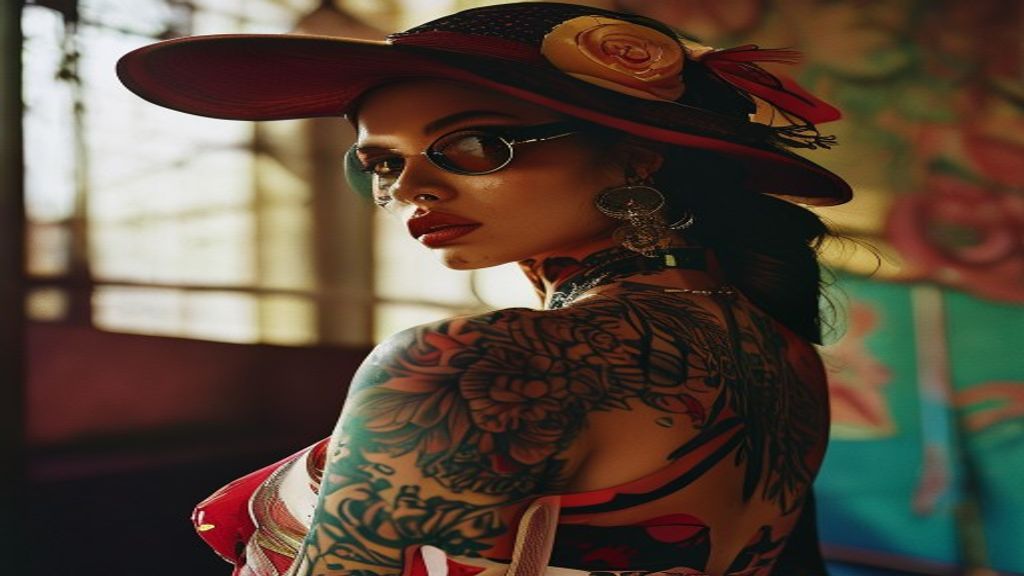
Plate · Beyond the Baseline: Naomi Osaka's 'Fashion Show' and the Subversive Allure of Facial Tattoos at Roland Garros
In the rarefied air of Roland Garros, where tradition often dictates sartorial nuance, a seismic shift occurred. Naomi Osaka, a titan of the tennis court and an increasingly potent force in the fashion firmament, didn’t merely arrive; she *unveiled*. Her presence at the French Open transcended sport, morphing into an audacious, living art installation, a ‘fashion show’ that commenced not on a conventional runway, but on the hallowed ochre clay, culminating in the subversive allure of facial tattoos. This was not just a player making an entrance; this was an artist declaring a new manifesto, etching an indelible mark not only on the game but on the very fabric of contemporary style.
The murmurs that ripples through the stands and across digital feeds were not solely about her forehand or her formidable serve. They were about a visual lexicon, a daring reinterpretation of the athlete's persona. Osaka, with her characteristic quiet intensity, has consistently demonstrated an innate understanding of the power of visual storytelling. But this moment, this particular iteration of her public self, felt different. It was a conscious, deliberate rupture with the predictable, a bold foray into the avant-garde that demanded attention, sparked debate, and ultimately, redefined the parameters of what constitutes ‘fashion’ within the rigid confines of elite athletics. Her aesthetic choices were not fleeting trends; they were pronouncements, carefully calibrated to provoke, to inspire, and to challenge.
The Canvas of Disruption: Decoding Osaka's Facial Adornments
The most striking element of Osaka’s Roland Garros ensemble, beyond the meticulously curated apparel, was undoubtedly the audacious embrace of facial tattoos. In a sport often characterized by pristine, almost sterile aesthetics, these subtle yet profound markings served as a radical declaration. They were not mere embellishments; they were an extension of her identity, a body art narrative etched onto the most public and intimate canvas – her face. Each delicate line, each symbolic motif, whispered tales of heritage, resilience, and an unyielding commitment to personal style that transcends commercial dictates.
This move placed Osaka squarely at the intersection of haute couture's boundary-pushing spirit and the raw, unedited authenticity of street culture. Facial tattoos, historically charged with cultural significance and often associated with subversion, became, under Osaka’s gaze, a powerful fashion statement. They challenged the very notion of 'professional' appearance, dismantling archaic expectations of decorum and ushering in an era where self-expression, in its most unfiltered form, becomes the ultimate luxury. It was a masterclass in avant-garde aesthetics, a silent scream against conformity that resonated with a generation yearning for genuine representation.
Her face, a testament to raw, unedited self-expression, became the most compelling runway at Roland Garros.
The implications were vast. In an industry increasingly grappling with questions of authenticity and individuality, Osaka offered a potent answer. Her tattoos were not an afterthought; they were the focal point, drawing the eye, inviting contemplation, and forcing a re-evaluation of beauty standards within sports and fashion alike. They spoke to a burgeoning trend where personal narrative is paramount, where the body itself becomes a medium for artistic declaration, blurring the lines between athlete, artist, and style icon.
Beyond the Baseline: A New Era of Athletic Sartorialism
While the facial tattoos commanded immediate attention, they were merely one facet of a meticulously constructed vision. Osaka’s entire tennis fashion narrative at the French Open was a testament to a burgeoning era of athletic couture. Gone were the days of purely functional performance wear. In its place, Osaka presented a sophisticated fusion of luxury sportswear and cutting-edge design, elevating the athletic ensemble to a realm of high fashion innovation.
Her choices were never accidental. Each garment, from the structural lines of her dresses to the subtle textures of her accessories, spoke volumes. It wasn't merely about wearing designer labels; it was about curating a look that reflected her multifaceted identity. We witnessed the seamless integration of technical fabrics with couture details, a testament to the evolving dialogue between the athletic and the aesthetic. This wasn't athleisure as a casual trend; this was athletic couture as a deliberate, powerful fashion innovation, designed to perform on court while simultaneously making an unequivocal statement off it.
The styling was impeccable, demonstrating an acute awareness of proportion, color, and silhouette. It spoke to a future where sportswear is not just practical but profoundly expressive, where the athlete is not just a competitor but a muse, a canvas for fashion narrative. Osaka, in essence, was crafting a new lexicon for designer collaborations within the sports world, pushing brands to think beyond mere logos and towards holistic, emotionally resonant fashion statements.
The 'Fashion Show' Unpacked: A Curated Rebellion
The term ‘fashion show’ attributed to Osaka’s appearances was not hyperbole; it was an apt descriptor for a series of meticulously orchestrated moments. Every stride onto the court, every pre-match press conference, every post-game interview became a segment of a larger runway spectacle. Her entrances were not just walks; they were carefully choreographed performances, imbued with an unspoken theatricality that commanded the gaze of the global fashion elite and casual observers alike.
Consider the deliberate choices: the juxtaposition of minimalist silhouettes with unexpected bursts of color, the subtle yet impactful statement accessories that punctuated her look, the effortless way she carried herself, transforming the court into her personal stage. This was editorial styling brought to life, a living mood board that showcased a mastery of visual communication. Osaka wasn't just wearing clothes; she was embodying a fashion narrative – one of strength, vulnerability, and unapologetic individuality.
Her rebellion was curated, precise, and profoundly effective. It wasn't about shock value for its own sake, but about articulating a deeper truth: that identity, even in the most high-stakes environments, can and should be expressed without compromise. This was a masterclass in trendsetting, an example of how true style icons don't follow trends; they forge them, laying the groundwork for future fashion evolution.
Every stride was a deliberate step on an invisible catwalk, redefining the very concept of a Grand Slam entrance.
The impact extended beyond the immediate visual. It sparked conversations about the intersection of sport and art, about the role of personal expression in public life, and about the power of an individual to shift cultural paradigms. Osaka, through her sartorial choices, became a catalyst for dialogue, inviting spectators to look beyond the score and into the deeper meaning of her presence.
Echoes of Subversion: Historical Contexts in Fashion
Osaka’s bold stance at Roland Garros is not an isolated incident but rather a resonant echo within the grand tapestry of fashion history. Throughout the annals of style, there have always been figures who dared to challenge the prevailing norms, whose sartorial choices became potent symbols of cultural impact and style evolution. From the flappers of the 1920s who shed corsets and embraced liberation, to the punk movement of the 1970s that weaponized safety pins and ripped fabrics as a statement against establishment, rebellious fashion has consistently served as a barometer of societal change.
Think of Vivienne Westwood’s anarchic brilliance, Alexander McQueen’s theatrical provocations, or even the early pioneers of street style who democratized fashion from the top-down. These were individuals and movements that understood that clothing and adornment are not merely utilitarian; they are powerful tools for communication, for resistance, and for forging new identities. Osaka, with her facial tattoos and elevated sportswear aesthetic, joins this illustrious lineage of fashion subversion. She is not just breaking a dress code; she is dismantling an ideology, proving that the athlete’s body is as much a site for artistic expression as any canvas or sculpture.
Her actions underscore a crucial point: fashion, at its most potent, is a mirror reflecting and shaping the zeitgeist. Osaka’s fashion forward approach is a contemporary iteration of this timeless dynamic, demonstrating that pushing boundaries is not just about novelty, but about forging deeper connections between individual expression and collective consciousness. She is, in essence, writing a new chapter in the ongoing narrative of style as a force for change.
The Commercial & Cultural Ripples: Influence and Industry Shift
The reverberations of Naomi Osaka’s ‘fashion show’ extend far beyond the clay courts, sending significant ripples through the global fashion landscape and impacting the very mechanics of fashion marketing. Her choices are a masterclass in influencer marketing, demonstrating how an authentic, personal statement can resonate more powerfully than any meticulously planned campaign. Brands, both within luxury brands and the broader sportswear sector, are acutely aware of her immense power as a trendsetter.
Osaka’s willingness to embrace such a distinctive and personal aesthetic signals a maturation in the symbiotic relationship between athletes and fashion. It moves beyond mere brand endorsements to a more profound fashion partnership, where the athlete is not just a spokesperson, but a co-creator, a muse, and a visionary. This shift is crucial for future fashion trends, as consumers increasingly demand authenticity and narrative over overt commercialism. Her approach champions inclusive fashion by celebrating individuality, appealing to a diverse youth culture that values self-expression above all else.
Her French Open statement amplifies a broader conversation about the democratization of luxury and the evolving definition of what constitutes 'premium'. When an athlete of Osaka's caliber, with her global reach and influence, makes such a bold personal statement, it validates and normalizes unconventional beauty and style choices. This directly impacts street style trends, filtering down to the masses and inspiring a generation to embrace their own unique aesthetics without fear of judgment. It’s a powerful testament to the fact that true luxury lies in the freedom to be unequivocally oneself.
In a single sartorial gesture, Osaka didn't just play the game; she rewrote the dress code for an entire generation.
The cultural impact is undeniable. Osaka is not just selling products; she is selling a philosophy – one of empowerment, self-acceptance, and the courage to stand apart. This makes her an invaluable asset for any brand seeking to connect with a contemporary audience that prioritizes values and authenticity. Her style legacy is being forged not just on the court, but through every considered fashion choice she makes, cementing her status as a profound cultural phenomenon.
Concluding Insights: The Future of Fashion and Identity
Naomi Osaka’s presence at the French Open transcended the mere act of playing tennis; it was an artistic intervention, a powerful declaration in the ongoing dialogue between sport, art, and identity. Her ‘fashion show,’ punctuated by the audacious elegance of facial tattoos, serves as a potent harbinger of future fashion trends, signaling a world where personal expression reigns supreme, unburdened by antiquated notions of conformity.
She has not merely pushed the boundaries of tennis fashion; she has obliterated them, demonstrating that the athlete’s body is a canvas, a statement, and a site of profound cultural meaning. Her style legacy will undoubtedly be one of courage and innovation, inspiring countless individuals and brands to embrace authenticity and challenge the status quo. Osaka reminds us that true fashion forward thinking is not about adhering to trends, but about creating them, about daring to be different, and about understanding that every choice, from a facial tattoo to a Grand Slam ensemble, contributes to a larger, more compelling fashion narrative.
As the fashion world continues its relentless quest for novelty and meaning, it would do well to look to figures like Naomi Osaka. She embodies a crucial truth: that the most compelling style emerges not from imitation, but from a deeply personal, often subversive, engagement with self. Her Roland Garros moment was more than a fleeting spectacle; it was a blueprint for how to command attention, provoke thought, and ultimately, redefine the very essence of modern glamour in an increasingly interconnected and visually driven world. It was, quite simply, a grand slam of style, served with unparalleled conviction and an unforgettable flourish.