Martin Wong: The Cartographer of Desire, Fashion's Unseen Oracle
Martin Wong, the enigmatic chronicler of New York's forgotten margins, re-emerges at P·P·O·W and Wrightwood 659, asserting his indelible mark on art and fashion's avant-garde.
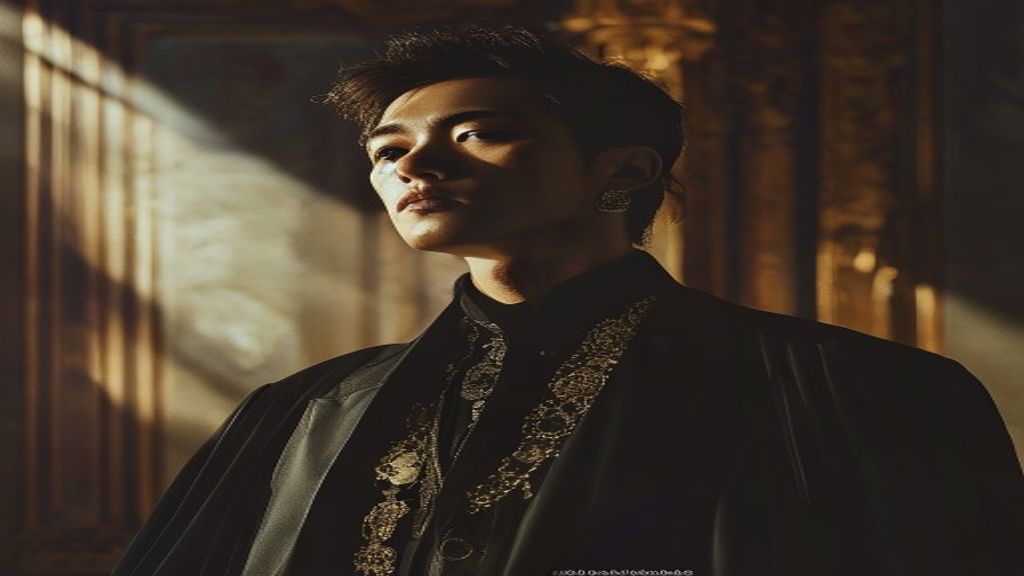
Plate · Martin Wong: The Cartographer of Desire, Fashion's Unseen Oracle
In the pantheon of artists who redefined the urban vernacular, Martin Wong stands as a singular, almost mythic figure. A cartographer of desire and a high priest of lowbrow aesthetics, Wong's oeuvre, once relegated to the periphery, now commands the spotlight in two concurrent, revelatory exhibitions: 'Martin Wong: Malicious Mischief' at P·P·O·W in New York and 'Martin Wong: Painting Is Free' at Wrightwood 659 in Chicago. As a premier fashion publication, we recognize in Wong not merely a painter, but a visionary whose audacious spirit and meticulous eye for the overlooked continue to resonate with the subversive currents of contemporary design and sartorial expression. His work, a brutal yet tender exposé of queer life, urban decay, and the transient beauty of the marginalized, offers a lexicon for understanding the very fabric of modern identity, making him an unwitting, yet profound, muse for avant-garde fashion.
The Alchemist of Urbanity: Decoding Wong’s Visual Semiotics
Wong’s canvases are not merely paintings; they are meticulously constructed worlds, rich with a visual semiotics that blends the grit of the street with the elegance of classical calligraphy. Born in Portland, Oregon, and raised in San Francisco, Wong found his true muse in the crucible of 1970s and 80s New York City, particularly the Lower East Side. Here, amidst the crumbling tenements and vibrant graffiti, he forged an aesthetic language that was simultaneously raw and refined, a testament to his unique ability to elevate the prosaic into the poetic. His narratives, often deeply personal, chronicled the lives of his neighbors, friends, and lovers – a tapestry woven from the threads of queer communities, drag queens, hustlers, and incarcerated men. He was an ethnographer of the overlooked, his brushstrokes meticulously recording the forgotten histories etched into brick walls and the fleeting moments of human connection in a landscape of desolation. This commitment to documenting authentic, often challenging, realities is a cornerstone of his enduring appeal, mirroring fashion's own perennial quest for genuine expression beyond superficial glamour.
A Palette of the Proletariat and Poetic Script
Wong’s color palette is distinct: a moody symphony of deep blues, ochres, fiery reds, and the stark contrast of urban grey. He rendered brickwork with an almost obsessive fidelity, each mortar line a testament to time and neglect, yet imbued with an unexpected warmth. His integration of Chinese calligraphy, graffiti tags, and American Sign Language (ASL) into his compositions transcended mere stylistic appropriation; it was a deliberate act of communication, a testament to his belief in the power of alternative languages. These visual lexicons, often seen as 'lowbrow' forms, were meticulously elevated to the status of haute couture in his hands, transforming the mundane into profound statements on identity and belonging. The tactile quality of his surfaces, often thick with impasto, evokes the very textures of the urban environment – cracked pavements, worn denim, the patina of time on a leather jacket. This celebration of texture and material speaks directly to the artisan's touch revered in luxury fashion.
The Cartography of Desire and Despair
His panoramic cityscapes, often depicted from a slightly elevated, almost voyeuristic perspective, are not just architectural renderings; they are psychological maps of human longing and societal neglect. Buildings become characters, their windows eyes peering into stories untold. The omnipresent fire escapes, a signature motif, symbolize both escape and entrapment. Through these intricate landscapes, Wong articulated the profound isolation and the fierce resilience of individuals navigating a city that could be both brutal and beautiful. His work is a masterclass in visual storytelling, where every detail, from a lone figure on a rooftop to a meticulously painted constellation, contributes to a larger narrative of desire, loss, and the enduring human spirit. This narrative depth is what designers often strive for in their collections, aiming to tell a story beyond mere garments.
"Wong transmuted the detritus of urban life into a new kind of visual poetry, a radical act of aesthetic alchemy that continues to challenge our perceptions of beauty and value."
Fashion’s Unseen Muse: Wong’s Resonance in Contemporary Design
The raw, unvarnished honesty of Martin Wong’s vision finds an unexpected yet undeniable echo in the most audacious corners of contemporary fashion. His celebration of the outsider, his meticulous documentation of subcultures, and his fearless embrace of what was once considered 'unfashionable' have become foundational tenets for a generation of designers. The current obsession with streetwear, the deconstructionist movement, and the blurring of gender lines in luxury ready-to-wear all owe a debt to artists like Wong, who dared to find beauty in the unconventional. His influence, though perhaps not explicitly acknowledged on every runway, is palpable in the ongoing dialogue between high art and street culture, in the appropriation of urban iconography, and in the persistent allure of the 'anti-fashion' sentiment that seeks to challenge established norms.
Wong’s Aesthetic Threads in Modern Sartorial Expression:
- Subversive Elegance: The elevation of utilitarian garments and working-class aesthetics, akin to Wong transforming brick walls into art. Think of designers who find haute couture in denim or workwear fabrics.
- Narrative Collections: Designers who craft entire collections around a specific historical period, subculture, or personal narrative, mirroring Wong’s storytelling through series like his 'Prison Paintings' or 'Lower East Side' series.
- Queer Aesthetics & Gender Fluidity: Wong’s unapologetic portrayal of queer life and bodies aligns with the contemporary fashion landscape’s embrace of gender-neutral designs and the celebration of diverse identities on the runway.
- Art as Textile: The direct integration of graffiti, graphic elements, and text into garments, transforming clothing into wearable canvases – a direct parallel to Wong’s use of text and symbols.
- The Power of Authenticity: A return to raw, unpolished beauty and genuine expression, moving away from sanitized perfection, much like Wong's gritty realism.
"His canvases are a sartorial forecast, predicting fashion’s eventual embrace of the dissident, the authentic, and the profoundly human."
The Exhibitions: A Dual Revelation of a Canonized Visionary
The simultaneous presentations at P·P·O·W and Wrightwood 659 are not merely exhibitions; they are pronouncements, cementing Wong's rightful place within the canon of American art. Each institution offers a distinct, yet complementary, lens through which to engage with his complex legacy.
P·P·O·W: Intimacy, Iconography, and the New York Years
P·P·O·W, Wong's long-standing gallery, presents 'Malicious Mischief,' an intimate deep dive into his New York period. This exhibition often highlights the personal narratives, his close ties to the Lower East Side community, and the evolution of his iconic visual vocabulary during his most prolific years. It’s here that one can witness the genesis of his 'Cosmic Debris' series, his powerful depictions of queer love, and his meticulous architectural portraits. The curatorial approach often emphasizes the emotional resonance and the autobiographical threads woven throughout his work, allowing viewers to connect with the artist's lived experience in a profoundly personal way. It’s an exploration of the artist's heart, beating in rhythm with the city's pulse, a raw and beautiful testament to his unique perspective.
Wrightwood 659: A Comprehensive Canon and Retrospective Grandeur
Meanwhile, 'Painting Is Free' at Wrightwood 659 in Chicago offers a more comprehensive, retrospective survey, tracing Wong’s artistic journey from his early days in California to his seminal New York works. This exhibition provides a broader historical context, showcasing the breadth and depth of his experimentation across various mediums and themes. It allows for a holistic understanding of his development, revealing the consistent threads of his artistic philosophy even as his style evolved. The scale of the Wrightwood exhibition underscores the ambition and sheer volume of Wong's output, firmly establishing him as a pivotal figure whose influence extends far beyond the confines of a single gallery or city. It’s a monumental affirmation of his genius, a grand statement on his enduring relevance.
"Together, these exhibitions don't just display art; they resurrect a vision, offering a masterclass in how to find extraordinary beauty in the everyday, the forgotten, and the fiercely individual."
Concluding Insights: The Enduring High Priest of Lowbrow
Martin Wong, who tragically succumbed to AIDS in 1999, left behind an indelible legacy that continues to unfurl its complexities and revelations. He was, and remains, the high priest of lowbrow, not in a derogatory sense, but as a title of honor – one who elevated the vernacular, the marginalized, and the 'unseen' into the realm of high art with unparalleled skill and profound empathy. His work is a timeless statement on the power of observation, the resilience of the human spirit, and the enduring beauty found in authenticity. For the discerning eye of the fashion world, Wong's canvases are not just historical artifacts; they are living mood boards, prophetic blueprints for future collections, and a constant reminder that true style, like true art, transcends superficial trends. It resides in the audacious spirit, the fearless embrace of individuality, and the relentless pursuit of narrative truth. His vision, once a whisper from the fringes, now roars as a clarion call, inviting us to look closer, to feel deeper, and to dress with the same uncompromising integrity that defined his extraordinary life and work. Wong lives on, not just in galleries, but in the very fabric of our evolving aesthetic consciousness, an eternal icon for those who dare to define their own luxury.