Martin Wong, The High Priest of Lowbrow, Lives On: A Fashion Editor's Perspective
Martin Wong's raw, poignant vision, once on the fringes, now commands the center stage, revealing the enduring relevance of his sartorial narratives and urban landscapes.
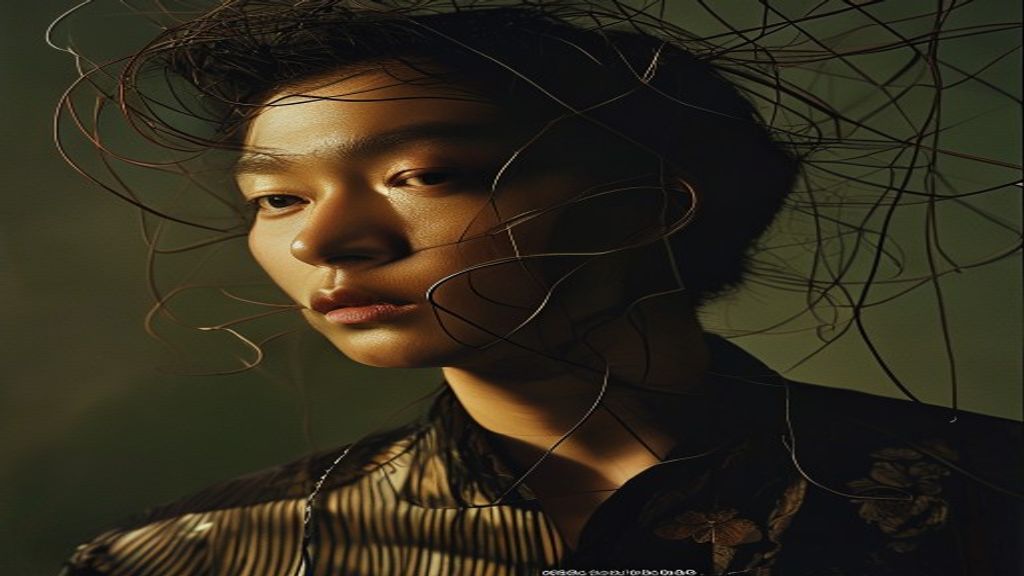
Plate · Martin Wong, The High Priest of Lowbrow, Lives On: A Fashion Editor's Perspective
Martin Wong, The High Priest of Lowbrow, Lives On: A Fashion Editor's Perspective
In the rarefied air of contemporary art, certain voices resonate with an authenticity that transcends fleeting trends, establishing an aesthetic lexicon that remains eternally relevant. Martin Wong, the late visionary painter, is one such voice. His profound impact, often understated during his lifetime, is now unequivocally celebrated across two pivotal exhibitions: P·P·O·W in New York and Wrightwood 659 in Chicago. As a senior fashion editor, I approach Wong's oeuvre not merely as art, but as an expansive narrative of style, identity, and the intricate fabric of human experience. His work, steeped in the gritty elegance of urban life, offers a masterclass in observation, a study in the sartorial grammar of subculture, and an enduring testament to the power of personal vision.
Wong, often dubbed the 'High Priest of Lowbrow,' meticulously documented the unseen threads of society. His canvases are not just paintings; they are meticulously curated collections of moments, gestures, and environments that speak volumes about human connection and isolation. In an industry perpetually seeking the next innovation, Wong's timeless pieces remind us that true originality often stems from a deep, unflinching gaze at the world as it is, transforming the mundane into the magnificent.
The Unvarnished Aesthetic: Wong's Vision as a Stylist
Martin Wong's aesthetic is characterized by a distinctive blend of raw realism and poetic symbolism. His canvases are saturated with the vibrant, often harsh, realities of New York's Lower East Side and the cultural nuances of Chinatown. This visual vocabulary, rich in detail and emotional depth, echoes the meticulous craftsmanship and narrative drive inherent in high fashion. Wong approached his subjects with the precision of a couturier, each brushstroke a deliberate stitch in a larger, more complex design.
From Chinatown to the Bowery: A Visual Lexicon
Wong’s early works, particularly those depicting the bustling streets and stoic storefronts of Chinatown, reveal an artist deeply attuned to the visual language of his surroundings. The intricate patterns of brickwork, the faded signage, the subtle shifts in light – these elements form a backdrop against which human dramas unfold. For a fashion editor, this attention to environment is critical. Just as a runway show crafts an immersive world for a collection, Wong built entire universes within his frames, each detail contributing to the overarching mood and message. His depiction of storefronts, often featuring intricate iron gates or peeling paint, speaks to the texture and patina of urban existence, elements that designers frequently draw upon for textile innovation or architectural silhouettes.
The Art of Observation: Garments and Gestures
What truly captivates from a fashion perspective is Wong’s unparalleled ability to capture the essence of individual style. His figures, whether firefighters, gang members, or anonymous denizens, are rendered with an acute awareness of their chosen garments. A leather jacket, a work uniform, a specific cut of denim – these are not incidental details but integral components of identity. They are signifiers, much like a carefully chosen accessory or a signature piece in a designer's collection, communicating status, belonging, and personal narrative. Wong’s exploration of homoerotic desire, particularly evident in his portraits of men, often highlights the subtle allure of specific attire – a fitted tank top, a worn pair of jeans – transforming everyday garments into objects of fascination and desire. This keen observation of 'street style' before the term became ubiquitous offers a timeless lesson in authentic expression.
“Wong’s canvases are not just paintings; they are meticulously curated collections of moments, gestures, and environments that speak volumes about human connection and isolation.”
P·P·O·W: A Curated Retrospective of Urban Narratives
The exhibition at P·P·O·W, “Martin Wong: Malicious Mischief,” presents a compelling retrospective that underscores the breadth and depth of Wong’s practice. The gallery, a long-time champion of Wong’s work, has masterfully curated a collection that highlights his thematic preoccupations and stylistic evolution. This presentation feels less like a traditional art show and more like a meticulously assembled fashion archive, each piece a significant 'look' contributing to a grander narrative.
Key themes emerging from the P·P·O·W exhibition include:
- Urban Cartography: Wong’s intricate cityscapes, often rendered with almost cartographic precision, reveal his fascination with the architectural fabric of New York. These works are analogous to a designer's mood board, capturing the structural integrity and aesthetic rhythm of a metropolis.
- Subculture & Identity: The portrayal of various subcultures, from graffiti artists to incarcerated individuals, demonstrates Wong’s commitment to representing marginalized voices. This resonates deeply with fashion’s ongoing exploration of identity politics and the power of clothing as a form of self-expression and protest.
- Poetic Symbolism: His use of American Sign Language (ASL) within his paintings, often spelling out evocative phrases, adds another layer of communication, transforming visual art into a silent, profound dialogue. This symbolic layering is akin to the nuanced storytelling found in high-concept fashion editorials.
- Materiality and Texture: Wong’s rendering of brick, metal, and human skin evokes a tactile quality, almost inviting the viewer to touch the canvas. This emphasis on texture is a cornerstone of textile design and material innovation in fashion.
The P·P·O·W presentation effectively frames Wong as a visual anthropologist, his brushstrokes meticulously documenting the sartorial choices and environmental textures that define a particular time and place. It’s a powerful reminder that the most compelling fashion often emerges from a deep understanding of cultural context and human experience.
Wrightwood 659: Deep Dive into Narrative and Legacy
Concurrently, Wrightwood 659 in Chicago offers “Martin Wong: Malicious Mischief,” a complementary yet distinct exploration of Wong’s oeuvre. This exhibition provides a more expansive context, allowing for a deeper immersion into his narrative complexity and his profound influence. The architectural space of Wrightwood 659, itself a study in minimalist design, provides a serene backdrop that allows Wong’s often-dense canvases to truly breathe and reveal their intricate layers.
The Poetics of the Everyday: Fashioning Identity
At Wrightwood 659, the focus on Wong’s personal narrative and his connections to figures like Miguel Piñero becomes particularly poignant. The exhibition highlights how Wong’s life experiences – his move from California to New York, his immersion in the East Village art scene, his relationships – directly informed his art. This biographical depth allows for a richer understanding of the 'why' behind his aesthetic choices. The garments depicted, the specific settings, the emotional weight of his subjects – all are imbued with a profound sense of authenticity that only personal experience can truly convey. This is the essence of enduring style: it is not merely about what one wears, but about the story it tells, the identity it projects, and the values it embodies.
“His profound impact, often understated during his lifetime, is now unequivocally celebrated across two pivotal exhibitions.”
Wong’s work at Wrightwood 659 further cements his status as a chronicler of urban chic and subcultural elegance. His paintings serve as a visual archive of forgotten styles and overlooked sartorial statements, reminding us that true fashion innovation often originates from the streets, from individuals expressing themselves without the constraints of commercial trends. His ability to elevate the ‘lowbrow’ to a position of high art is a powerful lesson for designers constantly seeking inspiration from diverse sources.
Martin Wong's Enduring Legacy: A Timeless Style
The simultaneous prominence of these exhibitions signals a critical reassessment of Martin Wong's place in art history. Beyond the academic discourse, his work holds immense value for the fashion industry. Wong’s commitment to capturing the essence of human experience, his meticulous attention to detail, and his fearless exploration of identity through visual narrative are principles that resonate deeply within the world of design. His art is a testament to the power of observation, the beauty of the overlooked, and the enduring allure of authentic expression.
The Authenticity Imperative
In a fashion landscape increasingly dominated by digital trends and fleeting micro-collections, Wong’s work serves as a powerful reminder of the 'authenticity imperative.' His paintings, with their raw emotional honesty and unwavering commitment to depicting the world as he saw it, offer a blueprint for creating work that truly lasts. The 'artisanal' quality of his brushstrokes, the 'curated' narratives within each frame, and the 'timeless' appeal of his subjects all speak to the highest ideals of craftsmanship and vision.
His influence can be subtly traced in contemporary streetwear aesthetics, in the way designers approach urban narratives, and in the ongoing fascination with vintage subcultural styles. Wong didn't just paint; he styled narratives, he dressed characters, he built worlds – all with an intuitive understanding of how visual elements coalesce to create a compelling statement. His palette, often earthy yet punctuated with vivid hues, offers inspiration for seasonal color stories, while his textural renderings could inform new fabric developments.
Concluding Insights
Martin Wong's dual exhibitions at P·P·O·W and Wrightwood 659 are more than mere art shows; they are cultural touchstones. They invite us to reconsider the boundaries between art and life, between the high and the low, and between the personal and the universal. For those of us immersed in the world of fashion, Wong’s legacy is particularly resonant. He reminds us that true style is born from observation, empathy, and an unwavering commitment to one's unique vision. His work continues to inspire, challenging us to look beyond the superficial and to find profound beauty in the unvarnished realities of the world. As we navigate an era of rapid change, Wong’s enduring aesthetic offers a blueprint for creating designs that are not only beautiful but also deeply meaningful, rooted in the rich tapestry of human experience.