Echoes of the Atelier, Whispers of the Wharf: Maison Margiela FW26's Transcendent Dialogue in Shanghai
Maison Margiela FW26 staged a breathtaking fusion: the soul of a Parisian flea market reborn amidst the stark grandeur of a Shanghai shipyard, redefining luxury.
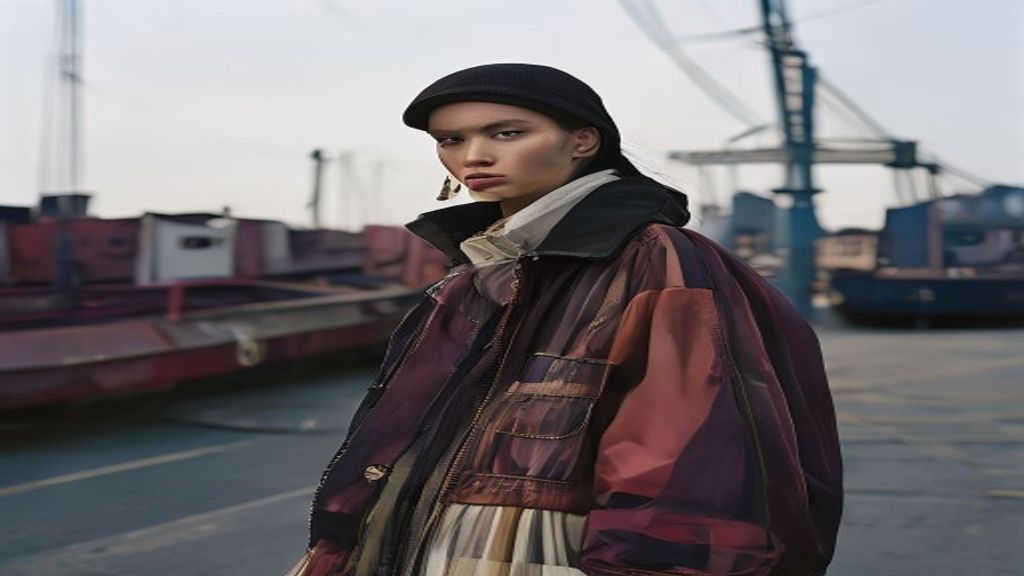
Plate · Echoes of the Atelier, Whispers of the Wharf: Maison Margiela FW26's Transcendent Dialogue in Shanghai
In an audacious act of sartorial alchemy, Maison Margiela’s Fall/Winter 2026 collection, under the visionary direction of John Galliano, transcended mere presentation. It was an immersive, visceral experience, a profound meditation on memory, transformation, and the very essence of luxury. Staged not within the hallowed halls of traditional fashion week but amidst the raw, industrial grandeur of a Shanghai shipyard, the collection orchestrated a breathtaking dialogue between the ghosts of Parisian flea markets and the pulsating heart of global futurism. This was not just fashion; it was a philosophical inquiry, a deconstruction of time and space, rendered in fabric and form.
The choice of venue was, in itself, a masterstroke of conceptual design. The Shanghai shipyard, a monument to human ingenuity and the relentless march of progress, with its colossal cranes and weathered steel, provided a stark, almost brutalist counterpoint to the collection’s delicate, memory-laden narratives. It was a canvas of industrial might, upon which Galliano painted an ode to the forgotten, the found, the beautifully imperfect. The air hummed with the ghosts of industry, yet a profound sense of human touch, of painstaking craft, permeated every look.
The Grand Juxtaposition: From Puces to Port
The genius of Margiela FW26 lay in its audacious juxtaposition. Imagine the dusty, crowded stalls of a Parisian flea market – the Puces de Saint-Ouen, perhaps – where time seems to fold in on itself, and every object carries a whispered history. Now, transport that spirit, that reverence for the worn, the mended, the serendipitously discovered, to the gleaming, utilitarian expanse of a Shanghai shipyard. This wasn't merely a backdrop; it was an active participant in the collection’s narrative, a crucible where past and future, East and West, artisanal craft and industrial might, converged.
Galliano, ever the architect of theatrical narratives, understood that the environment could elevate the garments from mere clothing to profound statements. The raw concrete, the exposed metal, the vast, echoing spaces amplified the fragility and intricate detail of the Margiela pieces. The collection became a bridge between two worlds: the romanticized decay of European heritage and the relentless, forward-thrusting energy of Asian modernity. It was a powerful commentary on globalization, on the universal language of objects, and on the capacity for beauty to emerge from unexpected collisions.
Deconstructing Memory: The Artisanal DNA
At the heart of Margiela’s ethos lies the art of deconstruction and reconstruction, a philosophy deeply rooted in the House’s foundational principles. For FW26, this was not simply a stylistic choice but a profound act of archaeological fashion, unearthing stories embedded in textiles and transforming them into contemporary haute couture. The collection felt like a meticulously curated assemblage of treasures salvaged from a forgotten atelier, each piece bearing the marks of a previous life, now given a new, elevated purpose.
The Trousseau Reimagined
The influence of the Artisanal line, the purest expression of Margiela’s conceptual brilliance, was palpable throughout the ready-to-wear collection. Vintage lace, silk slips, and forgotten fragments of trousseaux were not merely referenced but physically integrated, patched, and re-stitched into new forms. This was upcycling elevated to an art form, a testament to the enduring value of craft over disposable trends. Every seam, every visible stitch, every frayed edge told a story, a testament to the hands that had touched it, the time it had endured.
- Deconstructed Vintage Lace and Silks: Fragments of antique garments, meticulously hand-stitched onto contemporary forms, creating a palimpsest of textures and eras.
- Patched and Mended Textiles: Fabrics bearing the beautiful scars of repair, celebrating imperfection and the human touch in an era of mass production.
- Hardware Salvaged from Industrial Settings: Nuts, bolts, washers, and metallic elements, repurposed as unexpected embellishments, adding a brutalist edge.
- Repurposed Military Surplus: Khaki drill, canvas, and utilitarian fabrics given a new life through intricate tailoring and couture techniques.
- Found Objects as Embellishments: Buttons, keys, broken ceramics, and other everyday detritus meticulously integrated, blurring the line between trash and treasure.
Silhouettes of Serendipity
The silhouettes were a masterclass in controlled chaos, a fluid dialogue between historical grandeur and contemporary experimentation. Exaggerated volumes, reminiscent of Belle Époque couture, were warped and subverted, often appearing to have been caught mid-transformation. Shoulders were dramatically emphasized, waists cinched or entirely dissolved, and hemlines played a capricious game of asymmetry. The collection championed a deeply gender-fluid aesthetic, with traditional masculine and feminine codes dissolving into a singular, powerful statement of individuality.
Coats, often the backbone of a Fall/Winter collection, were particularly compelling. They ranged from sweeping, almost monastic forms crafted from heavy, distressed wools to sharply tailored, deconstructed blazers adorned with unexpected patches of lace or industrial webbing. Layering was key, not merely for warmth but as a narrative device, each layer revealing a new facet of the garment’s complex identity. The effect was one of profound elegance born from an embrace of the unconventional.
“The true luxury lies not in the new, but in the reimagined, the history imbued within each stitch. It is a whisper of the past, echoing into the future.”
Material Alchemy: Textures of Time and Industry
Margiela’s FW26 collection was a tactile feast, a symphony of textures that spoke volumes about the collection’s core themes. Galliano’s virtuosity in material manipulation was on full display, transforming seemingly disparate elements into a cohesive, compelling whole. The interplay between raw and refined, soft and hard, ancient and modern, was a constant, captivating tension.
The Palimpsest Palette
The color palette was a study in nuanced restraint, punctuated by strategic bursts of unexpected vibrancy. Muted, earthy tones predominated – the faded creams of aged linen, the rich ochres of oxidized metals, the deep charcoal greys of industrial steel, and the sepia tones of old photographs. These foundational hues were occasionally disrupted by electric blues, intense magentas, or acid greens, injecting a jolt of contemporary energy into the otherwise historical tapestry. The overall effect was that of a painting, where layers of color and texture create depth and resonance.
Fabrics were chosen for their inherent narrative potential: tweed with its connotations of heritage and intellectualism, raw silk with its delicate imperfections, heavy wools for their protective embrace, and repurposed denim for its democratic appeal. These were often combined with industrial canvas, fine lace, and delicate chiffon, creating a rich, almost jarring juxtaposition that was quintessentially Margiela. The materiality was not just about the look, but the feel, the weight, the way it moved and draped, echoing the collection's deep connection to human experience.
Accessories as Artifacts
In the Margiela universe, accessories are never mere afterthoughts; they are integral components of the narrative, often acting as conceptual anchors. For FW26, they were artifacts, objects imbued with a sense of history and transformation, mirroring the collection’s overarching theme of found treasures and repurposed beauty.
- Oversized, Distressed Leather Gloves: Extending past the elbow, often with visible mending or contrasting patches, adding a dramatic, almost theatrical flair.
- Bags Crafted from Repurposed Sailcloth or Tarpaulins: Structured yet soft, bearing the marks of their previous lives, adorned with industrial hardware and Margiela’s signature four-stitch motif.
- Footwear Incorporating Discarded Machinery Parts: Heels and soles featuring unexpected metal components, blurring the line between shoe and sculpture, functional and artistic.
- Jewelry as Assemblages: Brooches and necklaces crafted from antique buttons, rusted keys, forgotten trinkets, and fragments of broken ceramics, transforming detritus into precious adornment.
- Conceptual Headwear: Hats that resembled deconstructed cloches or repurposed industrial safety gear, offering both concealment and a statement of avant-garde individuality.
The Global Dialogue: East Meets West, Past Meets Future
Beyond the garments themselves, the Maison Margiela FW26 show was a potent cultural statement. By choosing Shanghai, a city that embodies both ancient tradition and breakneck modernity, Galliano deliberately positioned the collection within a global dialogue. It was a recognition of the shifting centers of fashion influence, a nod to the immense creative energy emanating from the East, and a sophisticated commentary on the interconnectedness of our world.
The collection spoke to a universal human experience of memory, longing, and the desire for authenticity in an increasingly digital and homogenized landscape. It challenged the conventional notions of luxury, suggesting that true value lies not in pristine perfection or mass-produced status symbols, but in the narrative, the craftsmanship, and the enduring spirit of an object. This was a collection that asked profound questions about our relationship with our clothes, with history, and with the future.
“In a world obsessed with the pristine, Margiela reminds us that beauty often resides in the imperfect, the lived-in, the beautifully flawed. It is a testament to resilience, a celebration of character.”
Concluding Insights: The Future Fabric of Fashion
Maison Margiela’s Fall/Winter 2026 presentation was more than a fashion show; it was a powerful manifesto for the future of luxury fashion. John Galliano continues to solidify his position as one of the industry's most profound thinkers, capable of translating complex philosophical ideas into breathtakingly beautiful and utterly relevant garments. The collection demonstrated that true innovation often lies not in inventing the entirely new, but in reimagining the familiar, in elevating the overlooked, and in forging unexpected connections.
This collection will undoubtedly resonate deeply within the luxury ready-to-wear landscape, influencing trends in materiality, silhouette, and the very approach to design. It champions a slower, more considered fashion, one that values longevity, artisanal techniques, and a profound sense of narrative. As the fashion world grapples with questions of sustainability and authenticity, Margiela FW26 offers a compelling vision: a future where the past is not forgotten but continually reborn, where the discarded finds new dignity, and where the human touch remains paramount. It is a reminder that fashion, at its most potent, is not just about what we wear, but about the stories we choose to tell.