Sagan Lockhart's 'Shangri-La' Isn't Only a Behind-the-Scenes Look at 'Alfredo 2.' It's a Case Study in "Boundless Creativity"
Dive into Sagan Lockhart's 'Shangri-La,' an intimate odyssey dissecting the creative genesis of 'Alfredo 2,' revealing a masterclass in uninhibited artistic expression.
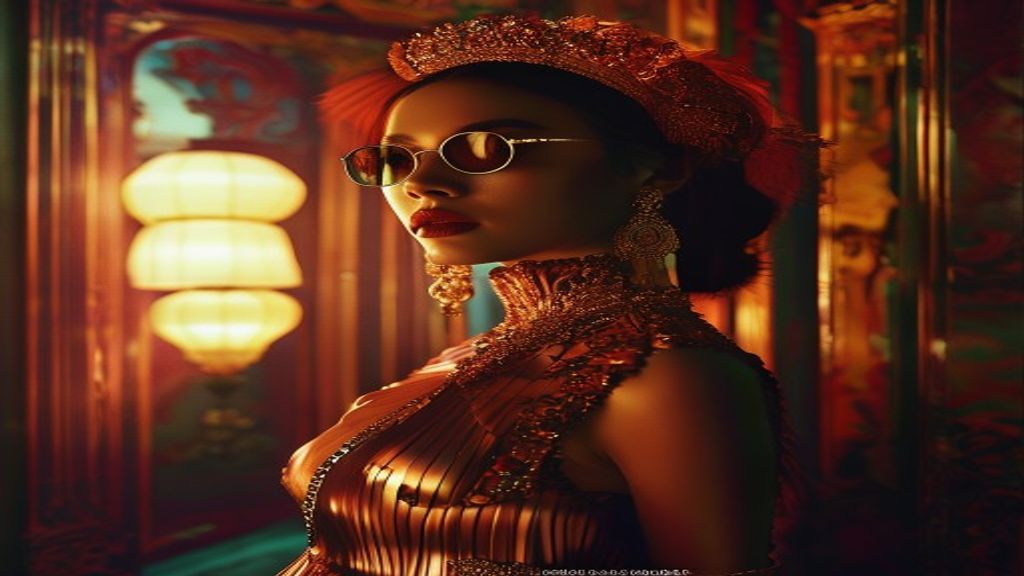
Plate · Sagan Lockhart's 'Shangri-La' Isn't Only a Behind-the-Scenes Look at 'Alfredo 2.' It's a Case Study in "Boundless Creativity"
The Unveiling of an Avant-Garde Praxis: Sagan Lockhart's 'Shangri-La'
In the ephemeral landscape of contemporary visual culture, where content is consumed with ravenous speed and discarded with equal alacrity, true artistic endeavors often struggle to etch their indelible mark. Yet, certain oeuvres transcend the fleeting trends, asserting their permanence through sheer audacious vision and an unwavering commitment to the avant-garde. Sagan Lockhart’s ‘Shangri-La’ is precisely such a phenomenon. Far from being a mere documentary or a conventional 'behind-the-scenes' exposé of the seminal 'Alfredo 2,' Lockhart’s latest cinematic exploration functions as a profound meditation on the very essence of creation itself. It is a meticulous deconstruction of the artistic impulse, a visceral journey into the genesis of a cultural artifact, and, fundamentally, a compelling case study in what we dare to call boundless creativity.
Lockhart, a polymath whose aesthetic sensibilities have consistently redefined the nexus of film, photography, and fashion, grants us an unprecedented access to his inner sanctum. 'Shangri-La' is not just observation; it is participation, inviting the viewer to traverse the labyrinthine corridors of ideation, collaboration, and execution that culminate in a work of art. In an era saturated with curated perfection, Lockhart's gaze is unsparing, revealing the beautiful friction, the meticulous chaos, and the relentless pursuit of an elusive vision that underpins true innovation.
The Alchemic Lens: Deconstructing Lockhart's Vision
To understand 'Shangri-La' is to first comprehend Lockhart's unique position within the creative pantheon. His work has always possessed a raw, almost primal energy, juxtaposed with an acutely refined sense of visual poetry. He is not merely a documentarian; he is an alchemist, transforming the mundane into the mythical, the fleeting moment into an eternal tableau. 'Shangri-La' is his most introspective work to date, a self-reflexive commentary on the very act of making.
"Lockhart doesn't just capture moments; he distills the very spirit of creation, presenting it raw and unvarnished. 'Shangri-La' is a masterclass in the art of artistic vulnerability."
The film delves into the often-overlooked minutiae of creative direction, from the initial spark of inspiration to the painstaking process of bringing abstract concepts into tangible form. We witness the selection of fabric, the debate over a particular light setup, the subtle adjustments to a model’s posture – each decision a brushstroke in a larger, intricate painting. This granular focus illuminates the profound dedication required to elevate work beyond mere craft to genuine artistry. It’s a testament to the power of vision, not as a singular, static idea, but as an evolving, breathing entity.
'Shangri-La' as Praxis: The Philosophy of Form
Lockhart’s approach in 'Shangri-La' is deeply philosophical. It posits that true creativity is not a linear progression but a cyclical dance between intuition and intention. The film’s narrative structure mirrors this, eschewing conventional chronological storytelling for a more impressionistic, stream-of-consciousness flow. This allows the viewer to experience the creative process as it truly unfolds: messy, exhilarating, and often unpredictable. It challenges the prevailing notion of effortless genius, replacing it with an appreciation for rigorous experimentation and an unwavering commitment to pushing boundaries.
We are privy to the moments of frustration, the sudden breakthroughs, and the silent understanding between collaborators that define a truly synergistic environment. This raw authenticity is a refreshing antidote to the sanitized narratives often presented in the fashion and art industries, offering a more honest and ultimately more inspiring portrayal of the creative journey.
'Alfredo 2': A Canvas for Unfettered Expression
'Alfredo 2' itself was a landmark. A multi-faceted project that blurred the lines between music video, short film, and high-fashion editorial, it became a cultural touchstone, celebrated for its audacious aesthetics and its fearless embrace of unconventional narratives. 'Shangri-La' peels back these layers, revealing the intricate scaffolding upon which such a monumental work was built.
The Garment as Narrative: Fashion's Role in the Aesthetic
The role of fashion in 'Alfredo 2,' as illuminated by 'Shangri-La,' extends far beyond mere costuming. Each garment, each accessory, was a deliberate choice, imbued with symbolic weight and narrative purpose. Lockhart meticulously details the process of curating these visual elements:
- Sourcing bespoke garments: Collaborations with emerging designers and established ateliers to create unique pieces that defied conventional ready-to-wear categories.
- Textile innovation: Experimentation with unconventional materials and fabrication techniques to achieve specific textures and visual effects.
- Styling as character development: How editorial styling transformed models into living embodiments of the film's thematic concerns, from ethereal beings to gritty urbanites.
- Silhouette as statement: The deliberate manipulation of form and proportion to convey emotion and amplify the visual storytelling.
The film showcases the intricate dance between haute couture and street-style influences, demonstrating how a truly boundless creative vision can seamlessly merge disparate fashion aesthetics to forge a new, compelling visual language. It’s a masterclass in understanding how fashion can elevate a visual narrative from merely beautiful to profoundly meaningful.
Beyond the Frame: Choreographing Visuals and Sound
Beyond the sartorial, 'Shangri-La' reveals the painstaking orchestration of every visual and auditory element in 'Alfredo 2.' From the elaborate set design, which often involved transforming mundane locations into surreal dreamscapes, to the precise camera movements that imbued each frame with a painterly quality, no detail was left to chance. The sound design, too, is explored, revealing how ambient noise, musical scores, and spoken word were interwoven to create a truly immersive sensory experience.
"'Alfredo 2' wasn't just seen; it was felt. 'Shangri-La' shows us the intricate alchemy that made that visceral connection possible, a testament to Lockhart's meticulous craft and profound artistic empathy."
This holistic approach to filmmaking, where every discipline — from fashion photography to cinematic direction, from art direction to post-production — converges under a singular, guiding vision, is the hallmark of boundless creativity. It's a reminder that truly groundbreaking work emerges from a refusal to acknowledge disciplinary boundaries.
The Anatomy of Boundless Creativity
What 'Shangri-La' ultimately provides is a blueprint, albeit an intensely personal one, for cultivating and sustaining boundless creativity. It underscores several critical components:
Collaboration as Catalyst: Synergy in the Atelier
Lockhart’s film highlights the indispensable role of collaboration. It showcases a diverse team of artists, technicians, and stylists working in concert, each bringing their unique expertise to the table. The creative process is depicted not as a solitary endeavor, but as a dynamic interplay of ideas, where mutual respect and a shared vision fuel innovation. This synergistic approach, where ego is sublimated for the greater artistic good, is a powerful lesson for any creative enterprise, particularly within the often hierarchical world of luxury fashion and editorial production.
Risk, Reward, and Radical Authenticity
Perhaps the most salient takeaway from 'Shangri-La' is the necessity of risk-taking. Lockhart consistently pushes against conventional norms, opting for the unexpected, the challenging, and occasionally, the uncomfortable. This radical authenticity, a willingness to expose the raw nerve of artistic expression, is what ultimately distinguishes his work. It’s a powerful argument for embracing vulnerability and imperfection as intrinsic parts of the creative journey, rather than obstacles to be overcome.
Key principles of boundless creativity, as observed in 'Shangri-La':
- Unwavering Vision: A clear, yet adaptable, artistic direction that guides all decisions.
- Iterative Process: Embracing experimentation and revision as essential to refinement.
- Interdisciplinary Integration: Blurring the lines between different art forms and technical disciplines.
- Empathetic Collaboration: Fostering an environment where diverse talents can flourish and contribute.
- Radical Authenticity: Prioritizing genuine expression over commercial expediency or trend adherence.
- Mastery of Craft: A deep understanding of the technical tools and artistic principles, allowing for intentional subversion.
Concluding Insights: The Future of Fashion Storytelling
In its profound exploration of the creative genesis of 'Alfredo 2,' Sagan Lockhart's 'Shangri-La' transcends its immediate subject matter to become a seminal text on the very nature of artistic endeavor. It is a powerful reminder that in an increasingly commodified world, true luxury lies not just in the exquisite garment or the polished image, but in the boundless, uninhibited spirit of creation itself. For those within the fashion industry – from avant-garde designers seeking inspiration to editorial teams crafting compelling narratives, from fashion photographers pushing the visual lexicon to creative directors charting new courses – 'Shangri-La' offers invaluable insights. It champions a return to a more holistic, more authentic, and ultimately more impactful mode of storytelling.
Lockhart has not merely documented; he has illuminated a path forward, demonstrating that the future of fashion storytelling, indeed of all artistic expression, lies in a fearless embrace of the unknown, a relentless pursuit of the authentic, and an unwavering belief in the transformative power of boundless creativity. 'Shangri-La' is not just a film; it is a manifesto, a whispered promise of what is possible when the constraints of convention are shed, and the human imagination is allowed to roam free, unfettered and magnificent.