Peter Knapp Revisits the Images That Captured Courrèges’ Fashion Revolution
Dive into Peter Knapp's archive, revealing the radical imagery that defined Courrèges' avant-garde vision and its lasting impact on modern design and performance aesthetics.
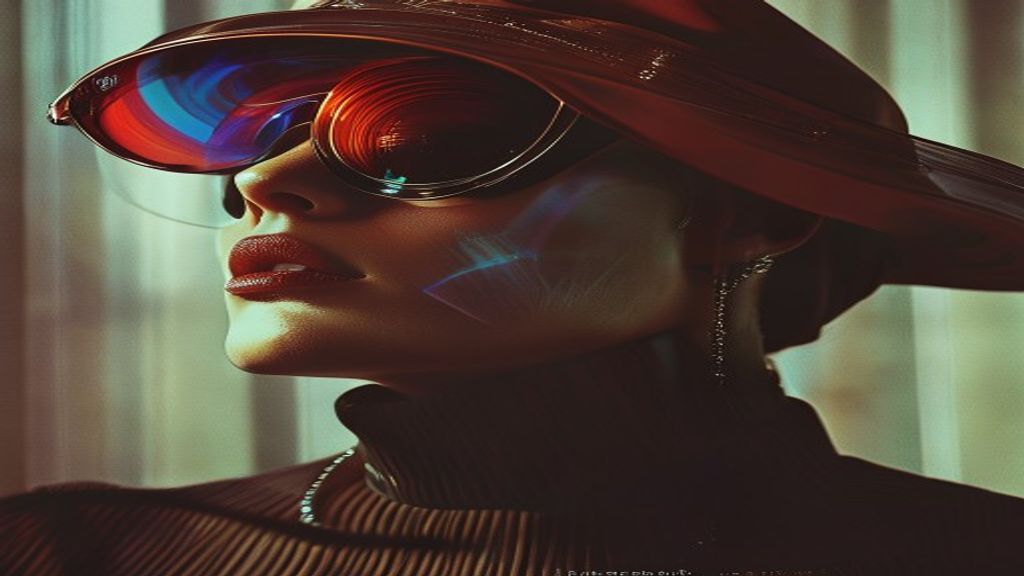
Plate · Peter Knapp Revisits the Images That Captured Courrèges’ Fashion Revolution
In the annals of fashion history, certain collaborations transcend the transactional, evolving into a symbiotic synthesis that redefines an era. The dynamic interplay between André Courrèges, the Parisian couturier of the future, and Peter Knapp, the Swiss photographic visionary, stands as a monumental testament to this phenomenon. As Knapp revisits his seminal work, we are granted an unparalleled aperture into the visual lexicon that not only documented but actively shaped Courrèges’ disruptive ethos. This retrospective offers more than mere nostalgia; it’s a critical recalibration of how fashion imagery can function as a high-performance instrument, translating avant-garde concepts into tangible, aspirational realities.
The mid-20th century was a crucible of profound societal shifts, and Courrèges emerged as an architect of sartorial futurism, designing garments that were less about adornment and more about empowerment and kinetic freedom. His collections were a radical departure, a bold proposition for a liberated woman navigating a world hurtling towards the space age. Knapp, with his precise and often stark lens, was the perfect visual engineer to articulate this revolution, capturing not just clothes, but a meticulously constructed vision of tomorrow.
The Architect of the Future: Courrèges' Vision
André Courrèges didn't just design clothes; he engineered a new paradigm for dressing. His aesthetic was a direct challenge to the prevailing opulence and restrictive silhouettes of post-war haute couture. Rooted in a philosophy of minimalism, geometric precision, and an unyielding belief in progress, Courrèges' work was inherently functional and forward-looking, anticipating the core tenets of modern techwear before the term even existed. His designs were a manifestation of pure form: A-line dresses, trapezoidal tunics, and trousers that liberated the body, all executed with an almost architectural rigor.
The materials themselves were revolutionary. Courrèges championed synthetic fabrics like PVC and gabardine, eschewing traditional silks and brocades for textiles that offered structure, durability, and a clean, modernist finish. This focus on innovative materials and ergonomic design elements — from strategically placed seams to functional zippers — underscored a commitment to utility that resonated deeply with a burgeoning desire for performance and practicality in everyday wear. The iconic white go-go boots, a symbol of youthful rebellion and space-age optimism, were not just fashionable; they were designed for movement, for a woman on the go, embodying a functional elegance that remains highly influential.
Peter Knapp: The Visual Engineer of an Era
If Courrèges provided the blueprint for the future, Peter Knapp crafted its visual manual. As Art Director for Elle magazine and a photographer of extraordinary vision, Knapp possessed an uncanny ability to translate Courrèges' abstract concepts into resonant, highly dynamic imagery. Their collaboration was less about traditional fashion shoots and more about visual experiments, pushing the boundaries of photographic storytelling.
Knapp’s photographs were characterized by their graphic clarity, innovative compositions, and an emphasis on movement. He rejected the static, studio-bound poses of conventional fashion photography, opting instead for outdoor locations, unconventional angles, and models captured in mid-stride or dynamic action. This approach perfectly amplified Courrèges' message of liberation and kinetic energy, ensuring the garments were perceived not as static objects, but as active components of a modern lifestyle.
Capturing Motion and Modernity
Knapp's techniques were as groundbreaking as Courrèges' designs. He understood that the essence of Courrèges' fashion was its relationship to the body in motion, its integration into a new, accelerated pace of life. His photographs were often stark, utilizing natural light and minimal props to focus intensely on the clean lines and bold silhouettes. The resulting images were not just beautiful; they were powerful statements, meticulously calibrated to convey a sense of immediacy and future-forward momentum.
Key elements of Knapp's signature style included:
- Dynamic Composition: Models often appeared in motion, emphasizing the garments' freedom of wear.
- Geometric Framing: Utilizing architectural backdrops and strong lines to complement Courrèges' structural designs.
- High Contrast & Starkness: A clean aesthetic that highlighted material textures and minimalist forms.
- Unconventional Angles: Photographing from above or below to create dramatic, sculptural effects.
- Emphasis on Youth & Empowerment: Portraying women as confident, independent agents of change.
“Knapp’s lens didn’t just document fashion; it engineered its perception, rendering Courrèges’ future into an immediate, tangible reality.”
The Echo Chamber: Courrèges' Enduring Legacy
Revisiting Knapp’s archive today reveals not just a historical moment, but a blueprint for enduring design principles. Courrèges’ influence permeates contemporary fashion, particularly within the performance apparel and minimalist aesthetic movements. The precision of his cuts, the purity of his palette, and his pioneering use of robust, modern materials continue to inspire designers who prioritize function, innovation, and a sleek, unburdened silhouette. The geometric precision and structural integrity of his garments resonate deeply with the engineering-driven approach found in high-performance outdoor wear and urban techwear.
The iconic Courrèges mini-skirt, a symbol of female liberation, was not merely a stylistic choice but a functional adaptation for an active, modern lifestyle. Similarly, his integration of zippers, snaps, and bold, contrasting panels foreshadowed the modularity and adaptability prized in modern technical garments. The white boots, the goggles, the helmets – these were not just accessories; they were components of a complete system for navigating the future, blending protection with provocative style.
From Runway to Reality: The Functional Aesthetic
Courrèges bridged the chasm between haute couture and practical wear, demonstrating that high fashion could, and should, be integrated with the demands of daily life. His designs were a precursor to the concept of elevated performance wear, proving that garments could be both avant-garde and inherently useful. This ethos is a cornerstone of current fashion innovation, where designers strive to synthesize aesthetic appeal with advanced functionality.
Innovations that foreshadowed modern techwear include:
- Material Innovation: Early adoption of PVC, vinyl, and gabardine for structural integrity and weather resistance.
- Ergonomic Design: Focus on freedom of movement through precise cuts and strategic paneling.
- Modular Elements: The use of zippers and interchangeable components for adaptability.
- Monochromatic Palettes: A focus on white, silver, and black, enhancing a clean, futuristic, and highly functional aesthetic.
- Protective Components: Goggles and helmets that blended utility with a distinct style statement.
“Courrèges didn’t predict the future; he designed it, offering garments as tools for a new way of living, a vision perfectly crystallized by Knapp.”
Concluding Insights: A Future Forged in the Past
Peter Knapp’s revisited archive serves as a powerful reminder of the profound impact a visionary photographer can have on shaping the narrative of a fashion revolution. His images of Courrèges are more than mere documentation; they are active interpretations, meticulously composed to articulate a radical departure from tradition and a bold leap into modernity. They demonstrate how visual storytelling, when executed with precision and foresight, can elevate fashion beyond fleeting trends into the realm of enduring cultural artifacts.
The enduring relevance of Courrèges’ space age fashion, preserved and amplified by Knapp’s discerning eye, offers crucial insights for contemporary designers and innovators. It underscores the timeless appeal of clean lines, functional design, and a fearless embrace of new materials. In an era where design innovation and performance aesthetics are paramount, the legacy of Courrèges and Knapp continues to inspire, reminding us that true revolution is often found at the intersection of aesthetic brilliance and functional imperative. Their collaborative output remains a critical benchmark, a high-fidelity transmission from a future that has, in many ways, already arrived.