The Shadow and The Sartorial: Jenna Ortega's Gothic Renaissance in Alexander McQueen
Jenna Ortega redefines darkness, channeling her iconic 'Wednesday' persona through a masterful Alexander McQueen gothic suit. A study in subversive elegance.
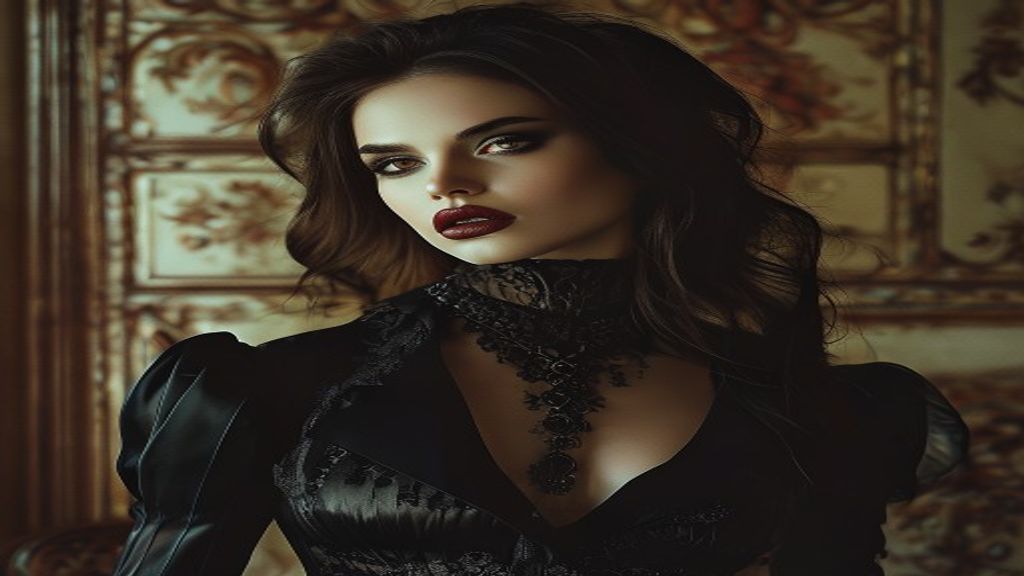
Plate · The Shadow and The Sartorial: Jenna Ortega's Gothic Renaissance in Alexander McQueen
In an era where celebrity style often treads the well-worn path of predictable glamour, Jenna Ortega emerges as a refreshing, almost subversive, counter-narrative. The young actress, whose portrayal of the enigmatic Wednesday Addams catapulted her into the echelons of global recognition, has, with deliberate precision, cultivated an aesthetic that is as compelling as it is consistent. Her recent foray onto the red carpet, draped in the unparalleled gothic grandeur of Alexander McQueen, was not merely an outfit choice; it was a profound sartorial declaration, a potent echo of her on-screen persona, yet entirely her own.
This wasn't just another fashion moment; it was a meticulously orchestrated symphony of dark romanticism, architectural tailoring, and an undeniable undercurrent of defiant elegance. Ortega, in McQueen, didn't just attend an event; she commanded the very atmosphere, solidifying her status as a bona fide fashion icon whose influence transcends transient trends, delving deep into the enduring power of a meticulously crafted image.
The Overture of Darkness: Ortega's Evolving Aesthetic
Jenna Ortega's ascent in Hollywood has been marked by a discerning approach to her public image, particularly her fashion choices. Long before the raven braids and deadpan delivery of 'Wednesday' captivated millions, Ortega demonstrated a nascent appreciation for a darker, more introspective style. Her early red carpet appearances hinted at a burgeoning affinity for monochrome palettes, sharp silhouettes, and an understated edginess that set her apart from her contemporaries.
From Scream Queen to Sartorial Icon
Her roles, often inhabiting the 'scream queen' archetype in contemporary horror, provided a natural foundation for this aesthetic. Yet, it was the sheer force of the 'Wednesday' phenomenon that truly crystallized her style identity. The character, a beacon of gothic charm and intellectual rebellion, became intrinsically linked with Ortega, not just in performance but in perception. This fusion allowed Ortega to embrace and elevate a style that is both deeply personal and universally resonant with a generation seeking authenticity beyond the superficial.
The 'Wednesday' Phenomenon and its Fashion Echoes
The global impact of 'Wednesday' cannot be overstated. It sparked a genuine gothic revival, not just in costume play, but in mainstream fashion. Retailers saw a surge in demand for dark academia, Victorian-inspired pieces, and tailored monochrome ensembles. Ortega, as the muse and embodiment of this resurgence, found herself in a unique position to shape and define the modern gothic aesthetic. Her choice of Alexander McQueen for a significant public appearance was, therefore, not just appropriate; it was an act of profound stylistic synergy, a deliberate nod to the character that defined her, while simultaneously asserting her own mature and sophisticated fashion sensibility.
"Ortega, in McQueen, didn't just attend an event; she commanded the very atmosphere, solidifying her status as a bona fide fashion icon."
McQueen's Macabre Masterpiece: A Deconstruction
To understand the gravitas of Ortega's ensemble, one must first delve into the hallowed halls of Alexander McQueen, a house synonymous with avant-garde artistry, dark romanticism, and unparalleled tailoring. The late Lee Alexander McQueen built a legacy on pushing boundaries, challenging conventional beauty, and infusing his creations with a raw, often visceral, emotional narrative. His designs were not mere clothes; they were wearable sculptures, profound statements on life, death, and the human condition.
The Legacy of Alexander McQueen: Gothic Grandeur
McQueen's work consistently explored themes of the grotesque and the beautiful, the macabre and the magnificent. His gothic sensibilities were not superficial; they were deeply ingrained in his design philosophy, manifesting in dramatic silhouettes, intricate embellishments, and a masterful command of dark palettes. His influence on contemporary fashion is immeasurable, a constant reference point for designers seeking to combine haute couture craftsmanship with a powerful, often unsettling, artistic vision.
Sarah Burton's Vision: Tailoring the Void
Under the masterful stewardship of Sarah Burton, the house of Alexander McQueen has not only preserved its founder's audacious spirit but has also evolved it, infusing it with a more refined, yet equally potent, feminine strength. Burton’s collections often feature exquisite bespoke tailoring, architectural precision, and a celebration of natural forms, all while retaining that signature McQueen edge. Her ability to translate raw emotion into impeccably crafted garments has ensured the brand's continued relevance and its position at the pinnacle of luxury fashion. The suit chosen by Ortega is a testament to Burton’s enduring vision, a perfect synthesis of the brand’s heritage and its contemporary direction.
The Suit: Anatomy of an Avant-Garde Statement
Ortega's McQueen ensemble was a study in sophisticated subversion. It eschewed traditional feminine dress for a sharp, impeccably tailored suit that spoke volumes without uttering a single word. This was not merely menswear-inspired; it was a deliberate embrace of a power silhouette, reinterpreted through a distinctly gothic lens. The fabrication, likely a luxurious wool or crepe, would have offered a matte, light-absorbing quality, enhancing the inherent darkness of the garment. The cut was precise, almost severe, yet undeniably elegant.
- Sculptural Silhouette: The jacket, likely a single or double-breasted design, would feature sharp shoulders and a cinched waist, creating an almost hourglass effect that subtly hints at the feminine form beneath the structured exterior. The lapels, possibly peaked or notched, would be narrow and sharp, drawing the eye upwards.
- Tailored Trousers: Complementing the jacket, the trousers would be slim-fit or a subtly flared bootcut, elongating the leg and maintaining the clean, unbroken line of the ensemble. Their precision tailoring would speak to the house's dedication to craftsmanship.
- Subtle Embellishments: True to McQueen's aesthetic, any embellishments would be purposeful and restrained. Perhaps a subtle play on buttons, a hidden embroidery in a contrasting texture, or a dramatic, almost sculptural, cuff. The beauty lies in the details that reveal themselves upon closer inspection.
- Monochromatic Mastery: The choice of an all-black palette is crucial. It’s not simply a lack of color; it’s a statement of absolute sophistication, allowing the intricate tailoring and the wearer's presence to take center stage. Black, in the McQueen lexicon, is a canvas for drama, depth, and unwavering power.
"Lee Alexander McQueen built a legacy on pushing boundaries, challenging conventional beauty, and infusing his creations with a raw, often visceral, emotional narrative."
The Ortega Effect: Persona and Proclamation
Jenna Ortega's decision to wear this particular McQueen suit is a masterclass in celebrity styling and personal branding. It transcends mere fashion, becoming a powerful proclamation of her identity and artistic sensibility.
Beyond the Character: Crafting a Personal Brand
For an actress so closely identified with a single, iconic role, the challenge lies in carving out a distinct personal identity that resonates beyond the character. Ortega achieves this by embracing the essence of 'Wednesday' – the dark romance, the intellectual edge, the subversive spirit – but translating it into a more mature, high-fashion context. Her McQueen moment is a clear signal that while she respects her roots, she is an artist in her own right, with a sophisticated understanding of sartorial expression. This is not 'Wednesday' in a suit; this is Jenna Ortega, an artist whose aesthetic is deeply informed by her work, yet stands independently as a force of contemporary chic.
The Power of Androgyny and Dark Femininity
The suit, traditionally a symbol of masculine power, becomes a vehicle for a different kind of strength on Ortega. It embodies a powerful dark femininity, challenging conventional notions of glamour. It’s a look that suggests intelligence, self-possession, and an unapologetic embrace of one's own unique allure. In an industry often fixated on overt sexuality, Ortega's choice champions a more nuanced, cerebral form of attraction – one rooted in confidence and an almost enigmatic mystique. This avant-garde choice reinforces her image as a thoughtful, daring individual who uses fashion as a tool for self-expression, not merely adornment.
"This is not 'Wednesday' in a suit; this is Jenna Ortega, an artist whose aesthetic is deeply informed by her work, yet stands independently as a force of contemporary chic."
The Broader Fashion Narrative: Gothic's Resurgence
Ortega's McQueen moment is not an isolated incident but rather a significant marker in a broader trend within the luxury fashion landscape: the resurgence of gothic aesthetics and dark romanticism. Designers across the spectrum are revisiting these themes, injecting them with contemporary relevance and a fresh perspective.
Dark Romance on the Runways
Recent seasons have seen an undeniable lean towards darker palettes, dramatic silhouettes, and an exploration of the melancholic beauty inherent in gothic themes. From Rick Owens' architectural minimalism to Simone Rocha's ethereal yet brooding femininity, and even touches in more mainstream luxury houses, the allure of the dark and mysterious is palpable. This isn't the costumey gothic of yesteryear, but a sophisticated, nuanced interpretation that speaks to a collective yearning for depth, emotion, and an escape from the saccharine. It’s about embracing the shadows as much as the light, finding beauty in the unconventional, and celebrating individuality with a subversive edge.
Subversive Elegance in Contemporary Culture
Beyond the runways, this 'subversive elegance' permeates popular culture. From the enduring appeal of 'Wednesday' to the rise of 'dark academia' aesthetics on social media, there's a clear appetite for styles that offer more than surface-level appeal. It’s about intellectual curiosity, an appreciation for history, and a desire for fashion that carries a narrative. Ortega, with her carefully curated image and her choice of the McQueen suit, stands as a prime example of a celebrity not just participating in this trend, but actively driving its evolution, making a compelling case for the enduring power of a dark, elegant, and deeply personal style statement.
Concluding Insights: The Future of Fashion's Dark Heart
Jenna Ortega's decision to return to the 'Wednesday' well, albeit through the elevated lens of Alexander McQueen, is more than just a clever styling trick. It's a testament to the symbiotic relationship between character and creator, and a powerful demonstration of how fashion can be used to articulate a complex, evolving identity. Her gothic McQueen suit is a sartorial triumph, perfectly encapsulating the gravitas of a global phenomenon while simultaneously asserting her own position as a serious fashion contender.
This moment solidifies her as a muse for the modern age: intelligent, edgy, and unafraid to explore the deeper, darker facets of beauty. As the fashion world continues its cyclical dance, one thing is clear: the dark heart of haute couture, championed by visionaries like Alexander McQueen and embodied by compelling figures like Jenna Ortega, will continue to beat strong, offering endless inspiration for those who dare to look beyond the obvious and embrace the profound elegance of the shadow.