Jenna Ortega Goes Back to ‘Wednesday’ in McQueen’s Gothic Suiting
Jenna Ortega, the undisputed queen of modern gothic, re-embraces her 'Wednesday' aesthetic in a masterful Alexander McQueen suit. A sartorial séance.
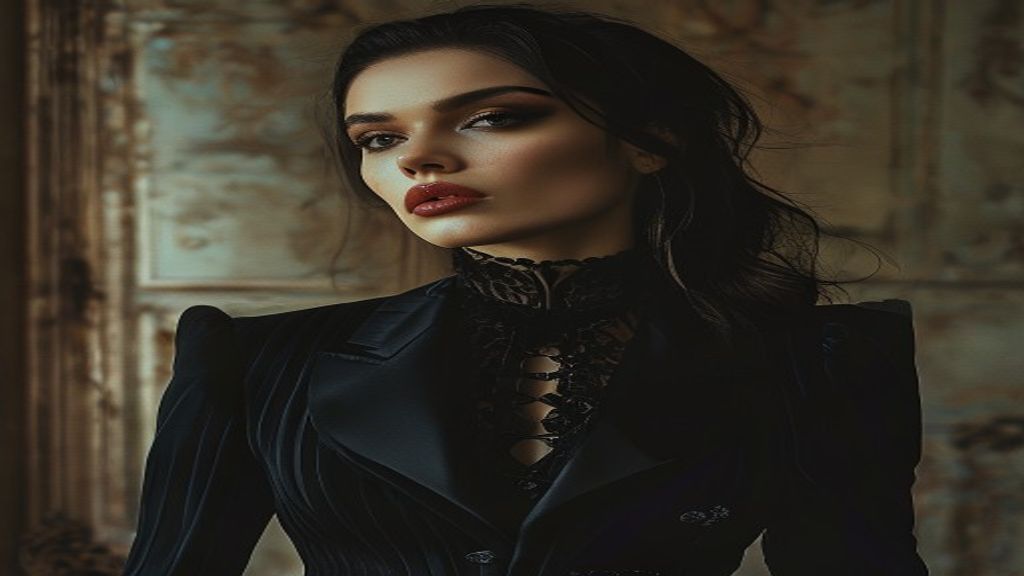
Plate · Jenna Ortega Goes Back to ‘Wednesday’ in McQueen’s Gothic Suiting
In the ephemeral theatre of contemporary celebrity, where personal branding often eclipses authentic sartorial expression, certain moments transcend mere fashion; they become cultural touchstones. Such is the recent spectacle of Jenna Ortega, the enigmatic ingenue who breathed new, macabre life into the iconic Wednesday Addams, re-emerging not merely dressed, but conceptually re-embodied in the formidable silhouette of Alexander McQueen's gothic suiting. This was not a mere outfit choice; it was a profound declaration, a meticulously orchestrated return to the very aesthetic that cemented her status as a generational muse for the darkly inclined.
The Inevitable Return: Ortega's Gothic Metamorphosis
Ortega’s ascension to the pantheon of modern gothic royalty was swift, undeniable, and deeply resonant. Her portrayal of Wednesday Addams, a character synonymous with a particular brand of chilling charm and intellectual defiance, unlocked a collective yearning for a sophisticated, understated darkness in mainstream fashion. Post-Netflix phenomenon, Ortega’s red carpet appearances have consistently flirted with, and often fully embraced, a melancholic elegance – a testament to the character’s indelible mark on her public persona. This latest iteration, however, feels less like an echo and more like a definitive statement, a conscious evolution of the 'Wednesday' spirit into the rarefied air of high fashion. It solidifies her as a powerful arbiter of style, one who understands the profound impact of narrative in sartorial choices.
Her commitment to this aesthetic is not simply a playful nod; it is a calculated embrace of a powerful visual language. In a landscape saturated with fleeting micro-trends, Ortega's consistent devotion to gothic romanticism and sharp, dark tailoring positions her as an authentic voice. She embodies a rare blend of youthful rebellion and old-world sophistication, a duality perfectly mirrored in the legacy of Alexander McQueen.
McQueen's Shadow: A Legacy Reimagined
To choose Alexander McQueen is to choose a lineage of conceptual brilliance, of tailoring that speaks volumes, and of a gothic sensibility that transcends mere aesthetic to become a philosophical stance. McQueen, even posthumously, remains the undisputed master of dramatic narrative woven into fabric. His collections were always more than clothes; they were performance art, social commentary, and deeply personal explorations of beauty, darkness, and the human condition.
The Suit as Armor: Deconstructing the Silhouette
The specific McQueen ensemble Ortega donned is a masterclass in architectural tailoring and subversive elegance. It wasn't just a suit; it was a sculpted form, a second skin of power and precision. The hallmark McQueen exaggerated shoulders, often reminiscent of Victorian military dress or the severe lines of a raven's wing, provided a commanding presence. The waist, cinched with an almost fetishistic precision, juxtaposed against a potentially wider, more fluid trouser leg or a dramatic, floor-sweeping overcoat, created a silhouette that was both formidable and undeniably feminine. The fabric, likely a rich barathea wool or a structured wool crepe, would have held its form with an almost sculptural quality, absorbing light rather than reflecting it, emphasizing the depth and mystery of the monochromatic palette. Every seam, every lapel, every buttonhole would have been executed with an obsessive attention to detail, a signature of the McQueen atelier.
"In the lexicon of modern gothic, McQueen is not merely a designer; he is an architect of emotion, a sculptor of the sublime."
This is power suiting redefined for the modern gothic muse. It's not about blending in; it's about standing out with an understated ferocity. The sharp lines and structured form act as both armor and a declaration of self, perfectly aligning with the unyielding spirit of Wednesday Addams.
The Dark Palette: Beyond Mere Black
While often perceived simply as 'black,' the McQueen universe understands the profound nuances within this seemingly singular hue. It is the black of midnight, of velvet shadows, of deep contemplation, and of silent rebellion. In Ortega's ensemble, the black is not just an absence of color; it is a presence, rich with texture and symbolic weight. It speaks of timelessness, of gravitas, and of an undeniable sophistication that eschews fleeting trends. The interplay of different fabric finishes – a matte wool against a subtle sheen of silk lapel, perhaps – would have added layers of visual interest, preventing the look from becoming monolithic and instead imbuing it with a textural dialogue.
Styling the Enigma: Accessories and Attitude
The success of Ortega's McQueen moment lies not just in the garment itself, but in the meticulous styling and the inherent attitude she brings. Her hair, often styled with a severe middle part or slicked back, reinforces the clean, sharp lines of the suiting, echoing Wednesday's signature braids in a more adult, editorial context. Makeup is kept minimal, emphasizing strong brows or a subtle, smudged kohl, allowing her piercing gaze to dominate. Accessories are either absent or strategically chosen for maximum impact – a stark silver ring, a delicate but edgy earring – never detracting from the architectural integrity of the suit. Footwear, likely a sharp pump or a platform boot, completes the elongated, powerful silhouette. This restraint in styling is crucial; it allows the conceptual power of the McQueen tailoring and Ortega's inherent persona to shine through, unencumbered by unnecessary adornment.
The 'Wednesday' Echo: Subverting Expectation
What makes this particular fashion moment so compelling is how Ortega’s choice doesn't merely reference 'Wednesday'; it elevates and recontextualizes it. This is not a costume; it is a sophisticated, adult interpretation of the character’s core aesthetic. It takes the school uniform, the casual gothic dresses, and the inherent defiance of Wednesday Addams, and translates them into the language of haute couture and avant-garde fashion. It's a testament to the enduring cultural impact of the series and Ortega's ability to transcend the role while simultaneously embracing its influence.
The look serves as a powerful bridge, connecting the character's on-screen persona with Ortega's evolving identity as a fashion icon. The elements that bridge this gap are palpable:
- The severe, almost rigid posture and self-assured stance.
- The monochromatic palette, an extension of Wednesday's signature dark wardrobe.
- The air of quiet defiance, a hallmark of both Ortega's public persona and her most famous character.
- The intellectual, contemplative gaze, suggesting depth beyond superficiality.
- The embrace of the unconventional and the rejection of saccharine femininity.
This thoughtful synthesis ensures that the 'Wednesday' echo isn't a limitation but a foundation upon which Ortega builds a truly unique and influential sartorial identity.
The Avant-Garde Dialogue: Ortega, McQueen, and the Future of Gothic Chic
This specific moment, Ortega in McQueen, is more than just a red carpet triumph; it's a significant marker in the ongoing dialogue between celebrity culture, designer legacy, and the evolution of fashion trends. It signals a continued appetite for conceptual depth and dramatic expression in luxury fashion. It reinforces the resurgence of power suiting, particularly with a subversive, gothic romanticism, and fuels the enduring appeal of dark academia aesthetics.
"Ortega, in McQueen, is not merely dressed; she is performing a sartorial séance, conjuring the spirit of an icon through the threads of another."
It's a powerful statement about the enduring influence of Alexander McQueen, whose vision continues to inspire and shape contemporary design, and about Jenna Ortega's growing prowess as a fashion force. She is not simply wearing clothes; she is engaging in a sophisticated conversation, interpreting and projecting a narrative through her choices. This is the essence of true style – not just consumption, but communication.
Concluding Insights: Beyond the Garment
Jenna Ortega's embrace of Alexander McQueen's gothic suiting is a masterclass in sartorial storytelling. It's a potent reminder that fashion, at its most profound, is a dialogue – between wearer and designer, character and persona, past and present. It solidifies Ortega's position not just as a talented actress, but as a discerning fashion muse, capable of articulating complex narratives through her wardrobe choices. The enduring allure of the gothic aesthetic, when rendered with the precision and conceptual depth of a McQueen, proves timeless.
This look is an affirmation of empowered individuality, a rejection of frivolous trends in favor of enduring style. It is a testament to the power of a perfectly tailored suit to transform, to embolden, and to declare one's presence with an undeniable, quiet strength. In the hands of Jenna Ortega, McQueen's gothic suiting is not merely clothing; it is a meticulously crafted statement of self, a sophisticated homage to a beloved character, and a glimpse into the compelling future of modern gothic chic.