Hyeree Ro: The Sculptural Ascent to Venice's Grand Stage
Discover Hyeree Ro's meticulous journey to the Venice Biennale, where her minimalist aesthetic and architectural precision redefine contemporary luxury fashion.
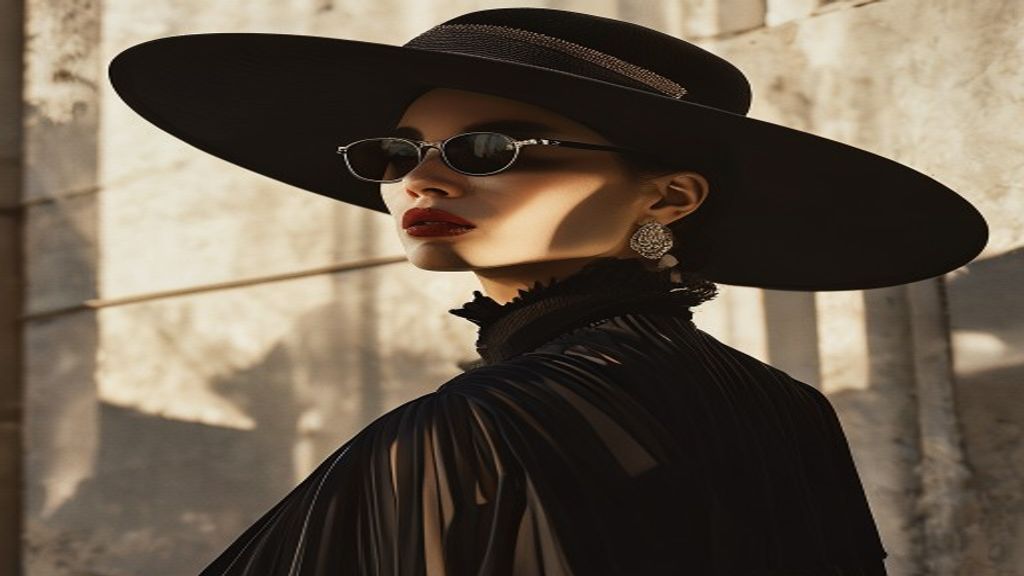
Plate · Hyeree Ro: The Sculptural Ascent to Venice's Grand Stage
Hyeree Ro’s Road to Venice
The hushed anticipation preceding a significant artistic revelation often carries its own distinct gravity. For Hyeree Ro, this gravitas culminated on the hallowed grounds of Venice, a city synonymous with artistic grandeur and cultural confluence. Her ascent to the global stage of the Venice Biennale was not merely a presentation; it was a profound statement, an eloquent articulation of a design philosophy that transcends the ephemeral trends of fashion, positioning her at the vanguard of contemporary luxury. Ro’s work, a meticulous fusion of art, architecture, and avant-garde fashion, arrived in Venice not as a fleeting spectacle, but as a considered, enduring contribution to the dialogue between form and function, material and meaning. Her journey, marked by an unwavering commitment to a pure, unadorned aesthetic, reflects a rare dedication to craft and concept, making her presence in the ancient city a landmark moment for discerning fashion connoisseurs and art enthusiasts alike. This is the narrative of an artist whose vision, honed through years of quiet innovation, found its ultimate expression amidst the Venetian canals.
Early Influences & Formative Years
Hyeree Ro’s foundational journey began far from the bustling fashion capitals, rooted instead in a deep engagement with abstract art and industrial design. Educated in Seoul, her initial forays into creative expression were less about garments and more about the inherent properties of materials and the structural integrity of forms. This early immersion in disciplines beyond traditional fashion design instilled in her a unique perspective, one that prioritises the "architectural silhouettes" and the tactile experience of "luxury textiles." She spent years dissecting the interplay of light and shadow, the tension between volume and void, and the intrinsic beauty of raw, untreated surfaces. It was during this period that her "minimalist aesthetic" began to crystallise, characterised by clean lines, monochromatic palettes, and an almost brutalist honesty in construction. Her early conceptual installations, often featuring draped and folded industrial fabrics, hinted at the "sculptural forms" that would later define her sartorial language. These formative years were less about building a brand and more about forging a distinct artistic identity, a commitment to a vision uncompromised by commercial pressures. This dedication to purity set the stage for her future explorations, laying the groundwork for a brand that would eventually become synonymous with "timeless design" and "innovation in design." She observed the world through a lens of reduction, seeking the essence of form, a practice that would become the bedrock of her unique contribution to "contemporary fashion."
The Genesis of a Vision: Sculpting Silence
The transition from conceptual art to wearable art was not a compromise for Hyeree Ro, but a natural evolution. Her vision, meticulously developed, sought to apply the principles of "artisanal craftsmanship" and "textile innovation" to the human form. She posited that true "luxury design" resided not in overt embellishment, but in the precision of cut, the quality of material, and the integrity of construction. Her collections quickly became known for their "avant-garde" approach to traditional tailoring, often reimagining classic garments through a deconstructed, yet highly refined, lens. Ro’s fascination with "gender-neutral fashion" emerged organically, as she designed pieces that transcended conventional gender binaries, focusing instead on universal human forms and the individual’s interaction with space. Each garment was conceived as a "statement piece," yet paradoxically, they whispered rather than shouted. The quiet power of her designs lay in their profound simplicity, their ability to evoke emotion through understated elegance. She experimented extensively with unconventional materials, elevating industrial fabrics and recycled fibres through sophisticated "couture techniques," challenging the very definition of "haute couture" itself. Her approach to "sustainable fashion" was inherent to her design philosophy, prioritising longevity and thoughtful consumption over transient trends. This meticulous development of a distinct visual language, one that spoke volumes through its restraint, carved out a unique niche for her in the demanding world of "premium fashion."
“Fashion, for me, is not about adornment, but about revealing the inherent structure and beauty of form. It’s a silent dialogue between the body, the fabric, and the space it inhabits.”
Crafting the Narrative: A Design Philosophy in Motion
Ro’s design philosophy is an intricate dance between structure and fluidity, a constant exploration of how garments can both define and liberate the body. Her process begins not with sketches, but with draping and sculpting directly onto forms, allowing the "luxury textiles"—from Japanese selvedge denim to innovative recycled silks—to dictate their own narrative. This intuitive, hands-on approach ensures that each piece possesses a natural grace and an ergonomic intelligence. Her "curated collections" are never extensive; instead, they are tightly edited capsules, each item a testament to meticulous thought and execution. This scarcity enhances their desirability, positioning them as "iconic pieces" rather than mere apparel.
- **Material Integrity:** Prioritising natural fibres and innovative sustainable alternatives, focusing on their inherent texture and drape.
- **Form as Function:** Every seam, every fold serves a purpose, contributing to the overall "architectural silhouette" and wearability.
- **Sensory Experience:** Emphasising the tactile quality of garments, inviting a deeper, more intimate connection between wearer and clothing.
- **Timelessness over Trend:** Designing pieces intended to transcend seasons, fostering a wardrobe built on enduring style rather than fleeting fads.
This deliberate approach extends to her presentation. Her "runway" shows are less about theatrical spectacle and more about controlled environments where the garments can be appreciated for their purity and precision. It is within this framework that her "wearable art" truly shines, demonstrating that profound artistic expression can exist harmoniously with practical utility.
The Venice Biennale: A Grand Unveiling
The invitation to the Venice Biennale was a watershed moment, a recognition of Hyeree Ro’s profound artistic contributions beyond the traditional confines of the "fashion week" circuit. Her project, titled "Immaterial Architectures," was conceived not as a collection, but as an immersive "conceptual art" installation. Set within a deconsecrated chapel on the Giudecca island, the presentation was a masterclass in spatial design and textile manipulation. Ro did not bring models; instead, she suspended monumental fabric sculptures, some reaching twenty feet in height, crafted from her signature blend of raw linen, repurposed canvas, and translucent organza. These "sculptural forms" were meticulously draped and pleated, creating an interplay of light and shadow that shifted with the Venetian sun, transforming the ancient stone interior into a dynamic, contemplative space. The challenge was immense: to imbue static fabric with the kinetic energy of her wearable designs, to translate the intimate experience of wearing her clothes into a public, architectural statement. She worked with local artisans, leveraging centuries-old "heritage brands" techniques for fabric dyeing and treatment, ensuring a dialogue between modern innovation and historical craft. This was her statement on the "global fashion stage," an assertion that fashion, in its purest form, is indeed art.
The Unveiling & Its Resonance
"Immaterial Architectures" opened to critical acclaim, drawing a diverse audience of art critics, fashion editors, and cultural theorists. The installation was lauded for its profound simplicity and its ability to evoke a sense of serene contemplation amidst the Biennale's often overwhelming sensory overload. Critics noted how Ro’s work, while deeply rooted in her "minimalist aesthetic," managed to convey immense emotional depth and intellectual rigor. The interplay of light, the subtle movement of the massive fabric forms, and the ambient soundscape created an almost spiritual experience, a testament to her mastery of spatial dynamics and material narrative.
Architectural Poise in a City of Water
Ro’s choice of Venice was deliberate. The city, a labyrinth of water and stone, offered a poignant counterpoint to her austere, yet fluid, designs. The reflections of her suspended forms on the ancient marble floors mimicked the city’s own fragmented reflections on its canals, creating a symbiotic relationship between the artwork and its environment. Her installation felt both ancient and utterly contemporary, a bridge between Venice’s storied past and its future as a crucible for cutting-edge art. It was a powerful demonstration of how "architectural silhouettes" can exist beyond the body, shaping and redefining space itself.
The Modernist's Legacy
Hyeree Ro's presence at the Biennale solidified her position as a vital voice in "contemporary fashion." She is not merely designing clothes; she is crafting experiences, challenging perceptions, and offering a compelling vision for what "modern elegance" can embody. Her work resonates with a generation increasingly seeking authenticity, longevity, and a deeper connection to the items they choose to live with. She carries forward the legacy of modernist masters who stripped away the superfluous to reveal the essential, but with a nuanced understanding of today's complex social and environmental landscapes. Her commitment to "sustainable fashion" and ethical production practices further amplifies her message, making her designs not just aesthetically pleasing, but also philosophically robust.
Concluding Insights
Hyeree Ro’s road to Venice was a testament to the power of unwavering artistic conviction. Her "Immaterial Architectures" at the Biennale transcended the conventional boundaries of fashion, firmly establishing her as a significant figure in the broader art world. She demonstrated that "premium fashion," at its zenith, is indistinguishable from fine art – a medium for profound expression, intellectual inquiry, and cultural commentary. Her journey underscores a crucial shift in the industry: a move towards thoughtful consumption, "curated collections," and a deeper appreciation for "artisanal craftsmanship" and "textile innovation." Ro’s work serves as a powerful reminder that true luxury lies in purity, purpose, and the silent strength of a singular vision. As the fashion landscape continues to evolve, Hyeree Ro stands as a beacon for designers who dare to dream beyond the seasonal cycle, proving that enduring beauty and impactful design can indeed shape the future of both fashion and art. Her legacy is not just in the garments she creates, but in the dialogue she provokes, inviting us to reconsider our relationship with what we wear and how it reflects the world we inhabit.