Breakfast at Givenchy’s: A Culinary Provocation Met with Polarized Receptions in China
Givenchy's conceptual 'Breakfast' in China ignited a digital maelstrom, revealing the precarious tightrope luxury brands walk between avant-garde expression and cultural resonance.
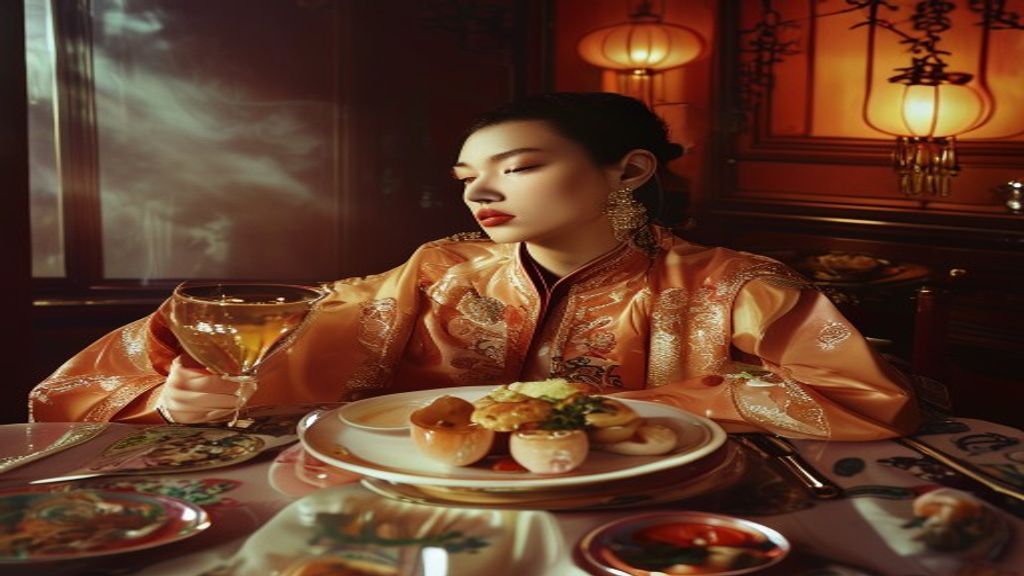
Plate · Breakfast at Givenchy’s: A Culinary Provocation Met with Polarized Receptions in China
Breakfast at Givenchy’s: A Culinary Provocation Met with Polarized Receptions in China
In the ethereal theatre of global luxury fashion, where spectacle often precedes substance and narrative trumps mere garments, Givenchy recently orchestrated a moment of audacious culinary performance in China. Dubbed 'Breakfast at Givenchy’s,' the event was less a meal and more a meticulously curated tableau, a deconstruction of domesticity filtered through the house’s distinct lens of urban gothic romanticism. Yet, what was conceived as a bold artistic statement, a visceral extension of the brand's creative direction, swiftly spiraled into a digital maelstrom, eliciting a chasm of polarized receptions across the vast digital landscape of China. This incident, far from a mere misstep, serves as a potent case study in the intricate dance between avant-garde expression, cultural sensitivity, and the unforgiving gaze of the contemporary luxury consumer.
The Provocation of the Plate: Decoding Givenchy's Aesthetic Gambit
Givenchy, under its current creative stewardship, has consistently pushed the boundaries of its historical codes, infusing its haute couture and ready-to-wear collections with a raw, almost confrontational edge. The 'Breakfast' event was a logical, albeit audacious, extension of this philosophy. Imagine a minimalist setting, stark and almost clinical, where familiar breakfast accoutrements – eggs, toast, fruit – were reimagined, abstracted, and presented with an unsettling precision. Plates were not merely vessels but canvases; food, a medium for conceptual exploration. It was a deliberate subversion of the everyday, an invitation to view the mundane through a lens of high fashion's often enigmatic artistry.
The visual language deployed was unmistakably Givenchy: a palette of muted tones, sharp lines, and an underlying tension that belied the apparent simplicity. This wasn't about gastronomic delight; it was about sensory interrogation. The brand aimed to evoke a feeling, to provoke a thought, to challenge conventional notions of luxury and comfort. In a market often accustomed to overt displays of opulence and traditional grandeur, this subtle yet profound deviation was a calculated risk. It sought to engage a segment of the Chinese luxury consumer base that appreciates intellectual provocation, those attuned to the more subversive currents within global fashion aesthetics.
"Givenchy's 'Breakfast' was not a meal, but a meticulously curated tableau, a deconstruction of domesticity filtered through the house’s distinct lens of urban gothic romanticism."
Echoes in the Digital Abyss: China's Unfiltered Discourse
The moment images and videos of 'Breakfast at Givenchy’s' permeated Chinese social media platforms – Weibo, WeChat, Douyin – the reactions were instantaneous and vociferous. The digital sphere, a notoriously unfiltered arena, became a battleground of opinions, illustrating the profound divergence in consumer sentiment.
The Devotees: A Celebration of Subversion
One contingent of netizens, primarily younger, globally-minded fashion enthusiasts and early adopters of avant-garde trends, lauded Givenchy's audacity. For them, the event was a refreshing departure from the predictable, a testament to the brand's courage to innovate and challenge norms. They interpreted the starkness as sophistication, the unconventional presentation as artistic genius. Comments ranged from:
- "This is true high fashion, not just pretty clothes. It makes you think."
- "Finally, a brand that dares to be different and provoke. So avant-garde!"
- "It's about the concept, the art. If you don't understand, it's not for you."
These consumers, often well-versed in international art and design movements, saw the 'Breakfast' as a natural evolution of luxury branding, moving beyond mere product display to immersive, conceptual experiences. They appreciated the subtle luxury, the intellectual engagement, and the brand's willingness to take creative risks in a competitive market.
The Dissenters: A Cry for Traditional Grandeur
Conversely, a significant portion of the Chinese audience expressed confusion, disappointment, and even indignation. For many, the minimalist, almost austere presentation of food felt antithetical to the very essence of luxury, particularly within a cultural context that often associates grandiosity, abundance, and aesthetic beauty with high-end experiences. The perceived lack of opulence, the unconventional plating, and the departure from traditional notions of comfort and hospitality were met with sharp criticism. Their sentiments often revolved around:
- "This looks like prison food. Where is the luxury?"
- "For a brand like Givenchy, this is an insult. It's not beautiful or appealing."
- "Is this what they call 'art'? It just looks cheap and unappetizing."
- "They don't understand Chinese culture. We value warmth and generosity."
This segment of consumers, often more traditional in their luxury consumption patterns, felt alienated by the abstract nature of the event. They expected a more conventional display of wealth, elegance, and perhaps a nod to local customs, which they perceived as entirely absent.
Cultural Chords and Discordant Notes: The Nuance of Reception
The polarized reception of 'Breakfast at Givenchy’s' in China underscores a critical challenge for global luxury fashion brands: navigating the complex interplay between universal aesthetic principles and deeply ingrained cultural values. What registers as sophisticated minimalism or intellectual provocation in one cultural context might be perceived as stinginess or cultural insensitivity in another.
Chinese culture often places a high value on hospitality, generosity, and the visual appeal of food. Elaborate banquets, vibrant colors, and abundant portions are deeply woven into the fabric of social gatherings and celebrations. The stark, almost clinical presentation by Givenchy, while perhaps intended to strip away excess and highlight purity of form, inadvertently clashed with these expectations. It raised questions about the brand's understanding of its target audience's cultural nuances and their evolving definition of luxury.
Furthermore, the event highlighted the generational divide within China's luxury market. Younger, digitally native consumers are often more open to experimental concepts and global trends, viewing luxury through a lens that values uniqueness and intellectual engagement over overt displays of wealth. Older or more traditionally-minded consumers, however, may still prioritize classic luxury markers: craftsmanship, heritage, and a sense of refined indulgence.
"What registers as sophisticated minimalism or intellectual provocation in one cultural context might be perceived as stinginess or cultural insensitivity in another."
The Unfolding Tapestry: Givenchy's Strategic Horizon
The 'Breakfast at Givenchy’s' saga is more than a fleeting moment of social media contention; it's a profound lesson in luxury branding and cross-cultural communication. For Givenchy, and indeed for all global fashion houses, it reiterates the necessity of a nuanced approach to the Chinese market, which remains a pivotal engine of growth for the industry.
This incident forces brands to introspect:
- How far can avant-garde push without alienating a significant consumer segment? The line between bold innovation and cultural misstep is increasingly fine.
- What is the true cost of artistic expression in a market driven by consumer sentiment? While creative freedom is paramount, market realities cannot be ignored.
- Can a brand maintain a singular global identity while simultaneously adapting to local cultural intricacies? The tension between global uniformity and local relevance is a constant balancing act.
The polarized reactions suggest that while a segment of the Chinese market is ready for and indeed craves, highly conceptual and provocative luxury experiences, a substantial portion still adheres to more traditional interpretations of luxury. Brands must decide whether to cater to the cutting-edge minority, risking alienation of the broader base, or to seek a more universally appealing, albeit potentially less distinctive, middle ground.
Concluding Insights: The Evolving Lexicon of Luxury
Givenchy’s 'Breakfast' in China serves as a powerful, albeit perhaps unintentional, cultural barometer. It reveals that the lexicon of luxury is not monolithic; it is a dynamic, culturally inflected language constantly being redefined by both brands and consumers. In an era of hyper-connectivity, where images travel at the speed of light and opinions are amplified instantaneously, the stakes for luxury fashion houses are higher than ever.
The incident is a stark reminder that while the pursuit of artistic integrity and brand identity is crucial, it must be balanced with an acute awareness of the cultural landscapes in which these expressions are received. For Givenchy, the 'Breakfast' may have been a challenging experiment, but it undoubtedly sparked a vital conversation – not just about food and fashion, but about identity, perception, and the delicate art of global communication in the ever-evolving world of luxury. The future of luxury in China will likely belong to those brands that can master this delicate equilibrium, crafting narratives that resonate authentically across diverse cultural spectra, without sacrificing their unique, avant-garde soul.