The Unconventional Couture: How 500 Loaves Became a Runway Gown
Explore the audacious alchemy behind fashion's most unexpected creation: a haute couture gown meticulously sculpted from 500 loaves of bread. Deconstruction meets culinary art.
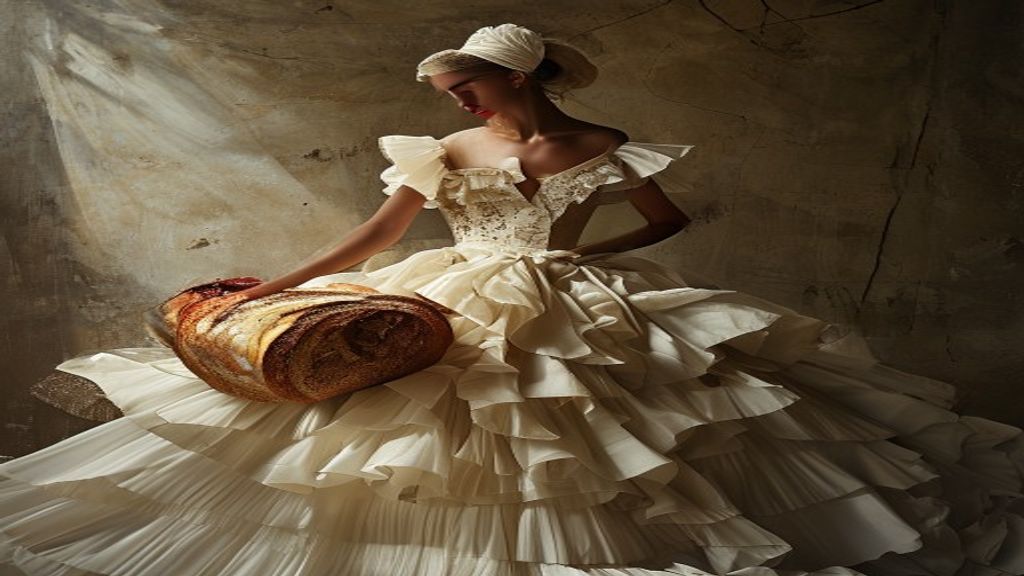
Plate · The Unconventional Couture: How 500 Loaves Became a Runway Gown
The Unconventional Couture: How 500 Loaves Became a Runway Gown
In an era where sartorial boundaries are not just pushed but obliterated, fashion's most disruptive minds continually seek to redefine what constitutes 'wearable art.' From digital fabrics to upcycled industrial waste, the runway has become a canvas for radical material experimentation. Yet, few creations have sparked as much intrigue, debate, and sheer wonder as the haute couture gown meticulously constructed from 500 loaves of bread. This isn't just a garment; it's a gastronomic marvel, a feat of material innovation, and a potent statement on consumption, sustainability, and the ephemeral nature of luxury. As senior fashion editors, we've witnessed the spectacle, but the real story lies in the audacious alchemy behind its creation. How, precisely, does one transform humble flour and water into a runway-ready masterpiece? Let’s deconstruct this edible ensemble.
The Genesis of a Gastronomic Gown
The genesis of a bread gown is, at its core, an act of conceptual defiance. Why bread? Because it challenges every preconceived notion of permanence, durability, and traditional textile. It’s a perishable, everyday staple elevated to an object of high art, forcing a confrontation with our definitions of luxury and value. The vision for such a piece isn't merely aesthetic; it's deeply philosophical, an exploration of time, decay, and the inherent beauty in transience.
Concept to Crust: Initial Vision & Sourcing
The journey begins not with a sketch of a silhouette, but with a profound understanding of the raw material itself. The choice of bread is paramount. This isn't a trip to your local supermarket; it's a highly specialized procurement mission. The designers, working with a team of culinary artists and material scientists, would meticulously select bread types based on:
- Material Selection: Identifying bread types with optimal density, crumb structure, and crust integrity. Rustic sourdoughs, dense rye, and artisanal whole-wheat loaves are often preferred for their structural stability and rich, varied textures.
- Volume & Consistency: Securing 500 identical or complementary loaves from a specialized artisanal bakery. Consistency in size, shape, and bake is crucial for a cohesive final design.
- Logistics: Transportation and initial storage must be executed with precision to prevent spoilage, mold, or damage, all while maintaining the bread's initial form and freshness before the preservation process begins.
"This isn't just fashion; it's a statement on consumption, an edible sculpture challenging our perceptions of luxury and permanence. It’s the ultimate expression of ephemeral beauty."
The Alchemy of Preservation: Beyond the Bakery
Once sourced, the bread must undergo a rigorous transformation to halt its natural decay and render it workable. This is where the true alchemy begins. Standard preservation techniques are often insufficient; a multi-pronged approach is required:
- Controlled Drying: Each loaf is carefully air-dried in a meticulously controlled environment, monitoring humidity and temperature to prevent cracking or warping. Low-heat ovens might be used for initial moisture extraction, followed by weeks, sometimes months, of natural air-drying.
- Stabilization & Hardening: To achieve the necessary rigidity and durability, the dried bread is often treated with food-grade, non-toxic sealants or resins. These treatments penetrate the crumb, fortifying its structure against breakage and environmental factors like humidity.
- Pest Prevention: A critical, often overlooked step involves impregnating the bread with natural, non-toxic anti-fungal and anti-pest agents to ensure the gown's longevity, even if temporary, and its safe handling.
The goal is to transform a perishable, soft item into a stable, structural 'textile' that can withstand the rigors of handling, shaping, and eventually, the runway.
Engineering the Edible Ensemble
With the bread stabilized, the real work of fashion engineering commences. This phase demands an extraordinary blend of traditional couture craftsmanship, architectural precision, and a deep understanding of the material’s unique properties.
Deconstruction & Reconstruction: From Loaf to Link
The 500 loaves are not simply draped; they are meticulously deconstructed and then reconstructed. This process is painstaking:
- Precision Cutting & Shaping: Each loaf is sliced, carved, or molded into specific components. This might involve laser cutting for intricate patterns, hand-carving for organic shapes, or even sanding to achieve smooth, consistent edges. The pieces could range from thin, flexible 'fabric' strips to robust, sculptural blocks.
- Assembly Techniques: Joining these bread components is perhaps the most critical challenge. Traditional sewing is impossible. Instead, innovative methods are employed:
- Invisible Adhesives: Specialized, fast-curing, food-safe adhesives are used to bond pieces, often reinforced with internal supports.
- Mechanical Fasteners: Miniature, custom-fabricated dowels, pins, or interlocking mechanisms made from lightweight, discreet materials (e.g., bamboo, specific plastics) are embedded within the bread segments.
- Specialized Stitching: In some instances, a heavy-duty, reinforced thread might be used to 'stitch' through pre-drilled holes in the bread, creating a chainmail-like effect or securing panels to an underlying structure.
The delicate balance between brittleness and flexibility is constantly managed, ensuring the gown can move, however subtly, with the wearer.
"Every crumb, every crust, had to be considered not just for aesthetics, but for structural integrity. It's an architectural marvel, a feat of material science as much as design, pushing the boundaries of what 'couture' can be."
The Skeleton Beneath the Sourdough: Support & Structure
A gown of this magnitude, especially one made from such an unconventional material, cannot simply hang. It requires a robust, yet discreet, internal armature to define its silhouette and bear its considerable weight. This 'skeleton' is often a lightweight, custom-built framework:
- Internal Armature: Constructed from materials like fine-gauge steel wire, carbon fiber, or reinforced plastic, this structure acts as the foundation, much like the boning in a corset or the framework of a historical gown.
- Weight Distribution: Even dried, 500 loaves of bread possess significant mass. The internal structure must distribute this weight evenly, ensuring the gown is wearable and doesn't collapse under its own force.
- Integrated Mounts: The bread components are carefully mounted onto this framework using a combination of the aforementioned adhesives, hidden clips, and integrated fastening points, creating a seamless, organic flow from the internal support to the exterior bread 'fabric.'
Embellishment & Finish: A Garnish of Grandeur
No haute couture piece is complete without its finishing touches. For the bread gown, these embellishments elevate it from a mere construction to a true work of art:
- Surface Treatments: Edible glazes might be applied to impart a subtle sheen, enhancing the natural variations in crust color and texture. Gilded crusts, using food-grade gold leaf, can add a touch of opulent contrast.
- Integrated Elements: Seeds, grains, or even intricate patterns carved into the bread itself can provide textural depth and visual interest, referencing the material's origins.
- Protective Coating: A final, clear, food-safe sealant is often applied to protect the entire gown from dust, minor impacts, and ambient humidity, ensuring its brief but impactful moment in the spotlight.
The Runway Reverberation: Impact & Interpretation
When the bread gown finally glides down the runway, it’s not just a visual spectacle; it’s a multi-sensory experience that disrupts the conventional fashion show. The subtle, yeasty aroma of the bread mingles with the usual perfumes, creating an unforgettable olfactory signature. The visual impact is immediate: a garment that defies expectations, a sculpture that walks.
A Feast for the Senses (and the Mind)
The bread gown serves as a powerful symbol in conceptual fashion, sparking dialogue on several fronts:
- Sustainability: By transforming an everyday, often wasted, food item into a luxury garment, it comments on food waste, consumption patterns, and the potential for radical upcycling.
- Ephemeral Art: Its inherent impermanence questions the lasting value of luxury and challenges the notion of fashion as a durable investment, positioning it more as performance art.
- Materiality: It pushes designers and consumers to reconsider what constitutes 'fabric,' encouraging a deeper appreciation for textile innovation and experimental materials.
- Sensory Engagement: Beyond sight, the gown engages smell and even the imagined texture, creating a more holistic and memorable experience for the audience.
It's a bold statement that luxury can be found in the most unexpected places, and that true innovation lies in challenging the status quo.
Concluding Insights: The Future is Flavorful
The creation of a 500-loaf bread gown is more than a whimsical stunt; it’s a profound exploration of fashion’s evolving identity. It stands as a testament to human ingenuity, artistic daring, and the relentless pursuit of pushing creative boundaries. This piece, with its fusion of culinary art and haute couture, exemplifies the interdisciplinary nature of contemporary design, where the lines between art, food, and fashion are increasingly blurred.
Such audacious creations inspire future generations of fashion designers to look beyond traditional materials and embrace the unconventional. They remind us that the most impactful statements are often made when we dare to transform the ordinary into the extraordinary, challenging perceptions of beauty, value, and permanence. The bread gown may eventually return to dust, but its legacy as a symbol of radical fashion innovation and its call to conscious creation will continue to ferment in the annals of style, proving that the future of fashion is indeed, wonderfully flavorful.