The Algorithmic Allure: Deconstructing French Luxury's Numerical Supremacy
Beyond the runway's ephemeral glow, French luxury thrives on precise data. We unravel the intricate figures shaping an empire of unparalleled elegance and influence.
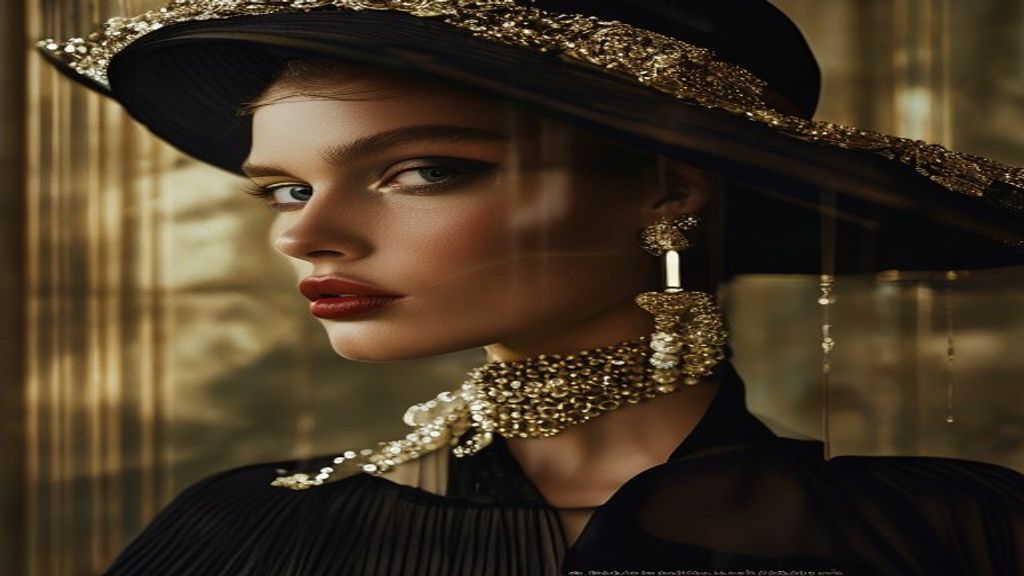
Plate · The Algorithmic Allure: Deconstructing French Luxury's Numerical Supremacy
In the ethereal realm of French luxury, where silk whispers and diamonds gleam with an otherworldly luminescence, one might be tempted to believe that its allure is purely an affair of the senses, a triumph of intangible artistry. Yet, beneath the exquisite facade, behind every meticulously hand-stitched bag and every haute couture silhouette, lies a robust, almost brutalist, architecture of numbers. This is not merely an industry; it is a meticulously engineered ecosystem, a veritable empire built upon pragmatic alchemy where creativity meets calculation. To truly comprehend the enduring power of French luxury, one must dare to look beyond the shimmering surface and decipher the esoteric equations that govern its unparalleled global dominance.
We embark on an audacious expedition into the numerical heart of this cultural phenomenon, dissecting the statistics, the market valuations, the artisanal hours, and the digital footprints that collectively forge the mythos of French elegance. This is not a dry economic report, but an x-ray into the very bone structure of an industry that defines aspiration, a deep dive into the quantifiable truths that sustain the dream.
Macro-Economic Canvas: The Billion-Dollar Tapestry
The sheer scale of French luxury is staggering, a testament to its pervasive influence on the global economy. Far from being a niche market, it is a colossal engine of wealth creation, innovation, and employment. The French luxury sector, encompassing everything from fashion and leather goods to jewelry, watches, cosmetics, and wines & spirits, contributes an estimated €170 billion annually to the French GDP, a figure that only hints at its broader global economic ripple effect. This isn't just about sales; it's about an entire value chain that supports millions.
The Giants' Shadow: LVMH, Kering, Chanel
At the apex of this empire stand titans whose market capitalizations dwarf those of entire nations. LVMH Moët Hennessy Louis Vuitton, a conglomerate of over 75 illustrious Maisons, frequently commands a market valuation exceeding €400 billion, making it Europe's most valuable company. Kering, another formidable force with brands like Gucci and Saint Laurent, operates with similar strategic precision, while the privately held enigma that is Chanel continues to post annual revenues in the tens of billions. These entities are not just fashion houses; they are financial behemoths, meticulously managing portfolios of heritage and innovation.
Global Footprint, Local Soul
While rooted in Parisian chic, French luxury maintains an unparalleled global footprint. France accounts for nearly 30% of global luxury goods exports, a statistic that underscores its pivotal role in shaping consumer desires worldwide. This export prowess supports over 2.5 million jobs globally, from the ateliers of Paris to the retail floors of Shanghai and New York. The industry's resilience is further evidenced by its consistent growth, often outpacing global economic averages, demonstrating an inelastic demand for its products even amidst fluctuating market conditions.
- Leather Goods: Constituting approximately 40% of the market share, driven by iconic brands like Louis Vuitton and Hermès, with an average annual growth rate of 7-9%.
- Apparel & Ready-to-Wear: Around 25% of the market, experiencing renewed vigor through creative direction and digital engagement, growing at 5-7%.
- Jewelry & Watches: A significant 20% slice, boasting high margins and enduring value, with a steady growth of 6-8%.
- Perfumes & Cosmetics: The remaining 15%, offering accessible entry points into luxury, consistently growing at 4-6% annually.
The Alchemy of Craft: Numbers in Creation
The true cost of French luxury is rarely perceived through its retail price alone; it is embedded in the immeasurable dedication to craft. Here, numbers speak not of mass production, but of singular devotion.
Artisanal Investment: Time, Skill, Legacy
Consider the genesis of a single Hermès Birkin or Kelly bag: it demands an average of 18-24 hours of a single artisan's meticulous labor, from the initial cut to the final stitch. For haute couture, the figures are even more breathtaking: a single gown can require anywhere from 800 to 2,000 hours of handiwork, involving dozens of highly specialized artisans—embroiderers, feather workers, pleaters—each a master of their esoteric domain. This isn't efficiency; it's an investment in perfection, a refusal to compromise on the human touch.
Material Metrics: The Pursuit of Perfection
The procurement of raw materials is another numerical marvel. Sourcing ethically certified rare leathers, conflict-free gemstones, and bespoke fabrics spun from the finest silks or cashmere involves a global network of suppliers, each adhering to stringent quality controls. The cost of these materials often represents over 60% of the production value for certain high-end pieces, a testament to the uncompromising pursuit of unparalleled quality. Every thread, every stone, every hide is chosen with a precision that borders on obsession, quantified by rigorous standards and certifications.
“The true measure of luxury is not its price tag, but the immeasurable hours of human devotion it embodies. It is the silent calculus of passion, translated into tangible beauty.”
Digital Decryption: Luxury in the Algorithmic Age
The digital revolution, once viewed with skepticism by traditional luxury houses, has been embraced with a strategic fervor, transforming how French luxury connects with its global clientele. The numbers here are not just about sales, but about reach, engagement, and data-driven personalization.
E-Commerce Zenith: The Digital Boutique
Luxury e-commerce has soared, with French brands leading the charge. Online sales now account for approximately 22% of total luxury sales, a figure projected to reach 30% by 2027. This isn't just about transactional convenience; it's about creating immersive digital experiences that mirror the exclusivity of a physical boutique, often leveraging advanced UI/UX design, virtual try-ons, and personalized digital concierges.
Social Resonance: Influence by the Impression
The power of social media for French luxury brands is undeniable. Campaigns on platforms like Instagram, TikTok, and WeChat generate billions of impressions annually. Top-tier brands consistently achieve average engagement rates of 5-8%, translating into unparalleled brand visibility and direct consumer interaction. The return on investment (ROI) for influencer marketing in the luxury sector can reach up to 7x, demonstrating the quantifiable impact of digital storytelling.
- AI-Driven Personalization: Utilizing vast customer data to offer bespoke recommendations, enhancing customer lifetime value by an average of 15-20%.
- Virtual Reality (VR) & Augmented Reality (AR): Deploying immersive experiences for product launches and virtual try-ons, increasing conversion rates by up to 10%.
- NFTs & Blockchain: Exploring digital authenticity, exclusive access, and new revenue streams, with some luxury brands generating millions from limited-edition digital assets.
- Data Analytics for Trend Forecasting: Leveraging big data to predict consumer preferences and optimize supply chains, reducing waste and increasing responsiveness.
The Sustainability Equation: Future-Proofing Elegance
In an era of heightened environmental consciousness, French luxury is recalculating its impact, embedding sustainability not as a trend, but as a fundamental pillar of its future value proposition. Here, numbers reflect commitments, reductions, and circularity.
Ethical Metrics: Beyond Greenwashing
Leading French luxury houses are collectively investing billions annually in sustainable practices, from regenerative agriculture for raw materials to renewable energy sources for manufacturing. Over 70% of major French luxury brands are actively pursuing or have achieved significant environmental certifications (e.g., ISO 14001, B Corp), demonstrating a quantifiable shift towards responsible production. Targets include a 30% reduction in carbon emissions across supply chains by 2030 and a substantial increase in the use of recycled or sustainably sourced materials.
Circularity's Calculus: Redefining Value
The concept of circularity is reshaping the luxury lifecycle. Brands are actively promoting repair services, extending product lifespans by an average of 5-10 years. Upcycling initiatives, where pre-loved items are transformed into new creations, are gaining traction, along with strategic partnerships with authenticated resale platforms. This not only minimizes waste but also creates new value streams and reinforces the enduring quality of luxury goods. The aim is to reduce waste to landfill by 50% by 2035, a bold numerical commitment to a more sustainable future.
“The future of luxury is not merely opulent, but inherently responsible. Its true value will be quantified not just by its rarity, but by its positive impact on the planet and its people.”
Concluding Insights: The Irreducible Value
To dissect French luxury by the numbers is not to diminish its mystique, but to illuminate the profound intelligence that underpins it. The statistics reveal an industry that is not only robust and economically vital but also remarkably adaptable and forward-thinking. From the hundreds of hours poured into a single creation to the billions invested in digital innovation and sustainable practices, every numerical datum tells a story of strategic intent and unwavering commitment to excellence.
Yet, the ultimate value of French luxury remains, in part, irreducible. While we can quantify market shares, growth rates, and artisanal hours, the emotional resonance, the cultural legacy, and the aspirational power it wields defy simple arithmetic. The numbers are the scaffolding; the dream is the edifice. French luxury, in its intricate dance between the quantifiable and the poetic, continues to set the benchmark for desirability, proving that even in a data-driven world, true elegance finds its most powerful expression when precision fuels passion.