The Cerebral Canvas: Basquiat’s Heads Get a Museum Show, Redefining Fashion’s Gaze
Basquiat's iconic "Heads" series gets a museum show, revealing its profound influence on avant-garde fashion, street style, and contemporary design narratives.
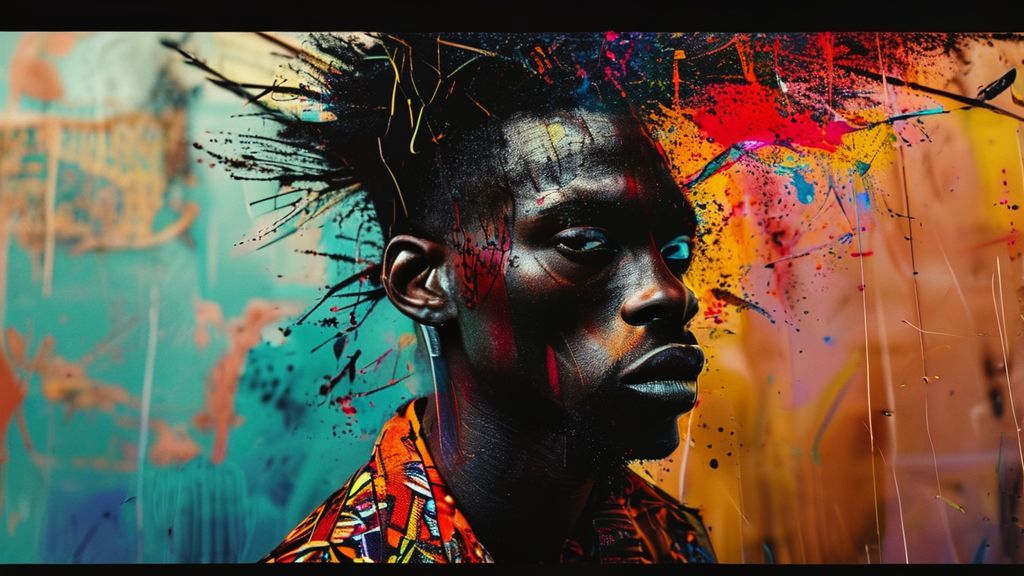
Plate · The Cerebral Canvas: Basquiat’s Heads Get a Museum Show, Redefining Fashion’s Gaze
In the hallowed halls where hushed reverence typically reigns, a seismic shift occurs. The raw, visceral energy of Jean-Michel Basquiat’s ‘Heads’ series erupts, not merely as an art exhibition, but as a profound sartorial manifesto. For the discerning eye accustomed to dissecting the intricate narratives of haute couture and the bold declarations of prêt-à-porter, this collection of Basquiat’s intensely personal and universally resonant portraits offers more than just visual stimulation; it presents a deconstructed roadmap to the very soul of contemporary fashion. This isn't merely an art show; it’s a cultural excavation, revealing the indelible marks Basquiat etched onto the canvas of our collective consciousness, a canvas now inextricably woven into the fabric of global style.
Basquiat, the quintessential style icon of an era defined by rebellion and creative explosion, was a conduit for the urban cacophony, transmuting its chaos into compelling visual poetry. His ‘Heads,’ with their frenetic lines, blazing eyes, and often unsettling smiles, are more than mere representations; they are psychological landscapes, portals into the artist’s acute perception of identity, power, and the socio-political currents of 1980s New York. Their arrival in a dedicated museum show forces a re-evaluation, challenging both art historical canons and the often-ephemeral nature of fashion trends. It is here that the true art-fashion synergy becomes undeniable, a dialogue both confrontational and captivating.
The Anatomy of Anarchy: Deconstructing Basquiat's Heads
The ‘Heads’ series is an audacious exploration of the human condition, stripped bare and reassembled with a primal urgency. Basquiat’s unique visual language, a potent amalgamation of graffiti, tribal art, anatomical drawings, and abstract expressionism, creates figures that are simultaneously fragile and monumental. These aren't polished portraits designed for polite admiration; they are raw, almost violent declarations, pulsating with the energy of the street. Each head is a universe of contradictions: joy and pain, wisdom and madness, beauty and grotesque. The deliberate rawness, the visible brushstrokes, the scratched surfaces, and the often-unsettling gazes resonate deeply with a certain strain of avant-garde fashion that champions imperfection and deconstructed aesthetics.
“Basquiat’s ‘Heads’ are not merely portraits; they are psychological landscapes, echoing the deconstructed narratives prevalent in contemporary fashion.”
Consider the deliberate fraying of Comme des Garçons’ early collections or the calculated asymmetry of Yohji Yamamoto. Basquiat’s approach to the canvas mirrors these sartorial revolutionaries who sought to dismantle conventional notions of beauty and form. His use of found objects, text, and symbols within the ‘Heads’ speaks to a bricolage aesthetic, a collage of disparate elements that find harmony in their juxtaposition. This methodology has been absorbed by luxury fashion houses, manifesting in everything from patchworked textiles to graphic-heavy streetwear collaborations, proving that the street’s spontaneous ingenuity can indeed ascend to the highest echelons of design.
A Canvas of Contradictions: Art, Identity, and the Urban Fabric
Beyond their aesthetic power, Basquiat’s ‘Heads’ are profoundly imbued with themes of identity, race, and the complex tapestry of urban life. As a Black artist navigating a predominantly white art world, Basquiat infused his work with potent critiques of colonialism, capitalism, and systemic racism. The crowns frequently adorning his figures are not mere embellishments; they are symbols of royalty, sainthood, and sovereignty, reclaiming narratives of power for marginalized voices. This exploration of authenticity and socio-political commentary finds a direct and powerful parallel in fashion’s current imperative for diverse representation and cultural dialogue.
From the nuanced messaging of Telfar Clemens, whose democratic luxury challenges traditional hierarchies, to the unapologetic declarations of Virgil Abloh, who masterfully bridged streetwear and haute couture, the runway has become a new arena for crucial discourse. Basquiat’s work, much like these designers’ collections, transcends mere aesthetics to become a vehicle for cultural identity and social critique. His ‘Heads’ embody a spirit of defiant individuality, a quality that remains the ultimate aspirational hallmark in the ever-evolving lexicon of personal style. They are a constant reminder that true elegance lies not in conformity, but in the courageous embrace of one’s unique narrative.
From Canvas to Couture: Basquiat's Enduring Fashion Resonance
The influence of Basquiat’s work on fashion is not merely tangential; it is deeply embedded in the contemporary design language. His lexicon of symbols – crowns, anatomical sketches, enigmatic texts, and the unmistakable scrawl of his handwriting – has permeated the fashion zeitgeist with an almost alchemical potency. His raw graphic sensibility, a rebellion against polished perfection, has become a coveted aesthetic, inspiring countless designer collaborations and collections. From Supreme’s highly anticipated drops to more elevated partnerships with luxury brands like Coach and Comme des Garçons, Basquiat’s artistic DNA is continually reinterpreted, proving his timeless appeal as a multidisciplinary force.
The very act of wearing a Basquiat-inspired piece is a statement – an alignment with a rebellious spirit, an intellectual curiosity, and an appreciation for art that refuses to be confined. It speaks to a consumer base that seeks authenticity and narrative depth in their luxury fashion choices, moving beyond mere branding to embrace cultural significance. This phenomenon underscores a broader shift in the industry, where artistic integrity and social commentary are increasingly valued alongside craftsmanship and material excellence. Basquiat didn’t just paint; he curated an entire aesthetic universe, and fashion has been diligently mining its riches ever since.
The Sartorial Echo: Textures, Silhouettes, and Subversion
The translation of Basquiat’s aesthetic into fashion is multifaceted. Consider the textures: the layered, scratched, almost archaeological surfaces of his canvases find their counterpart in distressed denim, artfully frayed hems, and the tactile richness of luxury streetwear. The deliberate imperfection, the visible process, and the raw materiality are echoed in textile innovation that celebrates irregularity and a handmade feel. Silhouettes, too, bear his mark. The stark, almost confrontational gaze of his ‘Heads’ inspires bold, sculptural forms that demand attention, eschewing delicate demureness for a powerful, assertive presence. Oversized tailoring, asymmetrical cuts, and garments that appear ‘unfinished’ or repurposed all owe a debt to Basquiat’s raw, neo-expressionist style.
“His raw graphic sensibility, a rebellion against polished perfection, has become a coveted aesthetic, inspiring countless designer collaborations and collections.”
Color palettes often reflect his vibrant, almost clashing juxtapositions – neon brights against somber blacks, primary colors clashing with earthy tones – creating visual tension that is undeniably chic. The subversive use of text and symbols as integral design elements, moving beyond mere embellishment to become part of the garment’s structural and conceptual integrity, is another hallmark. This conceptual fashion approach, where clothing becomes a canvas for ideas and statements, places Basquiat not just as an artist, but as an unwitting prophet of contemporary style, influencing everything from runway aesthetics to everyday urban chic.
The Museum as a Catwalk: Curating Cultural Dialogue
To witness Basquiat’s ‘Heads’ within the sanctified confines of a museum is to observe a profound recontextualization, a cultural reclamation that speaks volumes about the evolving relationship between street art, high culture, and by extension, street style and luxury fashion. The museum, traditionally a gatekeeper of established art, now acts as a grand stage, a catwalk where the raw energy of the streets is presented with academic rigor. This institutional embrace validates Basquiat’s genius, solidifying his position not just as a prodigious talent but as a pivotal figure whose influence transcends disciplinary boundaries.
The exhibition itself becomes a curated fashion editorial, each ‘Head’ a powerful image demanding interpretation, much like a striking runway look or a meticulously styled campaign. It invites viewers to engage with art on multiple levels – intellectual, emotional, and visceral – much in the same way that truly great fashion engages its audience. The dialogue between the art and its observers is amplified, forcing a confrontation with the uncomfortable truths Basquiat so fearlessly depicted, truths that continue to reverberate through our societal structures and, by extension, our sartorial choices.
A Legacy Etched in Thread: Basquiat's Eternal Muse
Basquiat was not merely an artist; he was a cultural seismograph, registering the tremors of his era and projecting them onto a canvas with unparalleled ferocity. His ‘Heads’ remain potent totems, eternal muses for designers seeking to infuse their collections with raw emotion, intellectual depth, and an undeniable pulse of the street. His legacy is etched not just in paint, but in the very threads of contemporary fashion. He championed a form of artistic expression that was audacious, uninhibited, and deeply personal, qualities that are now highly prized in a fashion landscape craving authenticity and boundary-pushing creativity.
The exhibition serves as a powerful reminder of his enduring impact, solidifying his status as a perpetual source of inspiration for those who dare to challenge norms and redefine beauty. His art continues to provoke, to inspire, and to demand attention, much like a truly iconic fashion statement. He remains a beacon for the intersection of art, music, and fashion, a true polymath whose vision continues to inform and transform the creative industries.
Concluding Insights: The Unending Dialogue
The Basquiat ‘Heads’ exhibition is more than a retrospective; it is a vital interrogation of identity, culture, and the enduring power of artistic rebellion. For the fashion cognoscenti, it serves as a potent reminder that true style, like true art, is never static. It is a continuous, often uncomfortable, dialogue with the zeitgeist, a reflection of societal shifts and individual expressions. Basquiat’s work, with its raw honesty and intellectual depth, provides a powerful lens through which to view the evolution of contemporary fashion, demonstrating how art can not only inspire but fundamentally shape our aesthetic sensibilities.
His ‘Heads’ are not just paintings; they are prophecies, foretelling a future where the boundaries between disciplines blur, where street culture informs luxury, and where personal expression reigns supreme. As we navigate an increasingly complex world, the echoes of Basquiat’s rebellious spirit and profound vision continue to resonate, urging us to look beyond the surface, to embrace authenticity, and to find beauty in the unconventional. The museum show is a testament to his lasting genius, a compelling argument for his continued relevance, and an undeniable affirmation of art’s transformative power on the runway and beyond.