Ai Weiwei's 30-Ton Button: Fashion, Art, & Dissent's New Form
Ai Weiwei's monumental 30-ton button installation redefines scale, materiality, and the subversive power of art, weaving a new narrative into the very fabric of contemporary fashion and cultural discourse.
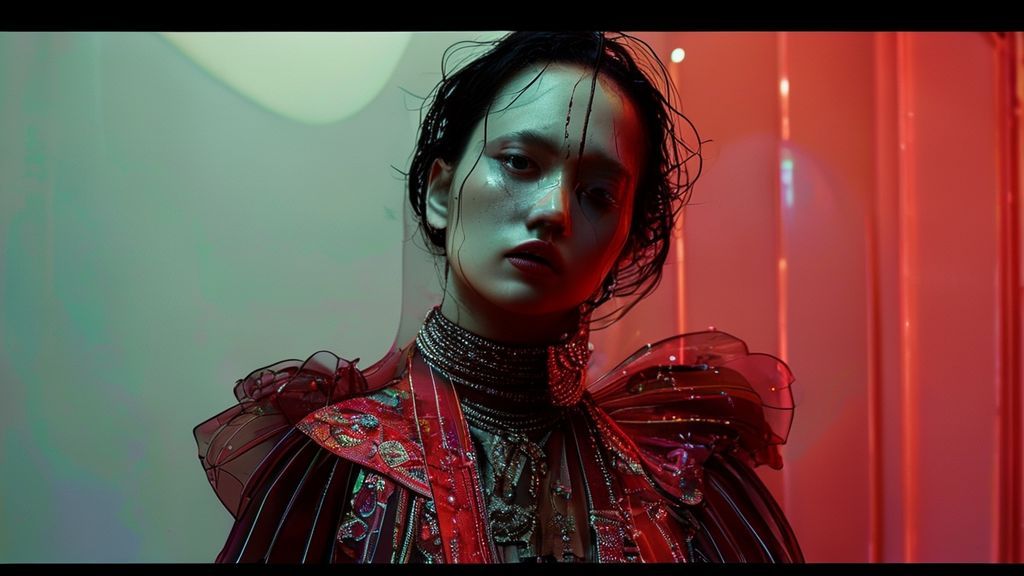
Plate · Ai Weiwei's 30-Ton Button: Fashion, Art, & Dissent's New Form
Ai Weiwei's Colossal Button: A 30-Ton Statement on Art, Fashion, and the Fabric of Dissent
In the rarefied air where artifice meets authentic expression, Ai Weiwei emerges once more, not merely with a statement, but with a seismic shift. His latest audacious undertaking—a 30-ton button installation—is not just an artwork; it is a monumental interrogation of the mundane, a philosophical anchor dropped into the churning currents of contemporary culture. For those attuned to the subtle vibrations of avant-garde design and the profound narratives woven into the very threads of our existence, this colossal artifact is a compelling, almost visceral, dialogue between the utilitarian and the utterly transcendent. It is here, at the intersection of immense scale and microscopic detail, that Ai Weiwei stitches a new chapter, one that resonates deeply within the hallowed halls of art and the fiercely innovative ateliers of high fashion.
The button, an object so ubiquitous it often slips beneath our notice, is elevated by Ai Weiwei to a status of profound contemplation. It is a fundamental component in garment construction, a humble fastener that dictates form, closure, and even the very silhouette of our sartorial choices. Yet, in his hands, it becomes a tour de force, a weighty symbol of connection, detachment, and the unyielding pressure of societal forces. This installation is a masterclass in challenging perception, urging us to reconsider the intrinsic value and symbolic power of the everyday, a practice that mirrors the most groundbreaking movements in luxury fashion and sustainable design.
The Anatomy of Disruption: A Button Reimagined
Deconstructing the Mundane: From Fastening to Philosophy
The button, in its conventional form, is an emblem of meticulous craftsmanship and functional design. From the mother-of-pearl closures on a bespoke shirt to the intricate toggles of haute couture, it speaks to the precision of the tailor and the elegance of the wearer. Ai Weiwei, however, strips this object of its immediate utility, inflating its scale to an almost absurd degree. Imagine a button, typically measured in millimeters, now weighing 30 tons. This act of monumentalization forces an immediate re-evaluation, transforming a simple fastening mechanism into a sculptural entity of immense gravity—both literally and metaphorically.
While the precise materials of the 30-ton button may vary (often ceramic, steel, or other robust, industrial composites in Ai Weiwei's oeuvre, echoing traditional Chinese craftsmanship scaled to industrial proportions), its essence lies in this radical recontextualization. It’s a bold statement on materiality itself, pushing the boundaries of what is considered art and what merely serves a function. This interrogation of material and form finds a powerful echo in contemporary fashion, where designers constantly experiment with unconventional textiles, deconstructed garments, and oversized silhouettes to challenge established norms of wearable art and ready-to-wear aesthetics. The button, in this new guise, becomes a silent sentinel, observing the endless cycle of creation and dissolution.
"In Ai Weiwei's universe, the button is not merely a fastener; it is a fulcrum, pivoting between the mundane and the monumental, the personal and the political."
Sculpting Silence: The Weight of Absence
A button's narrative is inherently tied to its counterpoint: the buttonhole, and by extension, the garment it would fasten. Ai Weiwei’s colossal button stands alone, unfastened, unattached. This absence of its intended partner, the garment, creates a profound void, a space pregnant with interpretation. It is a powerful metaphor for the unstitched seams of society, the narratives left untold, the connections severed, and the voices unacknowledged. The physical weight of 30 tons is dwarfed by the conceptual weight it carries, a silent testament to the unseen forces that shape our world.
This deliberate isolation invites a meditative introspection, prompting viewers to consider the implications of detachment and the power of the unsaid. In fashion, this translates to the allure of the unfinished, the raw edge, the garment that intentionally defies perfect closure—a rebellion against the suffocating dictates of conventional beauty and flawless presentation. The installation, therefore, becomes a mirror, reflecting our own anxieties about connection and the search for meaning in an increasingly fragmented world, resonating with the philosophical underpinnings of avant-garde fashion design that constantly seeks to disrupt and redefine.
Materiality and Metaphor: Fashion's Unstitched Seam
From Fabric to Form: A Dialogue of Textures and Ideas
Fashion, at its core, is a dialogue of textures, forms, and the stories they tell. Designers meticulously select fabrics—from the ethereal whisper of silk to the robust integrity of raw denim—to convey specific messages and evoke particular emotions. Ai Weiwei’s choice of material for his monumental button, whether it be polished steel, rough concrete, or delicate porcelain scaled to an impossible degree, is never arbitrary. Each material carries its own history, its own cultural baggage, and its own aesthetic weight, much like the carefully curated textiles in a luxury fashion collection.
The juxtaposition of the button's colossal scale with the delicate nature of its conventional use in fashion creates a fascinating tension. It forces us to confront the inherent contradictions in our material world—the disposable versus the eternal, the functional versus the purely symbolic. This tension is a fertile ground for avant-garde designers who explore deconstruction, oversized silhouettes, and radical fabric manipulation to challenge traditional garment construction. The button, in its isolated grandeur, becomes a tactile manifestation of these conceptual explorations, a beacon for those who see fashion not just as clothing, but as a profound artistic and intellectual endeavor.
The Unfastened Narrative: Fashion as a Site of Resistance
Fashion has long served as a potent site for expressing individuality, rebellion, and social commentary. From the punk movement's defiant anti-establishment aesthetic to Vivienne Westwood's sartorial activism, clothing has been a canvas for dissent. Ai Weiwei's unfastened, monumental button embodies this spirit of resistance. It is a symbol of unfinished business, unaddressed societal issues, and the refusal to be neatly contained or silenced. This resonance with fashion's capacity to challenge norms is undeniable.
Think of designers like Rei Kawakubo, Yohji Yamamoto, or Martin Margiela, whose work often embraces 'unstitched' aesthetics, exposed seams, and garments that appear perpetually in flux. Their creations, much like Ai Weiwei's button, deliberately defy conventional notions of perfection and completeness, inviting viewers to engage with a deeper, often uncomfortable, truth. The button, in this context, becomes a powerful emblem of an unyielding spirit, a testament to the enduring human desire to question, to provoke, and to leave certain narratives defiantly unfastened, echoing the most potent statements seen on global fashion week runways.
"The true luxury of Ai Weiwei's work lies not in its material opulence, but in its audacious refusal to be contained, much like the most provocative expressions of haute couture."
The Sartorial Statement of Dissent: Ai Weiwei’s Enduring Thread
Art as Activism: Stitching Political Commentary into the Cultural Fabric
Ai Weiwei’s entire oeuvre is a testament to the power of art as activism. He consistently leverages his platform to critique authority, shed light on human rights abuses, and offer poignant commentary on global politics. The 30-ton button, seemingly an innocuous object, is imbued with the weight of his artistic and political biography. It is a 'fastener' that refuses to fasten, symbolizing an unyielding refusal to conform, to be silenced, or to allow inconvenient truths to be neatly buttoned up and hidden away. This act of defiance, rendered in such immense physical form, is profoundly impactful.
The parallels to ethical fashion and luxury brands that use their platforms for social justice are striking. Many contemporary designers and labels are moving beyond mere aesthetics, weaving narratives of sustainability, fair labor, and cultural inclusivity into their collections. Ai Weiwei's button serves as a powerful reminder that true luxury, whether in art or fashion, can lie in its moral compass, its capacity to provoke thought, and its unwavering commitment to a more just and equitable world. It's a call to action, disguised as an art installation, urging us to consider the provenance and purpose behind every stitch and every choice.
Beyond Ornament: The Functional and the Symbolic in Fashion
In fashion, buttons serve a dual purpose: they are both functional necessities and decorative ornaments. They can be simple and utilitarian, or elaborate, jewel-encrusted statements that elevate a garment to an object of desire. Ai Weiwei’s colossal button, however, transcends both these categories. By stripping it of its immediate function through scale, he elevates it to a purely symbolic realm, creating an ornament of immense philosophical weight. It becomes a beacon for deeper meaning, a focal point for contemplation that extends far beyond surface aesthetics.
This challenges the fashion industry to look beyond fleeting trends and superficial embellishments, towards the deeper meanings embedded in design choices, artisanal craftsmanship, and the narrative a collection seeks to convey. It encourages a shift towards conceptual fashion, where the story, the message, and the underlying philosophy are as crucial as the silhouette or the fabric. The 30-ton button is, in essence, a masterclass in converting the everyday into the profound, urging us to seek the extraordinary within the ordinary, and to understand that true bespoke design is often born from such rigorous intellectual inquiry.
Beyond the Runway: Curating New Realities
Experiential Fashion and Immersive Art: A Shared Horizon
The installation of a 30-ton button is inherently an immersive, experiential event. Viewers don't merely observe it; they are enveloped by its presence. They walk around it, perhaps under it, grappling with its sheer mass and the paradox of its form. This active engagement mirrors the burgeoning trend of experiential retail and fashion presentations that transcend traditional runway shows. Today’s luxury brands are investing heavily in immersive experiences, pop-ups, and digital fashion initiatives that allow consumers to interact with collections in novel, multi-sensory ways.
Ai Weiwei’s work taps into this desire for authenticity and profound engagement. It’s not enough to simply see; one must feel, question, and participate in the narrative. This shared horizon between art and fashion signals a future where boundaries blur, and creative expressions merge to offer more holistic, thought-provoking encounters. The installation becomes a cultural landmark, a site of pilgrimage for those seeking not just aesthetic pleasure, but intellectual and emotional resonance, much like a groundbreaking fashion exhibition at a major museum.
The Global Narrative: Weaving Cultures and Critiques
Ai Weiwei’s art consistently transcends cultural boundaries, even while deeply rooted in his Chinese identity and personal experiences. The button, a universal object found in almost every culture’s sartorial history, allows for immediate global resonance. This 30-ton iteration serves as a potent focal point for discussions on globalization, mass production, the human condition, and the often-unseen labor that underpins our consumerist societies. It speaks a language understood by all, regardless of background, yet resonates with specific cultural critiques.
In a globalized fashion landscape, where trends are fluid and cultural exchange is constant, Ai Weiwei’s work acts as a powerful anchor. It reminds us that while aesthetic preferences may differ, the fundamental human experiences of connection, control, and commentary are universal. His button becomes a silent orator, weaving together disparate narratives into a cohesive, albeit challenging, global statement on contemporary fashion, art, and the intricate, often fraught, relationship between humanity and industry.
Concluding Insights: The Unbuttoned Future
Ai Weiwei’s 30-ton button installation is more than just an artistic spectacle; it is a profound testament to his genius in transforming the ordinary into the extraordinary, the functional into the philosophical. It stands as a monumental question mark, challenging our perceptions of scale, value, and purpose. Its resonance within the fashion world is undeniable: it’s a clarion call to embrace meaning beyond mere aesthetics, to deconstruct norms, and to wield design as a powerful voice for change. In an era saturated with ephemeral trends and fleeting digital fashion moments, this colossal, tactile statement offers a grounding force, a reminder of art's enduring power to provoke and inspire.
This installation is a new benchmark for conceptual art, an unbuttoned future where the most mundane objects are imbued with epic significance. It is a sartorial statement of epic proportions, challenging us to look closer at the stitches that hold our world—and our wardrobes—together. Ai Weiwei reminds us that sometimes, the most revolutionary act is simply to make us see, truly see, what has always been there, yet remained, until now, unfastened and unexamined.