The Quantum Leap: TurboTax's Unprecedented Foray into NYFW with Who Decides War and Kody Phillips
NYFW witnesses a paradigm shift as Intuit TurboTax co-opts the avant-garde visions of Who Decides War and Kody Phillips, forging a new fiscal aesthetic.
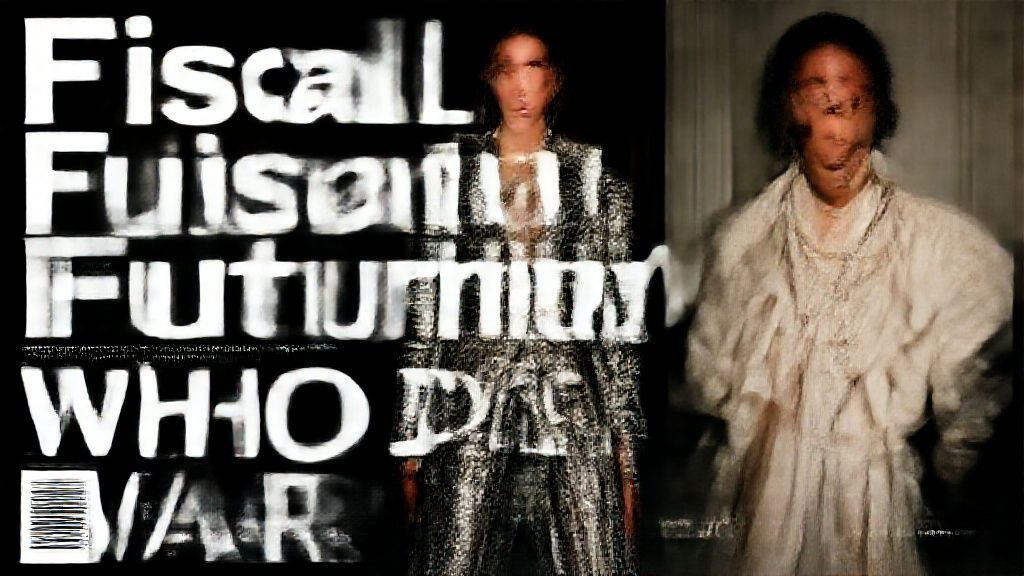
Plate · The Quantum Leap: TurboTax's Unprecedented Foray into NYFW with Who Decides War and Kody Phillips
The Unforeseen Synthesis: TurboTax as Muse
In the ephemeral theatre of New York Fashion Week, where the boundaries of art, commerce, and identity are perpetually redrawn, an announcement rippled through the hallowed halls of sartorial discourse with the force of an existential tremor: Intuit TurboTax, the very embodiment of fiscal meticulousness, was not merely sponsoring but actively collaborating with the iconoclastic forces of Who Decides War and Kody Phillips. This was not a mere branding exercise; it was an audacious declaration, a provocative thesis positing the financial ledger as a canvas, the algorithmic flow of data as a muse, and the very act of taxation as a profound, if hitherto unacknowledged, performative art. The fashion cognoscenti, accustomed to subversion, found themselves grappling with a new frontier of conceptual audacity. How does one reconcile the meticulous logic of tax codes with the fluid, often defiant, language of high fashion? This unexpected alliance compels us to interrogate the very essence of modern existence, where the abstract strictures of finance increasingly dictate the tangible realities of our aesthetic and cultural landscapes. It is a moment of profound, almost unsettling, synthesis, challenging every pre-conceived notion of corporate synergy and artistic autonomy, urging us to look beyond the surface of a seemingly disparate pairing to unearth the deeper, more resonant currents at play.
Who Decides War: Decoding the Dissonance
For a brand like Who Decides War (WDW), helmed by the visionary duo Everard Best and Téla D'Amore, a collaboration with TurboTax might initially seem anathema to their established lexicon of deconstructed elegance, spiritual undertones, and street-infused luxury. WDW's aesthetic is one of layered narratives, often imbued with a melancholic beauty, distressed textures, and a profound sense of history and rebellion. Their garments speak of battles fought, identities forged in adversity, and a constant questioning of societal constructs. How, then, does the stark pragmatism of tax software translate into their rich tapestry? The genius lies in interpretation. WDW approached the collaboration not as an endorsement of corporate finance, but as an exploration of the underlying structures that govern our lives. Imagine architectural tailoring that mimics the complex forms of tax documents, rendered in their signature distressed denim and treated silks. Think of translucent organzas layered to represent the intricate transparency (or opacity) of financial systems, with subtle, almost subliminal embroidery detailing abstract data flows. Their collection for this collaboration might feature garments that appear 'audited' – seams unraveling in deliberate, artful ways, patches that resemble corrected forms, or a palette that shifts from the stark black-and-white of official documents to the vibrant, chaotic hues of a financial market in flux. It’s a subversion of the mundane, transforming the bureaucratic into the beautiful, the restrictive into the liberating. The tension between their raw, often vulnerable aesthetic and the rigid framework of financial regulation creates a compelling, almost confrontational dialogue that is quintessentially WDW.
"This collaboration isn't about endorsing the mundane; it's about excavating the profound structures that underpin our very existence. Even in the algorithm, there is a pulse." – Everard Best, Who Decides War
Kody Phillips: Sculpting the Digital Dystopia
Kody Phillips, a name synonymous with experimental silhouettes, architectural forms, and a fearless embrace of the avant-garde, approaches the human form as a mutable sculpture. His work often blurs the lines between fashion, art, and technology, crafting garments that feel simultaneously futuristic and deeply primal. For Phillips, the TurboTax collaboration offers a fertile ground for exploring the digital self, the data-driven identity, and the abstract geometries of financial systems. One can envision Phillips translating the algorithmic precision of TurboTax into garments of severe, almost alien beauty. Think of razor-sharp pleats that mimic data packets, or laser-cut patterns that resemble circuit boards and flow charts. Fabrics could range from highly reflective technical materials to matte, almost sterile synthetics, playing with the dichotomy of tangible wealth and digital abstraction. His silhouettes might become exaggerated, almost grotesque, forms that speak to the overwhelming nature of data, or conversely, streamlined, minimalist designs that represent the efficiency of digital processing. Perhaps garments that physically 'morph' or 'adapt' through embedded technology, reflecting the dynamic nature of financial portfolios. Phillips's interpretation is likely to be less about direct representation and more about the visceral sensation of living within a digitally mediated financial ecosystem. It's a commentary on how our financial identities are increasingly constructed and deconstructed by unseen algorithms, rendered visible through his challenging, yet undeniably captivating, forms. The collection becomes a wearable manifesto on the digital age, a stark, beautiful, and often unsettling reflection of our fiscal selves.
The Collection's Narrative: A Fiscal Metamorphosis
The collective output of this audacious triumvirate – TurboTax, Who Decides War, and Kody Phillips – promises a runway experience unlike any other. It is a narrative woven from the threads of data, identity, and the inherent tension between human creativity and systemic logic. The collection, titled 'Fiscal Metamorphosis,' is rumored to unfold in acts, each revealing a different facet of this complex relationship.
-
Data Visualization as Textile Art:
WDW's signature distressed fabrics are reimagined with 'data decay' – patterns that emulate corrupted files or fragmented information, hand-embroidered with abstract representations of economic trends. Phillips contributes sculptural pieces that are literal interpretations of data arrays, using 3D printing and unconventional materials to create wearable 'charts' and 'graphs' that move with the body.
-
The Architecture of Fiscal Forms:
Sharp, almost brutalist tailoring from both designers, echoing the rigid lines of tax forms and legal documents. WDW introduces trench coats with hidden pockets and compartments, symbolizing the layers of financial secrecy, while Phillips crafts structural capes and exaggerated shoulders that evoke the imposing presence of financial institutions.
-
Deconstructing Economic Identity:
Garments that visually 'unravel' or are pieced together from disparate elements, reflecting the fragmented nature of modern economic identity. Think of WDW's torn and reassembled denim, now featuring patches of 'receipt' fabric or 'invoice' prints. Phillips presents deconstructed suits where traditional elements are reconfigured into new, unsettling forms, questioning the very uniform of capitalism.
-
Algorithmic Silhouettes:
A recurring motif of geometric precision, often achieved through intricate pleating, laser-cut details, and algorithmic pattern generation. Phillips's gowns flow with a mathematical grace, while WDW incorporates digital prints that abstractly render the flow of capital. The color palette oscillates between the stark, monochromatic tones of official documentation and unexpected bursts of 'error message' neons and 'graph spike' reds.
-
The Paradox of Transparency:
Sheer and translucent fabrics are employed extensively, often layered, to represent the push and pull between financial transparency and obfuscation. Who Decides War utilizes delicate lace and silk organza, revealing glimpses of undergarments that bear 'tax ID' numbers or 'account statements' in subtle script. Kody Phillips offers PVC and clear vinyl pieces, creating an almost clinical, yet undeniably alluring, sense of exposure.
Beyond the Runway: Cultural Implications
This collaboration transcends mere seasonal trends; it is a cultural artifact, a provocative commentary on the pervasive influence of financial structures in our lives. By elevating TurboTax from a utility to a conceptual catalyst, NYFW, Who Decides War, and Kody Phillips have not only expanded the lexicon of fashion but also challenged the very definitions of sponsorship and artistic inspiration. Is this the democratization of luxury, where even the most mundane aspects of life are ripe for high-fashion interpretation? Or is it a stark reminder of capitalism's ever-expanding reach, now co-opting even its most bureaucratic instruments for aesthetic ends? Perhaps it is both, existing in the liminal space where commerce and creativity collide to forge something entirely new and, undeniably, unsettlingly brilliant.
"We are living in an era where data is currency, and algorithms dictate destiny. Fashion, as a mirror to society, must reflect this new reality, however uncomfortable it may be." – Kody Phillips
Concluding Insights
The Intuit TurboTax x Who Decides War x Kody Phillips collaboration at NYFW is more than a collection; it is a cultural moment, a seismic shift in the topography of fashion and its relationship with the broader socio-economic landscape. It is a testament to the boundless capacity of avant-garde design to find inspiration in the most unexpected of places, transforming the prosaic into the poetic, the bureaucratic into the beautiful. This audacious partnership forces a re-evaluation of what constitutes 'fashionable,' pushing the boundaries of taste and challenging our preconceived notions of luxury, utility, and artistic integrity. In an era where every aspect of life is digitized, quantified, and interconnected, this collection stands as a powerful, albeit abstract, testament to the human condition under the gaze of the algorithm. It is a bold, uncompromising statement that will undoubtedly resonate through the annals of fashion history, prompting future generations to ponder the profound sartorial implications of a simple tax return.