Inside the Vault: Decoding Denim's Enduring Legacy at the Levi's Archives
A rare expedition into the hallowed Levi's Archives reveals the raw selvedge, revolutionary rivets, and cultural narratives that forged denim's indelible mark on global fashion.
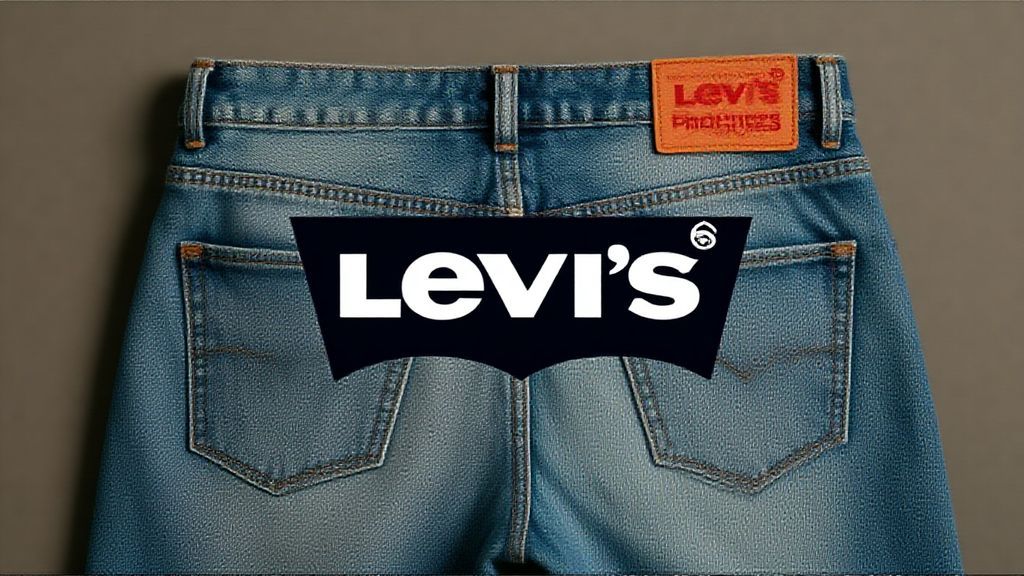
Plate · Inside the Vault: Decoding Denim's Enduring Legacy at the Levi's Archives
Inside the Vault: Decoding Denim's Enduring Legacy at the Levi's Archives
A rare expedition into the hallowed Levi's Archives reveals the raw selvedge, revolutionary rivets, and cultural narratives that forged denim's indelible mark on global fashion.
In the rarefied air of San Francisco, beyond the ubiquitous blue that swathes our global sartorial landscape, lies a repository of unparalleled significance: the Levi's Archives. This is not merely a museum of historical garments; it is a living laboratory, a meticulously curated data bank of denim's evolution, a nexus where heritage informs future-forward design. For the discerning observer of fashion's trajectory, stepping inside this vault is to witness the very genesis of performance wear, to comprehend the iterative refinement of utility, and to trace the indelible thread connecting raw function to cultural iconography.
Our expedition into this hallowed space reveals that Levi's Strauss & Co. has never simply manufactured clothing. They engineered a global uniform, a second skin for generations, adapting with precision to the shifting demands of human endeavor and self-expression. The archive, therefore, functions as a predictive model, informing the iterative design cycles that define modern apparel engineering, continually recalibrating the balance between durability, aesthetics, and sustainable practice.
Early Innovations & The Birth of an Icon
The narrative begins not with fashion, but with an urgent functional imperative. The mid-19th century American West demanded apparel that could withstand the brutal rigors of manual labor. Miners, cowboys, and railroad workers needed garments engineered for extreme stress, capable of enduring abrasion, strain, and the relentless elements. This foundational requirement birthed the very genesis of what we now classify as modern denim performance wear: the riveted "waist overalls."
The pivotal moment arrived in 1873 when Jacob Davis, a Nevada tailor, collaborated with Levi Strauss to patent the process of reinforcing stress points on work trousers with copper rivets. This seemingly simple innovation was a breakthrough in material science and garment construction, transforming fragile seams into points of impenetrable strength. This patent, meticulously preserved within the archives, is not just a legal document; it is the blueprint for durability, the foundational code for an industry.
"Every seam tells a story of utility refined into an emblem of self-expression."
The Genesis of Durability: Rivets and Raw Selvedge
The original Levi's garments, particularly the 501®, were crafted from robust, indigo-dyed denim sourced from American mills, most notably Cone Mills in Greensboro, North Carolina. The term "selvedge" (self-edge) refers to the tightly woven edge of the fabric, preventing unraveling and signifying a superior, often slower, loom process. Examining these early pieces in the archive, one can almost feel the dense, unyielding hand of the raw selvedge denim—a material engineered for longevity, designed to mold to the wearer's body over time, developing a unique patina of wear that bespoke a personal narrative of toil and triumph.
- Key Innovations:
- Copper Rivets (1873): Revolutionized garment strength.
- The Arcuate Stitching (1873 onwards): A distinctive, proprietary design element on the back pockets.
- Two-Horse Pull Patch (1886): Symbolizing the garment's immense strength.
- Red Tab (1936): A crucial branding identifier, protecting the Levi's name.
- Button Fly: A hallmark of durability and classic design.
Beyond Utility: Cultural Assimilation
What began as pragmatic workwear soon transcended its utilitarian origins. The sheer durability and democratic appeal of Levi's denim allowed it to permeate diverse strata of American society. From the ranches of the West to the burgeoning urban centers, the 501® evolved, shedding its overalls moniker to become synonymous with a distinct American ruggedness. The archive holds early examples of this transition, showcasing how a garment designed for labor seamlessly assimilated into everyday life, laying the groundwork for its eventual global dominance as a fashion staple.
The Fabric of Evolution: Denim's Metamorphosis
As the 20th century progressed, Levi's demonstrated an unparalleled adaptive capacity. The archives meticulously document this metamorphosis, revealing how the brand, while steadfast in its commitment to quality and durability, continually reinterpreted denim to align with evolving social currents and fashion sensibilities. The rigid raw denim began to give way to softer washes, varied fits, and new silhouettes, each iteration a response to a changing cultural landscape.
The Post-War Boom and Youth Rebellion
The post-World War II era marked a pivotal shift. Levi's denim, once the uniform of the working class, was embraced by a new generation seeking symbols of rebellion and nonconformity. Icons like James Dean and Marlon Brando, clad in their perfectly worn 501s, cemented denim's status as the ultimate anti-establishment garment. The archive's collection from this period—faded, distressed, and customized jeans and jackets—illustrates this powerful cultural appropriation, where the garment became a canvas for individual expression. This era solidified Levi's not just as a manufacturer, but as a cultural arbiter, a brand intrinsically linked to the spirit of youth and freedom.
"The archive functions as a predictive model, informing the iterative design cycles that define modern apparel engineering."
Avant-Garde Collaborations and Sustainable Futures
The latter half of the century and into the new millennium saw Levi's engage in strategic collaborations, pushing the boundaries of denim design and material innovation. From high-fashion partnerships to experimental washes and finishes, the brand consistently demonstrated its capacity for reinvention. The archives contain prototypes and limited editions that showcase this dynamic interplay between heritage and avant-garde exploration. Furthermore, this period saw the nascent stages of Levi's commitment to sustainability, recognizing the environmental impact of denim production. Early initiatives in water conservation, material recycling, and ethical sourcing are documented, providing a historical context for today's comprehensive sustainability strategies.
Curating Legacy: The Archive's Role in Innovation
The true power of the Levi's Archives lies not in its ability to merely preserve the past, but in its dynamic capacity to inform and inspire the future. It is a critical resource for contemporary designers, product developers, and material scientists within the company. Every stitch, every rivet, every fabric composition is analyzed, deconstructed, and recontextualized. This meticulous study ensures that Levi's remains at the forefront of denim innovation, blending deep heritage with cutting-edge performance requirements.
Data-Driven Design & Heritage Recalibration
Modern design at Levi's is an iterative process, deeply rooted in archival intelligence. Historical patterns are digitized and analyzed for optimal fit and durability. Vintage fabric swatches are studied under electron microscopes to understand fiber degradation and resilience. This data-driven approach allows designers to synthesize new materials and construction techniques that honor the brand's foundational principles while meeting the demands of the 21st-century consumer. Whether it's developing advanced stretch denim with superior recovery or engineering water-saving production methods, the archive serves as the ultimate reference point for both aesthetic authenticity and performance optimization.
Consider the resurgence of specific fits or washes; these are not arbitrary trends but often informed by deep dives into archival records, identifying successful design paradigms that resonate with contemporary sensibilities. The archive provides a blueprint for what works, and more importantly, why it works—a masterclass in enduring design principles.
The Ethical Imperative: Circularity and Craft
In an era defined by environmental consciousness and the demand for ethical production, the Levi's Archives play a crucial role in the brand's sustainability initiatives. By studying historical production methods and the inherent longevity of early garments, designers gain insights into crafting products built to last, thereby reducing waste. The archive's focus on the entire lifecycle of a garment—from raw material to wear and eventual disposal—informs Levi's commitment to circular fashion. This includes exploring innovative textile recycling, developing bio-based dyes, and implementing water-saving techniques like Water<Less™. The craftsmanship evident in older pieces inspires a renewed focus on quality and repairability, moving away from fast fashion paradigms towards a more sustainable, performance-driven approach to apparel.
The Future Woven In: Levi's Next Horizon
As we conclude our privileged access to the Levi's Archives, it becomes abundantly clear that the brand's trajectory is not merely about preserving the past but actively engineering its future. The lessons gleaned from generations of denim innovation are being applied to new frontiers: smart textiles that integrate technology, hyper-durable fabrics that offer unparalleled performance, and personalized fits achieved through advanced manufacturing processes. The essence of Levi's—utility, durability, and authenticity—remains constant, yet its manifestation continually evolves.
The future of Levi's denim will likely see an even greater integration of material science with consumer experience. Imagine jeans that adapt to ambient temperature, or fabrics imbued with self-cleaning properties, all while retaining that iconic Levi's aesthetic and robust build quality. The archive, in this context, is not a static endpoint but a dynamic launchpad, providing the foundational data and inspiration for these next-generation denim innovations. It is a testament to the brand's continuous pursuit of excellence, synthesizing its rich heritage with the imperative of future performance.
Concluding Insights: The Enduring Blueprint
Our journey through the Levi's Archives underscores a profound truth: true innovation is often rooted in a deep understanding of heritage. The archive is more than a collection of historical garments; it is a meticulously documented saga of human ingenuity, material science, and cultural resonance. It reveals how a simple pair of riveted trousers evolved into a global symbol of resilience, individuality, and timeless style. For premium fashion publications and their discerning readership, the Levi's Archives offer a rare glimpse into the strategic foresight required to build a brand that not only endures but perpetually reinvents itself.
"Levi's does not just make jeans; it synthesizes culture, utility, and an unwavering commitment to enduring design."
In an industry often characterized by fleeting trends, Levi's stands as a monolithic testament to enduring design principles: unparalleled durability, adaptive functionality, and authentic self-expression. The archive is the beating heart of this legacy, a constant source of inspiration and a rigorous standard against which all future innovations are measured. It is here that the past and future of denim are inextricably woven, a blueprint for performance, style, and an unwavering commitment to quality that continues to define a global icon.