Isabela Merced Enters 'House of the Dead': A New Paradigm for Performance Aesthetics in Cinema
Isabela Merced's casting in 'The House of the Dead' film adaptation signals a pivotal shift, blending gaming's kinetic energy with high fashion's functional elegance.
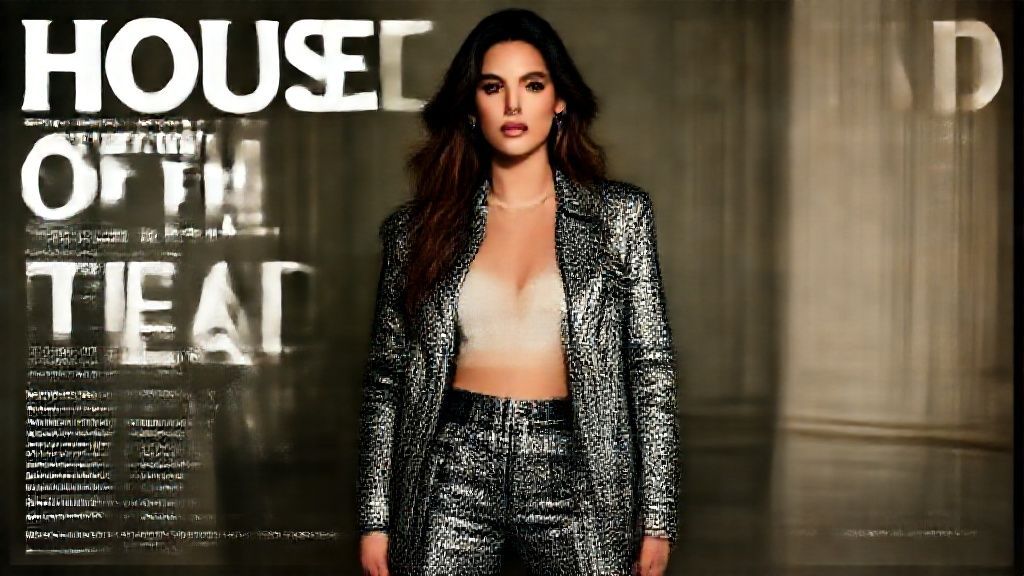
Plate · Isabela Merced Enters 'House of the Dead': A New Paradigm for Performance Aesthetics in Cinema
The New Vanguard: Isabela Merced's Tactical Ascent
In an era defined by the seamless convergence of digital realms and sartorial innovation, the announcement of Isabela Merced joining the film adaptation of Sega's cult classic, 'The House of the Dead,' is more than just casting news—it's a strategic move. This development marks a fascinating intersection, where the kinetic energy of gaming lore meets the rigorous demands of cinematic performance, all viewed through the discerning lens of a premium fashion sensibility. Merced, a talent known for her dynamic range and compelling screen presence, embodies the very essence of modern versatility, making her an ideal figure to navigate the potentially brutal, yet visually rich, landscape of a zombie apocalypse film.
Her career trajectory has consistently showcased a readiness for roles demanding both physical dexterity and profound emotional depth. From her compelling turn in 'Dora and the Lost City of Gold' to her more recent, action-oriented endeavors, Merced has cultivated an image of resilience and adaptability. This inherent versatility aligns perfectly with the core tenets of techwear performance—a fashion philosophy that prioritizes functionality, durability, and ergonomic design without sacrificing an avant-garde aesthetic. As an actress, Merced’s capacity to embody diverse characters, much like a modular garment adapting to various environments, positions her as a compelling muse for this evolving cinematic and stylistic narrative.
From Red Carpet to Digital Realm: A Seamless Transition
The contemporary actor, much like a finely crafted piece of technical apparel, must demonstrate an exceptional capacity for adaptation. Merced's public persona, often captured in refined yet subtly edgy ensembles, hints at a latent affinity for the performance-driven aesthetics that define luxury sportswear and high-concept streetwear. Her red carpet appearances frequently blend minimalist silhouettes with unexpected textural elements, suggesting an understanding of how form and function coalesce to create impact. This preparedness for diverse visual narratives makes her a compelling choice for a film that, by its very nature, demands a heightened sense of practical yet stylized attire.
The transition from the polished glamour of a premiere to the grimy, survivalist demands of 'The House of the Dead' is not merely a shift in genre but a fundamental re-calibration of aesthetic. Here, clothing ceases to be mere adornment and transforms into an integral component of a character's toolkit, a second skin engineered for endurance. Merced’s casting suggests a deliberate choice to ground the fantastical elements of the game in a tangible, performance-centric reality, where every stitch and panel of a costume could tell a story of survival and ingenuity. This approach elevates the film from a simple genre piece to a potential showcase for innovative costume design, mirroring the meticulous attention to detail found in bespoke techwear.
'House of the Dead': A Canvas for Performance Aesthetics
The original 'House of the Dead' arcade game, with its relentless pace and visceral horror, presents a unique opportunity for a film adaptation to explore costume design beyond mere thematic relevance. The inherent darkness and urgency of the game's world cry out for a visual language that is both practical and evocative. This is where the principles of techwear truly shine, offering a blueprint for garments that are not only visually striking but also fundamentally designed for the extreme conditions of a zombie outbreak.
Imagine characters clad in advanced performance fabrics, their movements unhindered by restrictive clothing, their gear integrated seamlessly into their attire. This isn't just about looking 'cool'; it's about conveying a deep understanding of utility and survival. The film's production design, particularly its approach to costuming, has the potential to become a significant talking point within both the fashion and film communities, showcasing how intelligent design can enhance narrative immersion and character authenticity.
The Utility of Fear: Costume Design as Narrative Arc
In a world overrun by the undead, clothing transcends its traditional role. It becomes protection, a tool, a symbol of resilience. The costume design for 'The House of the Dead' could leverage techwear's modularity and material innovation to create looks that evolve with the characters. A jacket might feature hidden compartments for essential gear, pants could incorporate articulated paneling for fluid movement during escape sequences, and footwear could be engineered for maximum traction on treacherous terrain. This approach moves beyond mere styling to a more holistic integration of fashion and function, where every garment is a piece of adaptive clothing, vital for survival.
"In the crucible of cinematic survival, fashion isn't an afterthought; it's the first line of defense, a silent testament to human ingenuity against the odds."
Consider the potential for durable textiles like ripstop nylon or advanced synthetic blends, offering protection against environmental hazards and the inevitable wear and tear of combat. The color palette could lean towards a minimalist aesthetic, utilizing muted tones and strategic pops of color to denote faction, rank, or even a desperate attempt at personal expression amidst chaos. This level of detail transforms costumes into narrative devices, reflecting character development and the harsh realities of their environment.
- Weather-Resistant Membranes: Fabrics like Gore-Tex or similar technical textiles, providing protection against adverse conditions.
- Integrated Utility Systems: Concealed pockets, carabiner loops, and strap systems for essential gear access.
- Articulated Paneling: Ergonomic cuts and paneling at joints for unrestricted range of motion.
- Reflective Detailing: Subtle yet functional reflective elements for low-light visibility, hinting at tactical awareness.
- Modular Attachments: Components that can be added or removed, adapting the garment to specific situational needs.
- Durable, Abrasion-Resistant Fabrics: Materials engineered to withstand harsh environments and prolonged use.
Beyond the Hype: The Intersection of Gaming, Film, and Fashion
The casting of Isabela Merced in 'The House of the Dead' is not an isolated incident but rather a potent symptom of a larger cultural phenomenon: the increasing cross-pollination between gaming, film, and high fashion. These once disparate industries are now engaged in a dynamic dialogue, each influencing the other's aesthetic and technological advancements. Techwear, with its inherent focus on innovation, utility, and a forward-thinking design philosophy, naturally emerges as the sartorial lingua franca for this convergence. It speaks to a generation that values performance as much as panache, demanding garments that are as ready for a digital battlefield as they are for an urban landscape.
This trend is evident in the rise of luxury streetwear brands embracing technical fabrics and utilitarian designs, blurring the lines between haute couture and highly functional apparel. The digital realm of gaming, with its intricate character designs and immersive world-building, provides an endless wellspring of inspiration for designers seeking to push the boundaries of conventional fashion. Conversely, the sophistication of contemporary fashion, particularly its embrace of sustainable practices and advanced material science, offers new avenues for visual storytelling in film and gaming.
The Digital Runway: How Performance Apparel Dominates the Screen
From dystopian epics to sci-fi thrillers, contemporary cinema increasingly features characters clad in what can only be described as high-performance, technical apparel. This isn't just about stylistic choice; it's about conveying a sense of authenticity and readiness. The sleek lines, integrated functionalities, and often monochromatic palettes of techwear lend themselves perfectly to narratives that demand a heightened sense of realism and preparedness. Films are becoming digital runways, showcasing innovative materials and ergonomic designs that subsequently influence mainstream fashion trends.
The blurring lines between military-grade utility, outdoor performance gear, and high fashion are more pronounced than ever. Designers are drawing inspiration from tactical wear, infusing elements like cargo pockets, strap systems, and robust closures into everyday luxury items. This movement champions a form-follows-function philosophy, where every detail serves a purpose, yet is executed with an artistic precision. 'The House of the Dead' has the potential to contribute significantly to this discourse, offering a cinematic platform for the exploration of truly functional and aesthetically compelling survival wear, setting new benchmarks for on-screen sartorial innovation.
Concluding Insights: The Future Silhouette
Isabela Merced's involvement in 'The House of the Dead' adaptation is more than a casting coup; it's a profound statement on the evolving landscape of entertainment and style. It underscores a collective yearning for narratives that are not only thrilling but also visually intelligent, leveraging the power of costume and design to deepen immersion. The techwear performance aesthetic, with its unwavering commitment to innovation, resilience, and a future-forward vision, provides the perfect framework for this new era of cinematic storytelling.
As we anticipate the film's release, the fashion world will undoubtedly be watching, eager to discern how the principles of functional design and adaptive clothing are translated onto the big screen. Merced, with her innate dynamism and capacity for transformation, stands poised to become an icon of this integrated approach, embodying the very spirit of technical sophistication and effortless cool. Her role signals a definitive shift towards a more integrated, performance-driven approach in both entertainment and sartorial expression, where the lines between the digital, the cinematic, and the wearable continue to elegantly blur. The future silhouette, it seems, is undeniably engineered for performance, ready for anything the digital or physical world might throw its way.