From the Archive: Celebrating Carmen de Lavallade, Icon of Dance and Style
Explore Carmen de Lavallade's unparalleled journey: a visionary dancer whose sartorial choices redefined performance aesthetics and left an indelible mark on global culture.
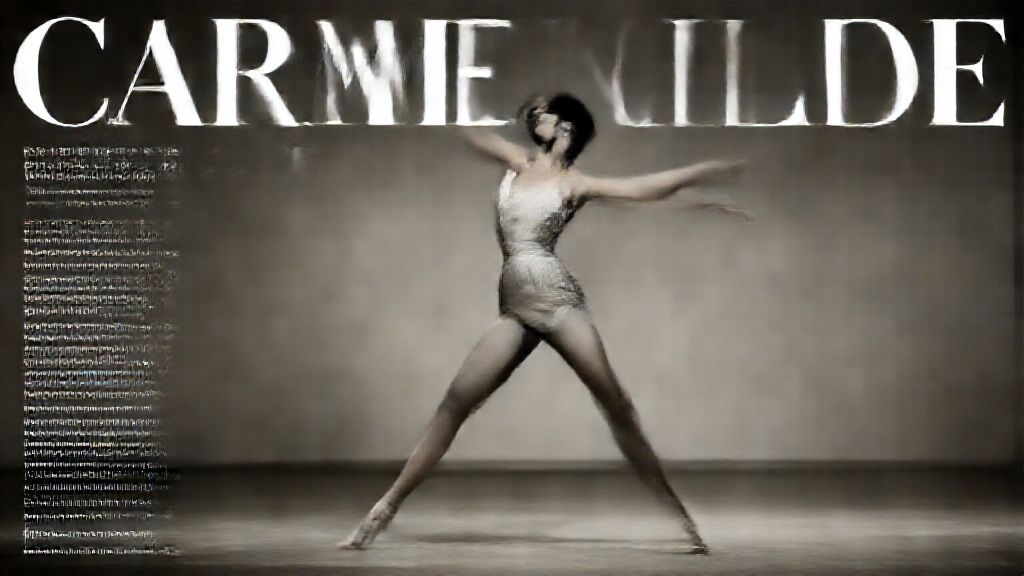
Plate · From the Archive: Celebrating Carmen de Lavallade, Icon of Dance and Style
The Adaptive Icon: Carmen de Lavallade's Engineered Grace
In the expansive archive of performing arts, certain figures emerge not merely as artists, but as architects of a new paradigm, their influence extending far beyond the stage to calibrate the very essence of style. Carmen de Lavallade stands as one such formidable prototype. A dancer, choreographer, actress, and educator whose career spans over seven decades, de Lavallade’s contribution is a masterclass in integrated performance and aesthetic foresight. Her legacy is not just a chronicle of extraordinary movement, but a testament to a deeply considered, almost engineered approach to self-presentation, where every gesture, every garment, was an extension of her kinetic genius. This deep dive into her archival footprint reveals a visionary whose sartorial choices were as deliberate and impactful as her groundbreaking choreography, setting a benchmark for what it means to be a truly adaptive icon.
De Lavallade’s unparalleled journey began amidst the vibrant artistic crucible of Los Angeles in the 1940s, a period ripe for innovation. Her early training with Lester Horton, a pioneer of American modern dance, instilled in her a foundational understanding of the body as a precision instrument. Horton's technique, with its emphasis on a whole-body approach, anatomical correctness, and spatial awareness, provided de Lavallade with a robust vocabulary of movement. This wasn't just dance; it was a system, a biomechanical blueprint for expressive motion. She mastered the intricate isolations, the dramatic falls, and the powerful, yet fluid, transitions that characterized Horton's work. This rigorous preparation cultivated a dancer of extraordinary strength, flexibility, and an innate understanding of the dynamic interplay between tension and release. Her movements possessed an architectural integrity, each line and curve meticulously placed, yet imbued with an organic, almost liquid grace. This early immersion in a system-based approach to dance profoundly influenced her holistic view of performance, where the visual and the kinetic were seamlessly interwoven.
The Choreography of Form: De Lavallade's Movement Language
Early Innovations and Horton Technique
Carmen de Lavallade's mastery of the Horton technique was pivotal. It provided her with a unique kinetic syntax, a language of movement that was both powerful and exquisitely nuanced. Her performances were not just sequences of steps; they were narratives sculpted in real-time, each pose a perfectly calibrated frame, each transition a fluid, seamless shift. This precision, honed through years of dedicated practice, allowed her to inhabit roles with an unparalleled depth and authenticity. She could embody the raw power of a mythical figure one moment and the delicate vulnerability of a human spirit the next, all while maintaining an astonishing command over her physical instrument. Her body became a conduit for complex emotions and narratives, a testament to the transformative power of a deeply understood movement vocabulary. This foundational training was the material science of her artistry, enabling her to innovate and adapt across diverse performance landscapes.
Collaborations and Kinetic Elegance
De Lavallade's career was also defined by a series of transformative collaborations that pushed the boundaries of modern dance and theater. Her partnership with Alvin Ailey, a fellow Horton alumnus, was particularly impactful. Together, they formed a dynamic duo, their synchronized movements and shared artistic vision creating electrifying performances that captivated audiences worldwide. With Ailey, she explored themes of African American heritage, resilience, and joy, imbuing each piece with a profound emotional resonance. Her work with her husband, the multi-talented Geoffrey Holder, further expanded her artistic horizons. Holder, a visionary in his own right, often designed the costumes for their productions, understanding that the visual aesthetic was integral to the performance. These collaborations allowed de Lavallade to explore diverse choreographic styles, from the theatricality of Broadway to the avant-garde sensibilities of experimental dance. Through it all, her kinetic elegance remained her signature, a testament to her ability to adapt and innovate while staying true to her core artistic principles. Her performances were always a harmonious blend of athletic prowess and refined artistry, a testament to her ceaseless pursuit of perfection in movement.
The Fabric of Performance: Her Sartorial Signature
Beyond Costume: Integrated Design Philosophy
For Carmen de Lavallade, clothing was never merely an adornment; it was an integral component of her performance, a 'second skin' meticulously chosen to enhance and articulate her movement. Her approach to costume design was a precursor to modern performance wear, prioritizing functionality, fluidity, and dynamic form. She understood that a garment's silhouette and materiality could either liberate or constrain a dancer, and she consistently opted for designs that facilitated rather than hindered her expansive kinetic vocabulary. Whether it was a flowing tunic that accentuated her dramatic turns or a structured leotard that highlighted her sculpted physique, each piece was a deliberate choice, reflecting an integrated design philosophy. She favored textiles that offered both drape and resilience, materials that would move with her, not against her, creating a seamless visual extension of her artistry. This was not just about aesthetics; it was about optimizing performance through intelligent design, a principle now central to high-performance athletic apparel and luxury activewear. Her stage presence was a masterclass in how costume design can elevate a performance from mere spectacle to a profound artistic statement, blurring the lines between fashion and functional art.
"Her garments were not merely worn; they were activated, an extension of her kinetic vocabulary."
Off-Stage Resonance: Personal Style as Prototype
De Lavallade’s integrated design philosophy extended seamlessly into her personal wardrobe. Off-stage, she cultivated a style that was both timeless and forward-thinking, a prototype for effortless elegance rooted in architectural principles and refined taste. Her choices often leaned towards clean lines, sophisticated tailoring, and a judicious use of color, reflecting a minimalist design sensibility long before it became a widespread trend. She understood the power of a well-cut dress, the impact of a statement accessory, and the enduring appeal of quality craftsmanship. Her wardrobe was a carefully curated collection of pieces that could be mixed and matched, forming a modular system of personal expression. From bespoke suits to artfully draped dresses, her ensembles always exuded an air of understated luxury and inherent confidence. She was a connoisseur of haute couture, but always filtered through her unique lens of practical sophistication. She demonstrated that true style is not about fleeting trends, but about developing a consistent, authentic aesthetic that speaks to one's core identity. Her personal fashion choices continue to inspire, serving as a blueprint for classic style with a contemporary edge, proving that enduring elegance is a function of intelligent design and effortless wearability.
"De Lavallade understood that true elegance is a function of intelligent design and effortless wearability."
Archival Impact: A Legacy Engineered for Tomorrow
Influence on Contemporary Aesthetics
Carmen de Lavallade's legacy reverberates powerfully through contemporary fashion and performance. Her pioneering integration of movement and design laid the groundwork for today's interdisciplinary artists and fashion designers who blur the lines between disciplines. Her emphasis on functional beauty and kinetic expression can be seen in the rise of performance-inspired fashion, where technical fabrics and ergonomic designs are seamlessly blended with high aesthetics. Designers now routinely look to the fluidity of dance and the precision of athletic movement for inspiration, creating collections that prioritize comfort, adaptability, and dynamic form. Her influence is evident in the minimalist yet impactful silhouettes favored by many contemporary brands, and in the growing appreciation for garments that facilitate freedom of movement without sacrificing sophistication. She was, in essence, an early proponent of what we now recognize as adaptive fashion and smart textiles, understanding intuitively that clothing should serve, enhance, and celebrate the human form in motion. Her work continues to inspire a generation of creatives to think beyond traditional boundaries, forging new pathways where art, movement, and style converge.
The Enduring Blueprint of an Icon
De Lavallade’s enduring appeal lies in her comprehensive artistry and her unwavering commitment to authenticity. She created a blueprint for what it means to be a truly integrated artist – one whose physical prowess, intellectual curiosity, and impeccable style coalesce into an unforgettable presence. Her career is a masterclass in longevity and continuous evolution, demonstrating that true iconic status is earned not just through talent, but through persistent innovation and a relentless pursuit of excellence. Her archival images and performance recordings serve as invaluable resources, offering insights into a visionary who consistently pushed the envelope, both on and off stage. She remains a touchstone for dancers seeking to infuse their movements with deeper meaning, for designers striving to create garments that truly live and breathe, and for anyone who believes that style is an extension of identity and purpose. Her legacy is a powerful reminder that the most impactful art, and the most enduring style, are always rooted in a profound understanding of the human condition and an unwavering commitment to craft. She is a cultural icon whose influence continues to shape the future of both art and fashion.
Concluding Insights: The Adaptive Icon
Carmen de Lavallade is more than a legendary performer; she is a paradigm of integrated design and kinetic elegance. Her journey from the rigorous discipline of the Horton technique to the global stages of ballet, modern dance, and Broadway, was underpinned by an innate understanding of the symbiotic relationship between body, movement, and attire. Her style, both on and off stage, was a meticulous calibration of form and function, anticipating the very tenets of modern performance wear and sustainable fashion through its timelessness and adaptability. She didn't just wear clothes; she animated them, transforming fabric into a dynamic extension of her unparalleled artistry. As we revisit her archival footprint, we recognize not just a celebrated past, but a predictive vision—a blueprint for future creatives who seek to synthesize performance, style, and profound personal expression. De Lavallade remains an adaptive icon, her legacy a vibrant, living testament to the power of a life lived with precision, grace, and an unwavering commitment to innovation.