From the Archive: Celebrating Carmen de Lavallade, Icon of Dance and Style
Unpack the indelible legacy of Carmen de Lavallade, whose pioneering spirit in dance and avant-garde style continues to inspire generations of artists and designers.
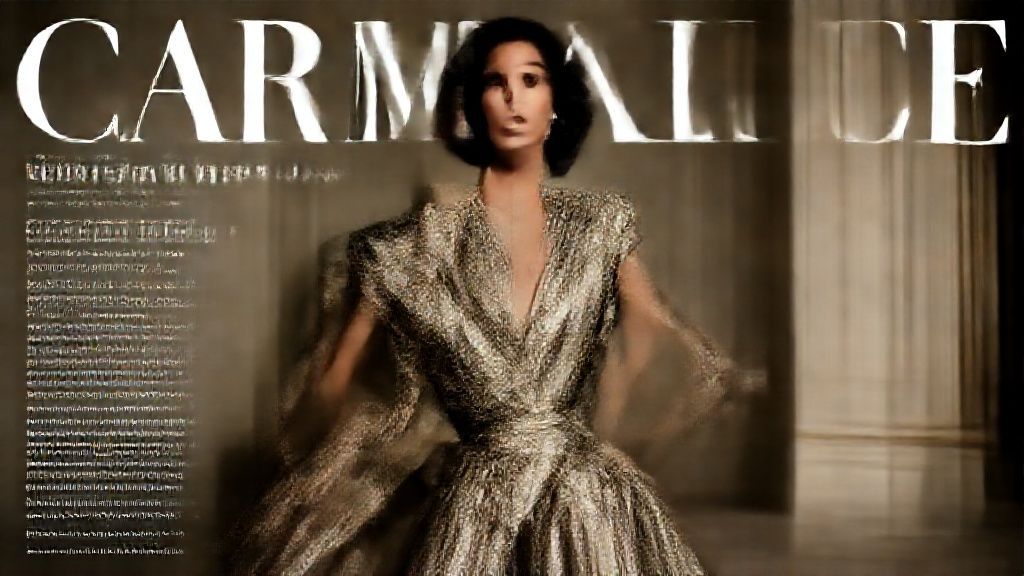
Plate · From the Archive: Celebrating Carmen de Lavallade, Icon of Dance and Style
In the rarefied strata of performance art and fashion, few figures command the enduring reverence and analytical scrutiny reserved for Carmen de Lavallade. A kinetic force whose presence alone could redefine a stage, de Lavallade transcended mere performance; she engineered an aesthetic. Our deep dive into the archives reveals not just a dancer of unparalleled grace, but a sartorial architect whose personal style was as meticulously calibrated as her choreography. Her journey, spanning decades, offers a masterclass in the synergy between body, movement, and design, cementing her status as an icon whose influence is perpetually future-forward.
The Engineered Body: A Kinetic Masterpiece
De Lavallade’s early training under the rigorous tutelage of Lester Horton and Martha Graham forged an instrument of extraordinary precision and expressive power. Her physicality was not merely a vessel for emotion but an engineered system, each muscle group honed for optimal output, every limb a component in a complex, dynamic mechanism. This foundational discipline allowed her to articulate narratives with a clarity and force that few could emulate. Her body became a living sculpture, capable of both monumental stillness and explosive velocity, navigating space with an almost architectural understanding of form and void.
Choreographing the Self: Movement as Design
What distinguished de Lavallade was her innate ability to translate the abstract into the tangible through movement. Her performances were not simply executed steps; they were meticulously designed sequences, each gesture a deliberate stroke on a kinetic canvas. She embodied a philosophy where the body, in its highest state of training, becomes the ultimate tool for design, capable of constructing complex visual and emotional landscapes. This was a form of self-choreography that extended beyond the stage, informing her every public appearance and interaction.
"Her movement wasn't merely expressive; it was an architectural statement, each gesture a meticulously placed element in a kinetic sculpture."
Her approach to dance was akin to a master engineer perfecting a high-performance machine – every angle considered, every transition seamless, every output maximized for impact. This dedication to the integrity of movement, its structural coherence, and its capacity for profound communication established a benchmark for performance art that remains unchallenged. It was a testament to the power of the human form when optimized for both artistic expression and physical prowess, truly embodying a form of performance wear that was inherent to her being.
Sartorial Architecture: De Lavallade's Style Lexicon
Beyond the proscenium, Carmen de Lavallade’s personal style was a masterclass in sartorial elegance and minimalist aesthetics. She eschewed ephemeral trends in favor of a timeless, considered wardrobe that mirrored the structural integrity of her dance. Her choices were deliberate, often gravitating towards clean lines, architectural silhouettes, and high-quality fabrics that allowed for fluid movement and sophisticated drape. This wasn't merely fashion; it was an extension of her performance philosophy, where clothing functioned as a second skin, enhancing rather than distracting from the wearer's inherent dynamism.
Iconic Silhouettes and Textile Narratives
De Lavallade’s wardrobe often featured streamlined gowns, impeccably tailored separates, and statement coats that spoke volumes without excessive ornamentation. Her preference for monochrome palettes or rich, understated hues allowed the form and texture of the garments to take precedence. She understood the power of a well-cut garment, its ability to sculpt and define the body, echoing the precision of her dance. Accessories were chosen with similar discernment – a bold piece of jewelry, a distinctive headwrap, or a pair of elegant gloves, each an intentional accent rather than a superfluous addition. This deliberate approach to dressing cemented her status as an iconic style innovator, long before the terms 'capsule wardrobe' or 'functional design' became ubiquitous in fashion discourse.
"De Lavallade understood that true elegance isn't about adornment, but about the integrity of form and the dynamic interplay with the body in motion."
Her style was a precursor to much of what we now identify as modern luxury or sophisticated ready-to-wear. She favored textiles with intrinsic character – fine wools, silks, and linens that spoke of quality and longevity. Her fashion choices were never about fleeting fads, but about creating an enduring aesthetic, a personal brand of avant-garde fashion that was both elegant and inherently practical. This was not a pursuit of ostentation, but a commitment to excellence in every facet of her visual presentation, a testament to her holistic understanding of design, from the kinetic to the corporeal. Her influence is palpable in contemporary designer collaborations that seek to fuse art and utility.
Collaborative Dynamics: Shaping the Cultural Fabric
De Lavallade's impact extended far beyond her solo performances and personal aesthetic. She was a pivotal figure in numerous groundbreaking collaborations that reshaped the cultural landscape. Her ability to adapt, innovate, and elevate the work of others made her an invaluable asset to some of the 20th century's most influential artists. Her presence was a force multiplier, enhancing the creative output of every project she touched.
A Catalyst for Creative Synergy
Her collaborative spirit was evident in her diverse engagements, demonstrating a versatility that few artists achieve. She seamlessly navigated the worlds of modern dance, jazz, Broadway, and film, consistently bringing her unique blend of precision, power, and elegance to each medium.
- Alvin Ailey American Dance Theater: As a founding member, de Lavallade's pioneering contributions were instrumental in establishing the company's distinctive voice and repertoire, creating works that fused African-American cultural themes with modern dance techniques.
- Duke Ellington's "A Drum Is a Woman": Her starring role in this innovative jazz opera showcased her ability to blend narrative, music, and movement in a genre-bending performance that challenged conventional artistic boundaries.
- Lena Horne: A lifelong friend and collaborator, de Lavallade shared a deep artistic sensibility with Horne, often inspiring and supporting each other's creative endeavors, embodying a shared commitment to excellence and grace.
- Broadway & Film: From "House of Flowers" to "Carmen Jones," her ventures into theatrical and cinematic productions highlighted her dramatic range and her capacity to command the screen as powerfully as the stage, further solidifying her status as a multifaceted performer.
These partnerships were not merely professional engagements; they were profound artistic dialogues, each a testament to her ability to foster creative synergy and push the boundaries of artistic expression. Her contributions remain vital components within the fashion archives of performance history.
The Enduring Algorithm: De Lavallade's Legacy in the Modern Age
Carmen de Lavallade’s legacy is not confined to historical records; it is an active, living algorithm that continues to inform and inspire. Her principles of movement, form, and integrity resonate profoundly in today's landscape of both performance art and luxury textiles. Contemporary choreographers and fashion designers alike draw from her wellspring of innovation, seeking to emulate her harmonious blend of rigorous discipline and expressive freedom.
Adaptive Aesthetics: A Timeless Blueprint
Her approach to personal style, characterized by its focus on functional design and timeless fashion, serves as a blueprint for modern performance wear and minimalist luxury brands. Designers exploring textile innovation and engineered garments often unconsciously echo de Lavallade’s emphasis on how clothing interacts with the moving body, how it enhances natural lines, and how it communicates a sense of purpose and elegance. Her choices in apparel, always considered and never trend-driven, offer a compelling argument for investing in quality and enduring design over fleeting fads. This makes her a relevant figure for discussions around sustainable fashion, even if not explicitly her intent, by virtue of her preference for longevity.
De Lavallade’s message of authenticity and continuous evolution, articulated through her body and her wardrobe, offers a powerful counter-narrative to the rapid consumption cycles of contemporary culture. She reminds us that true iconic status is earned through a relentless pursuit of excellence, an unwavering commitment to one's craft, and an inherent understanding of how form meets function in both art and life. Her enduring relevance speaks to the universal appeal of genuine artistry and a meticulously curated existence.
Concluding Insights: The Future Forward Archive
Carmen de Lavallade stands as an architectural marvel in the annals of culture – a dancer whose kinetic intelligence shaped the very air around her, and a style icon whose sartorial choices were as deliberately crafted as her stage presence. Her career is not merely a collection of performances and outfits, but a cohesive narrative of engineered beauty and expressive power. For fashion editors, designers, and enthusiasts, her archive is a rich repository of insights into how personal style can transcend mere aesthetics to become a profound statement of identity and artistic philosophy. She offers a compelling argument for the synergy of precision, form, and function, providing a timeless blueprint for those who seek to build legacies of enduring grace and future-forward innovation. De Lavallade is not just a memory; she is a masterclass in living design, a testament to the power of a life meticulously choreographed and impeccably styled.