Ruth Asawa’s Labyrinthine Forms: A Paradigm Shift in Sculpture and Style, Arriving at Guggenheim Museum Bilbao
Guggenheim Bilbao unveils Ruth Asawa's profound wire sculptures, a visceral dialogue between art, space, and the very fabric of avant-garde design. An essential pilgrimage.
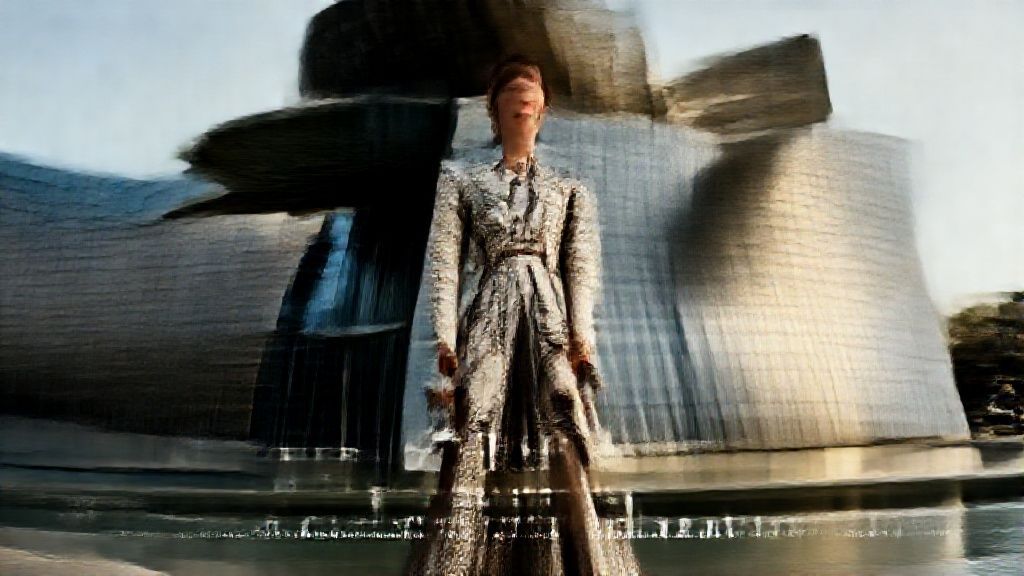
Plate · Ruth Asawa’s Labyrinthine Forms: A Paradigm Shift in Sculpture and Style, Arriving at Guggenheim Museum Bilbao
In the rarefied echelons of contemporary art, a seismic event is poised to redefine our understanding of form, material, and the very essence of aesthetic innovation. The Guggenheim Museum Bilbao, that titan of architectural audacity, is set to host a monumental retrospective of Ruth Asawa, an artist whose ethereal yet profoundly grounded wire sculptures have, for decades, whispered secrets of the universe into the void. For the discerning eye attuned to the shifting paradigms of style and substance, this is not merely an exhibition; it is a pilgrimage, a profound re-evaluation of the interplay between art, architecture, and the perennial quest for a new sartorial future.
The Unveiling: A Spatial Revelation at Bilbao's Nexus
The choice of the Guggenheim Bilbao as the stage for Asawa’s oeuvre is nothing short of inspired. Frank Gehry’s titanium-clad marvel, itself a sculpture on an epic scale, offers a dynamic counterpoint to Asawa’s intricate, often gravity-defying creations. Imagine the interplay: the monumental, reflective surfaces of the museum’s exterior mirroring the delicate, almost breathing transparency of Asawa’s looped wire forms. Inside, the cavernous, light-drenched galleries will become active participants in the experience, allowing her hanging sculptures to truly inhabit space, casting intricate shadows that are as much a part of the artwork as the wire itself.
This exhibition promises a dialogue between two titans of form. Asawa's work, often described as drawing in space, will engage with Gehry's architectural poetry, creating an immersive, multi-sensory encounter. The viewer is not merely an observer but an integral element, navigating a landscape where the boundaries between solid and void, permanence and transience, are elegantly blurred. This is where art transcends the static, becoming an active, breathing presence, a concept deeply resonant with the fluid, evolving nature of avant-garde fashion.
“Her sculptures are not merely objects; they are atmospheres, challenging the very notion of fixed form, inviting us to reconsider the very air we breathe.”
Asawa's Alchemical Threads: Crafting the Void
The Genesis of Form: Black Mountain's Enduring Echoes
Ruth Asawa's journey into the alchemy of wire began amidst the experimental crucible of Black Mountain College in the late 1940s. Under the tutelage of visionaries like Josef Albers, she was encouraged to explore the inherent qualities of materials, to understand form not as an imposition but as an emergence. It was during a trip to Mexico, observing local artisans crafting baskets from wire, that her signature technique was born: the continuous looping of wire, transforming an industrial material into organic, biomorphic volumes. This process, meditative and endlessly repetitive, became her lexicon, a means to articulate the unseen and give tangible presence to the ephemeral.
The Wire's Whisper: Transparency, Gravity, and the Unseen
Asawa’s genius lay in her ability to manipulate a rigid material into forms that appear weightless, fluid, and profoundly alive. Her sculptures are a masterclass in challenging perception, playing with transparency and opacity, light and shadow. The viewer's eye is drawn through the intricate mesh, comprehending both the exterior boundary and the interior volume simultaneously. This exploration of positive and negative space, of contained and containing form, predates and informs much of contemporary design philosophy.
- Transparency and Opacity: The delicate interplay of light passing through and being caught by the wire.
- Organic Geometry: Structured yet free-flowing, echoing natural forms like water droplets, human organs, or plant structures.
- Repetitive, Meditative Process: Each loop a deliberate act, building complexity through simplicity.
- Challenging Gravity and Weight: Sculptures that float, dance, and seemingly defy their material reality.
- Dialogue with Surrounding Space: The environment becomes an active participant, reflected and refracted within the wire.
Her work is a testament to the transformative power of vision and ceaseless artisanal craftsmanship. From the mundane industrial wire, Asawa conjured the sublime, demonstrating that true innovation often lies in the re-imagining of the simplest elements.
“From the mundane, Asawa conjured the sublime, a testament to the transformative power of vision and ceaseless handcraft – a purity of process that resonates with the finest haute couture.”
Sculpture as Garment: Fashion's Enduring Dialogue with Asawa
For the fashion cognoscenti, Asawa’s work offers more than mere aesthetic appreciation; it provides a profound conceptual framework for understanding the evolution of fashion design itself. Her exploration of volume, transparency, and the body’s interaction with space finds direct parallels in the most radical expressions of avant-garde fashion. We see echoes of her methodology in designers who push the boundaries of textile innovation and fabric manipulation.
The Drape and the Silhouette: Architectural Forms for the Body
Consider the architectural fluidity of her forms. They are not rigid, static objects but dynamic entities that respond to light and air. This resonates deeply with designers who sculpt the body, creating silhouettes that are both structural and sensuous. Think of the intricate pleating of Issey Miyake, the deconstructed volumes of Rei Kawakubo for Comme des Garçons, or the ethereal, almost biological structures of Iris van Herpen. These designers, much like Asawa, are not merely creating garments; they are engineering wearable environments, playing with the space between fabric and skin, between the body and its sartorial extension. Asawa’s suspended forms, with their internal and external dialogues, could easily be blueprints for couture gowns that defy gravity, challenging the very notion of traditional drapery.
Materiality and Innovation: Wire as a New Textile
Asawa’s use of industrial wire as a primary medium was, in its time, a radical act of experimental textiles. She elevated a utilitarian material to the realm of high art, demonstrating its potential for delicacy and complexity. This spirit of material re-invention is a cornerstone of modern luxury fashion. Designers are constantly seeking new fibers, new treatments, new ways to transform the mundane into the extraordinary. From laser-cut leathers to 3D-printed fabrics, the quest to redefine what constitutes a ‘textile’ is ongoing, directly mirroring Asawa’s pioneering spirit. Her work offers a compelling argument for the beauty found in unexpected materials, encouraging a broader perspective on what constitutes wearable art.
Wearable Art and Architectural Fashion: Beyond the Runway
The concept of wearable art finds one of its purest expressions in the philosophical underpinnings of Asawa's work. Her sculptures, while not designed to be worn, imbue the viewer with a sense of intimate scale, a connection to the human hand that shaped them. This intimacy, combined with their striking visual impact, positions them as ultimate statement pieces. The architectural fashion movement, which sees garments as structures rather than mere coverings, owes a conceptual debt to artists like Asawa who rigorously explored the spatial potential of non-traditional materials. Her forms suggest new ways for garments to interact with the body, to create voids and volumes that are both protective and revealing, pushing the boundaries of what is considered beautiful or functional on the runway and beyond.
“Asawa's forms are the ultimate blueprint for the sartorial avant-garde, where the body becomes a pedestal for fluid architecture, a testament to the silent power of the design aesthetic.”
The Legacy Unwoven: Influence on Contemporary Design and Beyond
Asawa’s impact extends far beyond the confines of the art gallery. Her innovative approach to material, her dedication to process, and her profound understanding of form continue to inspire generations of designers across disciplines. Her work champions a timeless minimalist design philosophy, where complexity arises from simplicity, and beauty is found in the inherent qualities of the material and the meticulousness of its manipulation.
Beyond the Gallery Walls: A Return to Handcraft and Intentionality
In an age increasingly dominated by mass production and fleeting trends, Asawa’s work serves as a powerful reminder of the enduring value of artisanal craftsmanship. Each loop of wire, each carefully constructed form, speaks to a dedication to process that is increasingly rare. This philosophy resonates deeply with the burgeoning movement towards slow fashion and sustainable fashion, where the emphasis is on the longevity, ethical production, and inherent beauty of handcrafted items. Her sculptures are not merely objects; they are narratives of labor, patience, and profound artistic vision.
A Timeless Modernity: Asawa's Futuristic Resonance
Asawa’s aesthetic, while rooted in mid-century modernism, possesses a distinctly futuristic fashion resonance. Her biomorphic forms and exploration of transparency feel utterly contemporary, speaking to a world fascinated by digital fabrication, bio-mimicry, and the seamless integration of technology and nature. Her work challenges us to look beyond the obvious, to find beauty in the intricate details, and to appreciate the power of a single, repeated gesture. This timelessness ensures her continued relevance, inspiring new collections and conceptual frameworks within the ever-evolving landscape of global fashion week showcases.
“In a world of ephemeral trends, Asawa's enduring forms offer a profound meditation on permanence, process, and the quiet revolution of meticulous craft – a beacon for the discerning eye.”
Concluding Insights: A Call to Experience the Unseen
The Ruth Asawa retrospective at the Guggenheim Museum Bilbao is more than an exhibition; it is an imperative for anyone seeking to understand the vanguard of visual and tactile culture. It is an opportunity to witness the profound beauty that emerges when an artist truly understands her material, when form is allowed to breathe, and when the void itself becomes a canvas. For those immersed in the world of fashion, it is a chance to trace the conceptual lineage of today's most audacious designs, to see how a simple loop of wire can inspire the most complex and innovative fashion design. Prepare to be challenged, enlightened, and utterly captivated. This is not merely art; this is an education in the future of form, a testament to the enduring power of human ingenuity, and an essential dialogue for the discerning modern sensibility.