Ruth Asawa’s Massive Retrospective Heads to Guggenheim Museum Bilbao: The Engineering of Ethereal Forms
Ruth Asawa's groundbreaking wire sculptures arrive at Guggenheim Bilbao, revealing a masterclass in form, function, and material innovation that resonates deeply with techwear's avant-garde ethos.
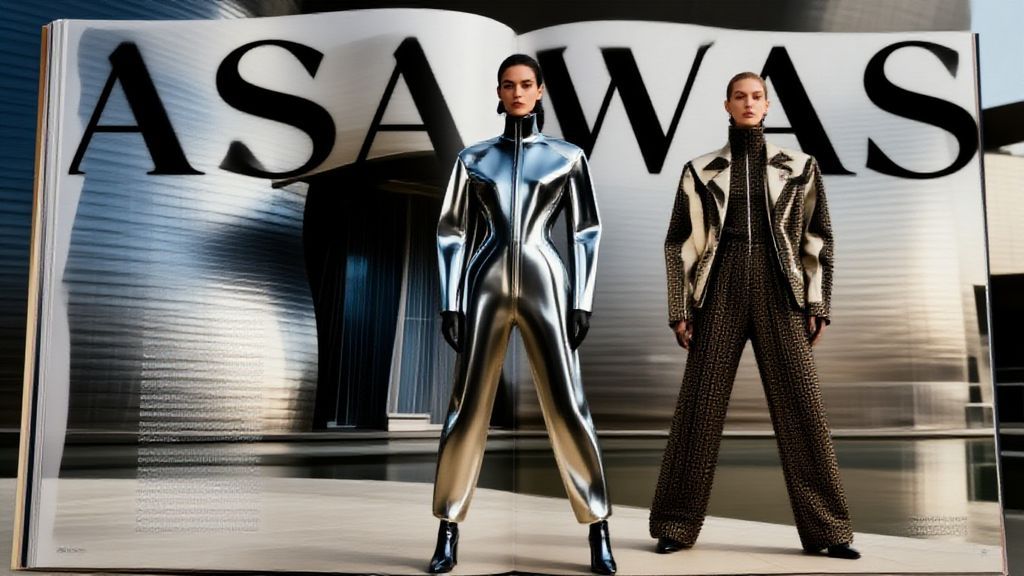
Plate · Ruth Asawa’s Massive Retrospective Heads to Guggenheim Museum Bilbao: The Engineering of Ethereal Forms
Ruth Asawa’s Massive Retrospective Heads to Guggenheim Museum Bilbao: The Engineering of Ethereal Forms
In an era where the lines between art, fashion, and technology are not merely blurred but deliberately interwoven, the Guggenheim Museum Bilbao prepares to host a monumental retrospective that promises to redefine our understanding of sculptural form and its profound resonance with contemporary design. Ruth Asawa, a visionary artist whose intricate wire sculptures have long captivated critics and connoisseurs, is poised to take center stage. Her work, characterized by its ethereal yet rigorously structured nature, offers an uncanny precursor to the principles governing today’s most advanced techwear and performance fashion. This isn't merely an exhibition; it's a deep dive into the engineering of beauty, a dialogue between the artisanal and the algorithmic, presented within one of the world's most architecturally audacious institutions. For the discerning eye attuned to the nexus of innovation and aesthetic prowess, Asawa's massive retrospective at Bilbao is set to be an unparalleled pilgrimage, illuminating the foundational tenets of form-follows-function that animate both her legacy and the cutting-edge of sartorial expression.
The Architecture of Form: Asawa's Vision Reimagined
Ruth Asawa’s oeuvre, predominantly her signature looped wire sculpture art, stands as a testament to the power of meticulous craftsmanship and an intuitive understanding of structural integrity. Her sculptures, often suspended, create volumes of incredible lightness, their intricate networks of copper and brass wire forming permeable skins that define space without enclosing it. Each loop, a singular gesture, contributes to a larger, complex system – a parallel strikingly evident in the modular design philosophies of modern techwear fashion. The fluidity of her forms, achieved through repetitive, almost meditative handwork, mirrors the seamless integration of technology and aesthetics found in high-performance garments. These are not static objects but kinetic entities, their perceived movement a dance between gravity and tension, material and void. The exhibition at Bilbao offers an unprecedented opportunity to examine these works up close, revealing the sheer precision and innovative spirit embedded in every curve and intersection. It's a masterclass in how raw material, through disciplined manipulation, can transcend its inherent properties to achieve an almost organic, living presence. This sophisticated interplay of structure and pliability is a cornerstone of avant-garde fashion, where materials are engineered to adapt, protect, and perform, all while maintaining an unmistakable aesthetic.
Material Innovation and Textile Parallels
Asawa's pioneering use of industrial wire as a primary artistic medium predates much of the current discourse around material innovation in both art and fashion. Her choice of wire, typically associated with utility rather than fine art, allowed her to explore transparency, volume, and light in ways that were revolutionary for her time. This bold embrace of unconventional materials resonates deeply with contemporary textile development, where designers are constantly pushing the boundaries of what fabrics can do. Consider the parallels: Asawa's delicate yet durable wire forms find their echo in today's lightweight composites, engineered for strength without bulk; in breathable meshes that sculpt the body while optimizing airflow; or in structural knits that offer both flexibility and form retention. Her work demonstrates an early, intuitive grasp of how a material's inherent properties can dictate and elevate design, a principle central to the development of intelligent fabrics and integrated systems in luxury fashion and technical apparel. Viewing her sculptures through this lens highlights not just their artistic merit, but their profound conceptual alignment with the functional aesthetics of modern design.
"Asawa's work isn't merely observed; it's experienced – a testament to how raw material, meticulously manipulated, can redefine space and perception."
Beyond the Silhouette: Space, Movement, and Wearable Art
The true genius of Asawa's sculptures lies in their dynamic interaction with the surrounding environment. They are not merely objects to be viewed, but installations that actively engage with light, casting complex, ever-shifting shadows that become integral to the artwork itself. This interplay of form and shadow creates an immersive experience, a visual symphony of presence and absence, much like how a meticulously designed garment interacts with the wearer's body and movement. In techwear, the silhouette is not static; it's designed to adapt, to respond to the kinetic energy of the human form, creating dynamic lines and folds that enhance both function and aesthetic. Asawa's work, in its exploration of permeable surfaces and internal volumes, invites a similar consideration of the body's relationship to its enclosure. Her suspended forms, seemingly weightless, suggest a potential for movement, a subtle sway that imbues them with a lifelike quality. This notion of art as a responsive, almost wearable entity, capable of transforming its environment and the viewer's perception, positions Asawa as a visionary whose insights into dynamic form are more relevant than ever.
Ergonomics of Elegance: A Shared Design Ethos
The ergonomic principles evident in Asawa's sculptures are striking. The way her wire forms hold their shape, appearing both robust and impossibly delicate, speaks to an innate understanding of tension, balance, and the efficient distribution of material. This 'ergonomics of elegance' finds direct resonance in contemporary fashion design, particularly in performance-driven apparel. Consider the articulated knees of a technical pant, the gusseted crotch of a performance jacket, or the precision cuts of a waterproof shell – all are engineered to allow maximum freedom of movement while maintaining structural integrity and aesthetic appeal. Asawa's sculptures, by creating volume through open structures, achieve a similar functional aesthetic, allowing light and air to pass through, creating an illusion of weightlessness that is paradoxically strong. This shared design ethos emphasizes a few key characteristics:
- Precision Engineering & Craftsmanship: Meticulous attention to detail in construction.
- Dynamic Modularity & Adaptability: Forms that can be perceived differently from various angles and under changing light.
- Integrated Systems of Form & Function: Where aesthetic beauty is inseparable from structural purpose.
- Textural Innovation & Material Transparency: Exploring the visual and tactile qualities of materials to create unique effects.
- Kinetic Potential & Responsive Design: Art and apparel that suggest or facilitate movement and interaction.
"Her sculptures are not static objects but conduits for light and air, embodying a kinetic elegance that challenges the very definition of structure."
The Bilbao Effect: A Synergistic Canvas
The choice of the Guggenheim Museum Bilbao as the venue for this monumental retrospective is itself a stroke of curatorial brilliance. Frank Gehry's iconic architecture, with its undulating titanium curves and daring structural feats, provides a profoundly synergistic canvas for Asawa's work. The museum building is, in essence, a colossal sculpture, its surfaces reflecting light and shifting perspectives, creating a dialogue with the surrounding urban landscape. This architectural prowess echoes the very principles of structural design and architectural fashion that Asawa explored. Her delicate, organic forms, when placed within Gehry's bold, metallic edifice, create a compelling contrast and a powerful resonance. The interplay between the museum's monumental scale and Asawa's intricate intimacy will amplify the visual impact of both, inviting visitors to consider how art and architecture can elevate and transform one another. It’s a testament to the power of context, where the environment itself becomes an active participant in the artistic experience, much like how a runway show amplifies the narrative of a designer's collection.
Curatorial Precision and Fashion's Gaze
The curatorial approach at Bilbao will undoubtedly frame Asawa's work in a manner that speaks directly to a fashion-forward audience, emphasizing the meticulous craft, the innovative use of materials, and the profound impact of form on perception. This is not just an exhibition for art historians; it is a masterclass for designers, architects, and anyone fascinated by the intersection of creativity and engineering. The thoughtful arrangement of Asawa's suspended sculptures within the vast, light-filled galleries of the Guggenheim will highlight their three-dimensionality and their interaction with space, drawing attention to their almost garment-like qualities – how they drape, flow, and hold their shape. The exhibition promises to be a powerful reminder that the foundational principles of good design, whether in a sculpture, a building, or a piece of performance wear, transcend disciplinary boundaries, rooted in a shared pursuit of beauty, functionality, and enduring relevance.
"In the hallowed halls of Bilbao, Asawa's forms transcend mere art; they become a dialogue between human ingenuity and architectural ambition, a perfect storm for the discerning eye."
Concluding Insights: The Enduring Resonance of Engineered Beauty
Ruth Asawa's massive retrospective at the Guggenheim Museum Bilbao is more than an exhibition; it is an imperative pilgrimage for anyone invested in the future of design. Her work, crafted with an almost surgical precision, yet imbued with an organic, humanistic spirit, offers profound insights into the synthesis of art and function. For the world of fashion design and especially techwear, Asawa's legacy serves as a potent reminder that true innovation often lies in the thoughtful manipulation of fundamental materials and a deep understanding of structural dynamics. The lessons gleaned from her looped wire forms – about transparency, volume, weightlessness, and the kinetic potential of static objects – are directly transferable to the creation of garments that are not only aesthetically compelling but also performative and inherently intelligent. As we continue to navigate an era defined by rapid technological advancement and an increasing demand for integrated systems in our daily lives, Asawa’s work stands as a timeless beacon. It reminds us that the most forward-thinking designs, whether in art or apparel, are those that elegantly fuse human ingenuity with an acute awareness of material properties, creating something enduringly beautiful, functional, and utterly transformative. This exhibition is not merely a look back at an artist's career, but a powerful affirmation of the enduring relevance of engineered beauty in shaping our contemporary aesthetic landscape.